Variance in intraindividual stability of vitreous humor for thanatochemistry
Antonia Kaehler, Piotr Kuta, Thomas Renné, Jack Garland, Rexson Tse, Stefanie Iwersen-Bergmann, Antonia Fitzek, Benjamin Ondruschka

TL;DR
This study examines how vitreous humor changes over time and its usefulness in forensic investigations, showing that while it provides valuable data, careful interpretation is needed.
Contribution
The study introduces a detailed analysis of intraindividual variability and ex-vivo stability of vitreous humor analytes for forensic thanatochemistry.
Findings
Potassium, calcium, creatinine, and lactate showed linear relationships with PMI but had non-linear trends.
Sodium, chloride, and glucose levels varied with cardiovascular and infectious conditions.
Elevated urea and creatinine were linked to renal or multi-organ failure.
Abstract
This study investigates the intraindividual variability and ex-vivo stability of vitreous humor (VH) analytes for forensic thanatochemistry. VH, an anatomically isolated and robust postmortem fluid, provides valuable insights into the postmortem interval (PMI) and potential antemortem medical conditions. A total of 207 VH samples were collected from 36 cases and divided into three cohorts: serial sampling across three days postmortem, intraindividual variability assessment using triplicates, and ex-vivo stability evaluation through freeze-thaw cycles. Linear relationships between PMI and potassium, calcium, creatinine, and lactate were identified, but their non-linear trends limited PMI estimation accuracy. Sodium, chloride, and glucose demonstrated variations linked to cardiovascular and infectious conditions, while elevated urea and creatinine correlated with renal or multi-organ…
Genes, proteins, chemicals, diseases, species, mutations and cell lines named across the full text — each resolved to its canonical identifier and authoritative record.
Click any figure to enlarge with its caption.
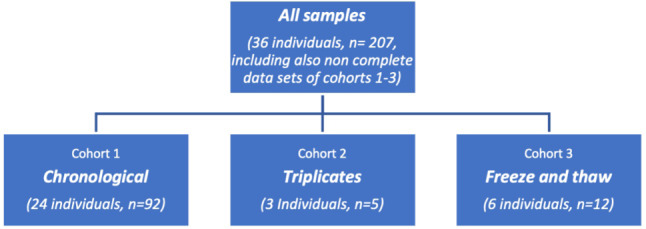 Figure 1
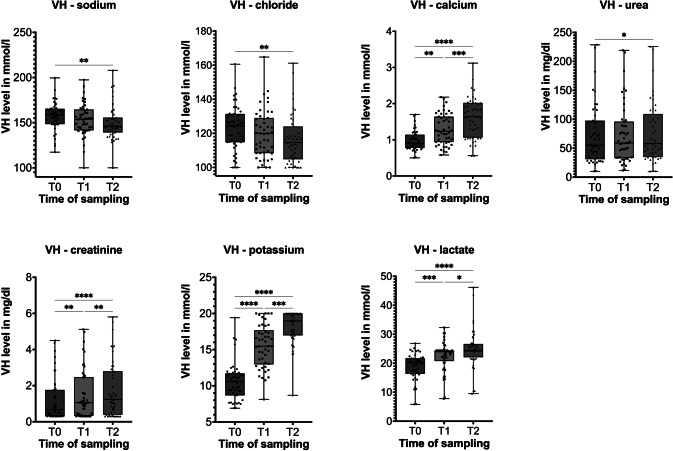 Figure 2
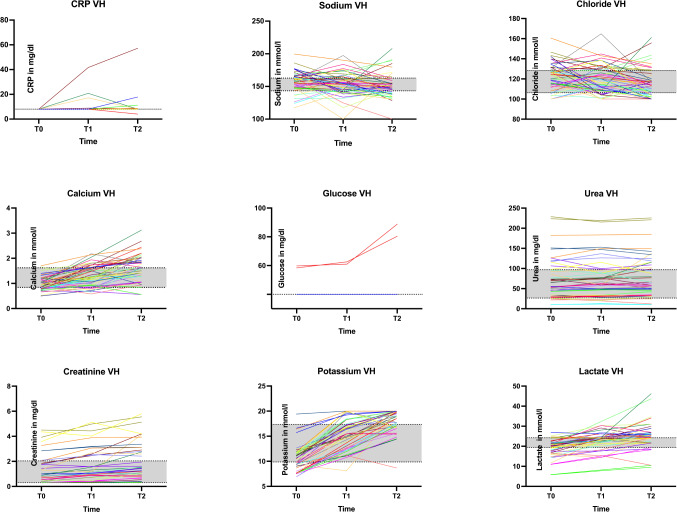 Figure 3
Peer Reviews
No public reviews on file for this paper yet. If you reviewed it on a platform where reviews are public (OpenReview, ICLR, NeurIPS, ICML), you can paste yours below so the community can read it here.
Videos
No videos yet. Explain this paper in a talk, walkthrough, or lecture? Add one.
Taxonomy
TopicsForensic Entomology and Diptera Studies · Autopsy Techniques and Outcomes · Forensic Toxicology and Drug Analysis