Gain and Loss of Heterozygosity in the Genome of the Asexual Nematode Halicephalobus mephisto
Ali Amini, John R. Bracht

TL;DR
This paper studies how the asexual nematode Halicephalobus mephisto maintains genetic diversity despite reproducing without sex.
Contribution
The study reveals genomic regions with loss of heterozygosity and suggests a dynamic evolutionary history involving potential recombination.
Findings
No homozygotes were observed in the population across two loci.
LOH tracts covering 4.3 million base pairs suggest a recent meiotic recombination event or chromosomal segregation error.
Genome stability is maintained with no new LOH detected in parent–progeny pairs.
Abstract
Asexual reproduction often leads to loss of genetic diversity, but several mechanisms have evolved to maintain heterozygosity. The subterrestrial nematode, Halicephalobus mephisto, reproduces parthenogenetically, and here, we investigate how its genetic diversity \documentclass[12pt]{minimal} \usepackage{amsmath} \usepackage{wasysym} \usepackage{amsfonts} \usepackage{amssymb} \usepackage{amsbsy} \usepackage{mathrsfs} \usepackage{upgreek} \setlength{\oddsidemargin}{-69pt} \begin{document}\end{document}-1.15% SNP heterozygosity—is retained from generation to generation. To test for loss of heterozygosity, we PCR-typed 56 individual animals at two different loci; no homozygotes were observed in the population. Furthermore, whole-genome analysis of parent and progeny demonstrated no transition from heterozygote to homozygote across over 620,000…
Genes, proteins, chemicals, diseases, species, mutations and cell lines named across the full text — each resolved to its canonical identifier and authoritative record.
Click any figure to enlarge with its caption.
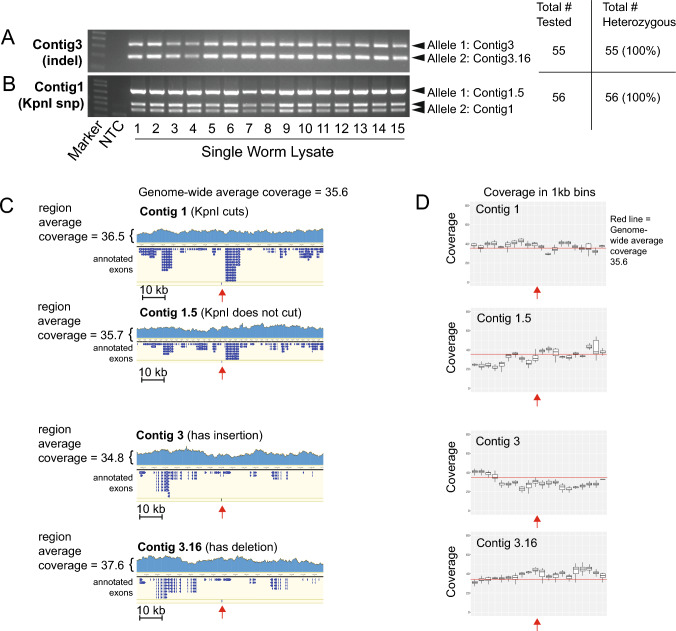 Figure 1
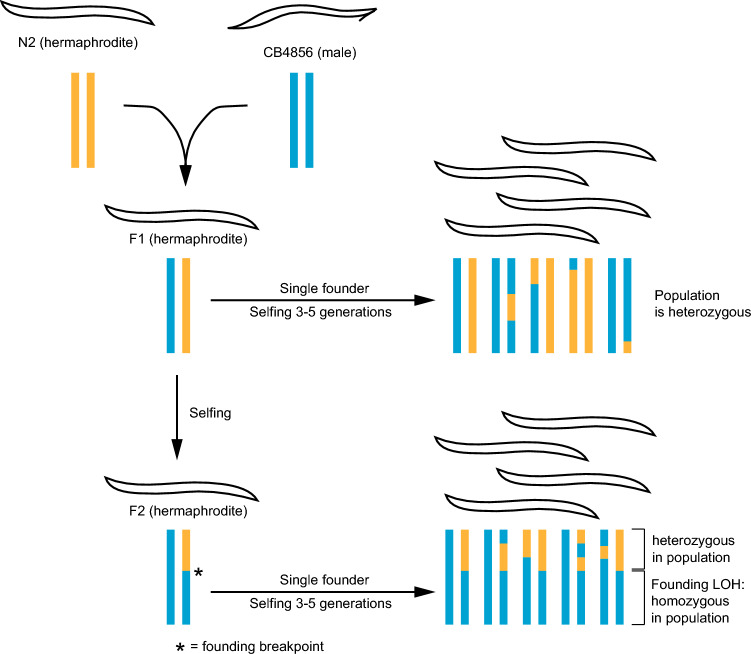 Figure 2
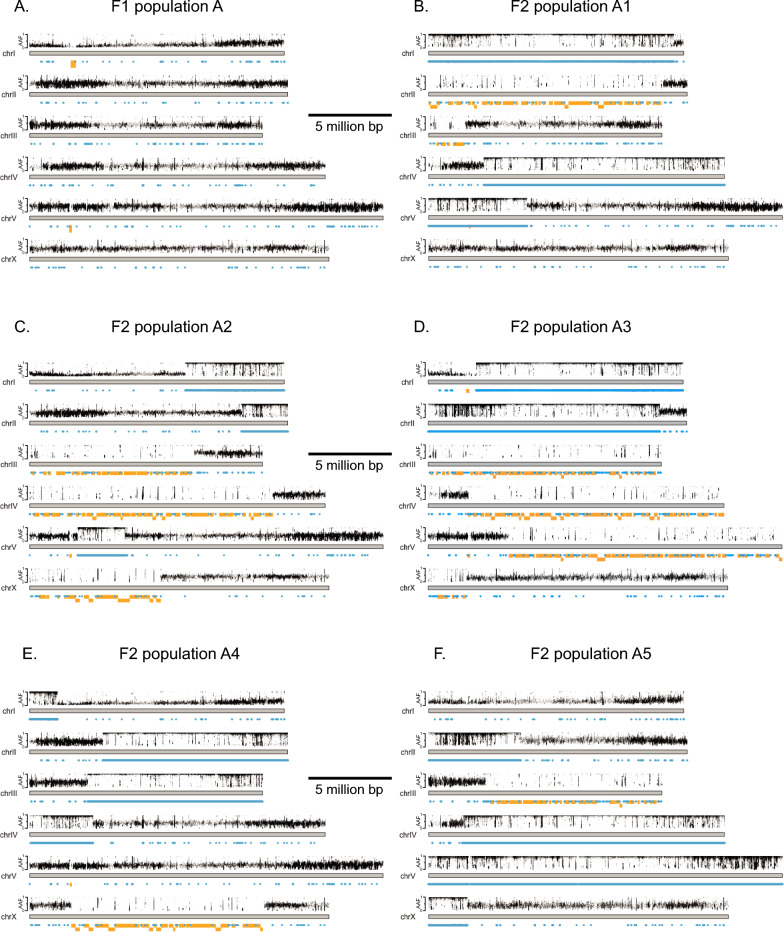 Figure 3
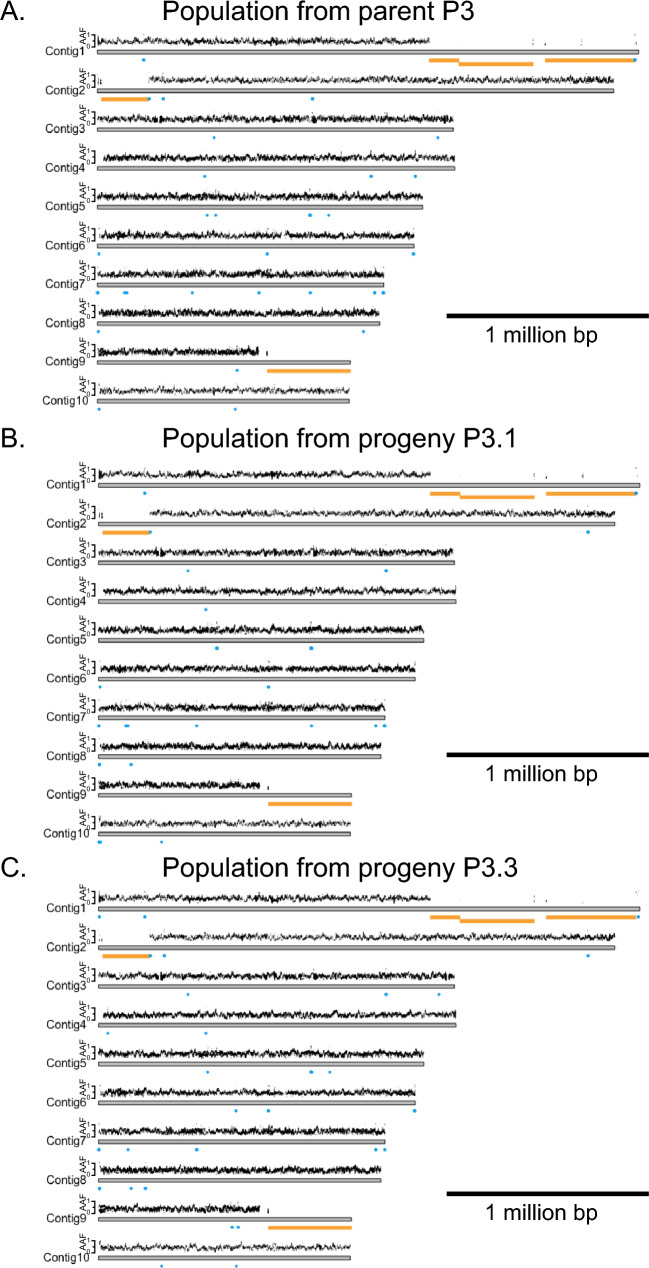 Figure 4
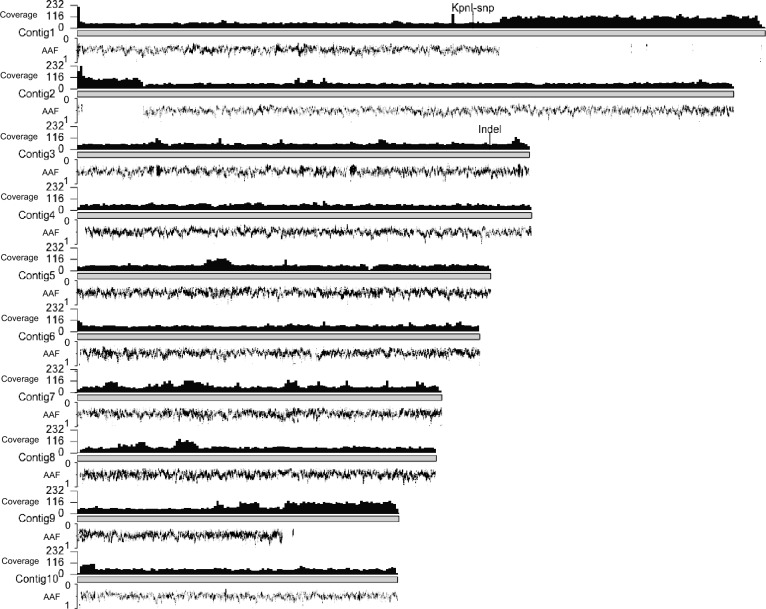 Figure 5
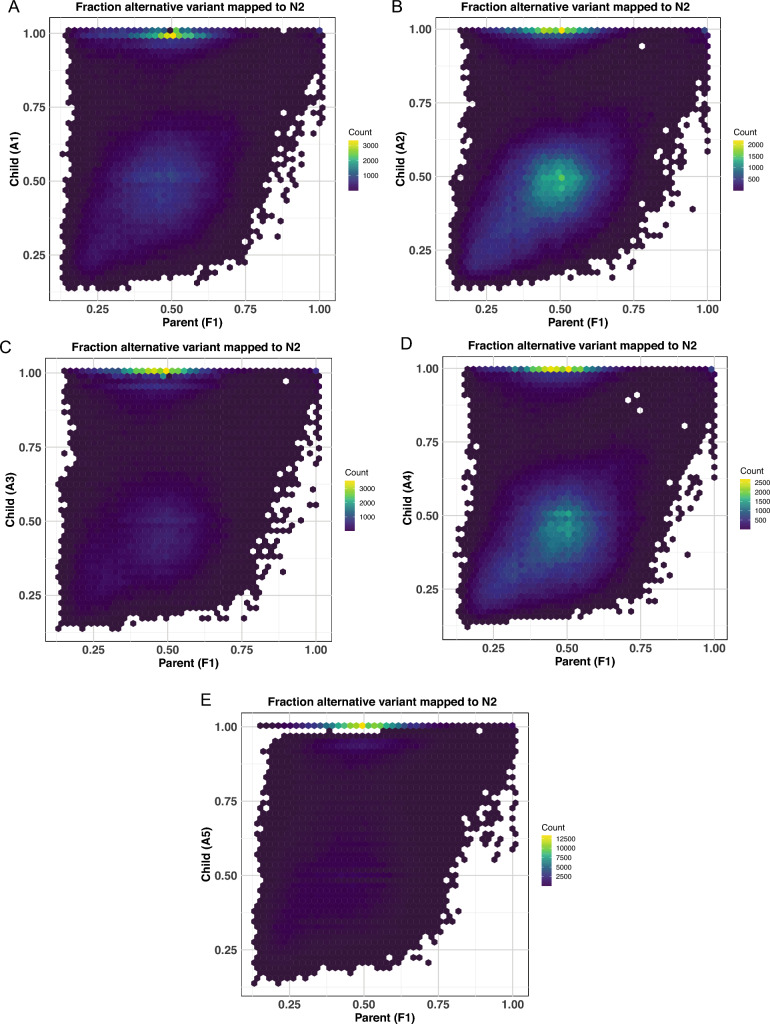 Figure 6
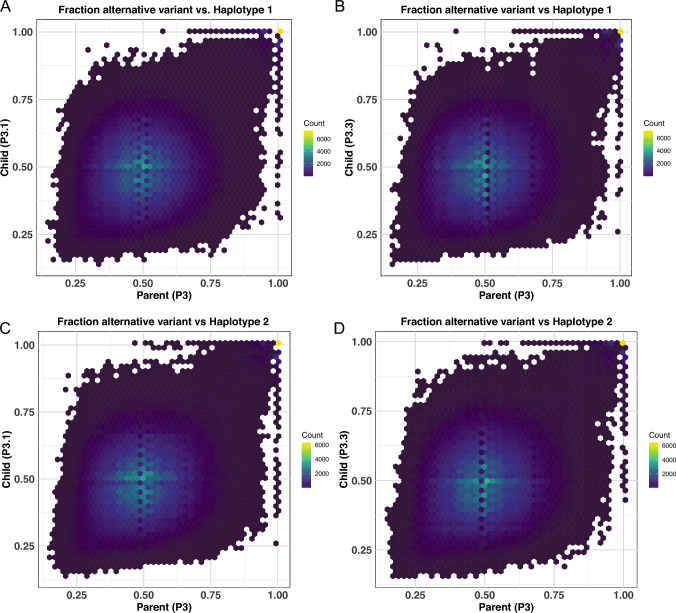 Figure 7
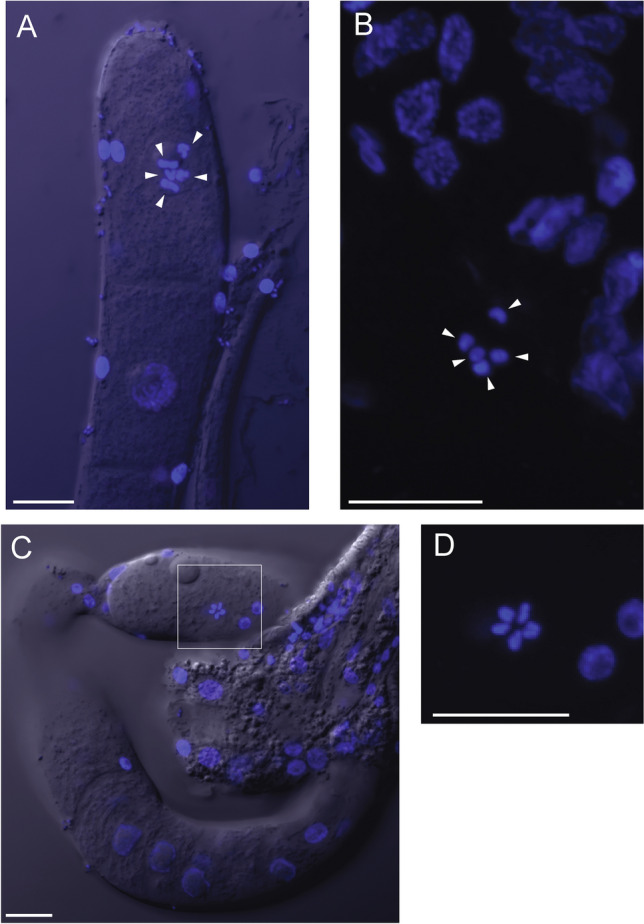 Figure 8
Peer Reviews
No public reviews on file for this paper yet. If you reviewed it on a platform where reviews are public (OpenReview, ICLR, NeurIPS, ICML), you can paste yours below so the community can read it here.
Videos
No videos yet. Explain this paper in a talk, walkthrough, or lecture? Add one.
Taxonomy
TopicsCRISPR and Genetic Engineering · Evolution and Genetic Dynamics · Insect symbiosis and bacterial influences