COVID-19: a vascular nightmare unfolding
Qinan Yin, Youjin Huang, Hulin Wang, Yin Wang, Xuefei Huang, Yujie Song, Yueyuan Wang, Lizhu Han, Bian Yuan

TL;DR
This paper reviews how immune inflammation contributes to blood clots in COVID-19 and updates on drug trials and guidelines for prevention.
Contribution
The paper offers a comprehensive review of thrombosis mechanisms and pharmacological prevention strategies in COVID-19.
Findings
Immune inflammation is a key driver of thrombosis in COVID-19 patients.
Pharmacological interventions are being tested to prevent thrombosis in these patients.
Guidelines for thrombosis prevention are evolving with new research findings.
Abstract
The emergence of COVID-19 has been associated with an increased risk of arteriovenous thrombosis, with immune inflammation playing a significant role in the pathogenesis of thrombosis. Numerous drug-related clinical trials have been undertaken to prevent thrombosis, and guidelines for its prevention and treatment are continuously evolving as our understanding of the disease progresses. This article provides a comprehensive review of the mechanisms underlying thrombosis in COVID-19 patients, as well as the advancements in clinical trials and guidelines for thrombosis prevention with pharmacological interventions.
Genes, proteins, chemicals, diseases, species, mutations and cell lines named across the full text — each resolved to its canonical identifier and authoritative record.
Click any figure to enlarge with its caption.
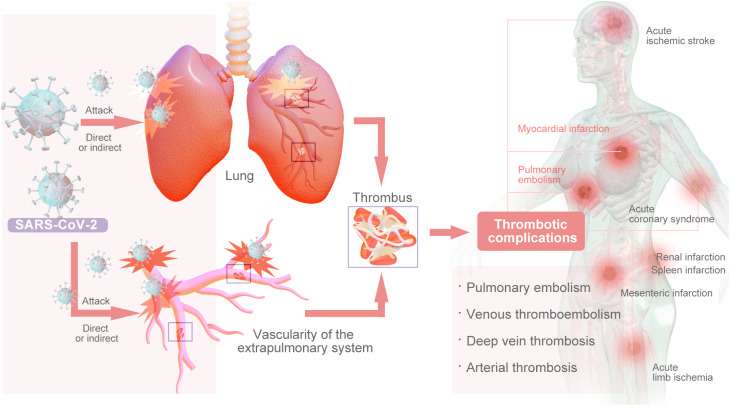 Figure 1
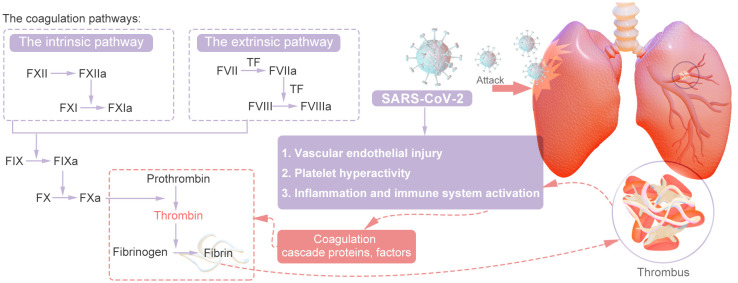 Figure 2
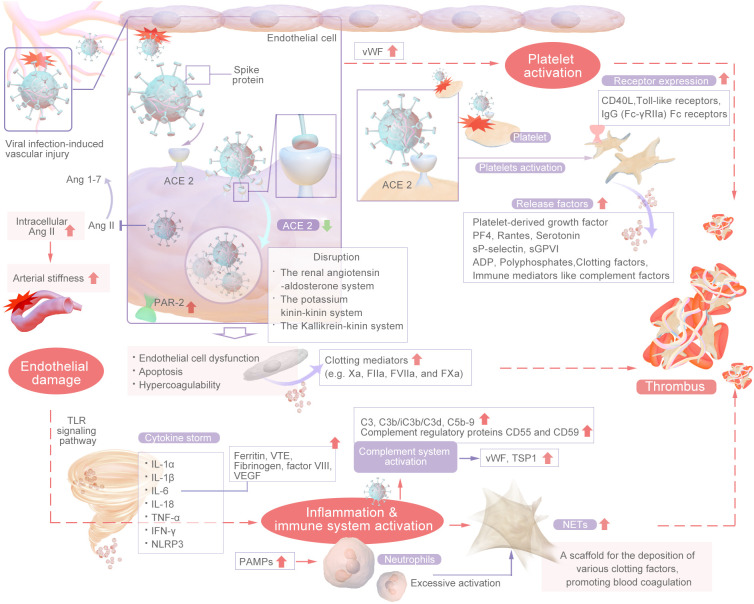 Figure 3
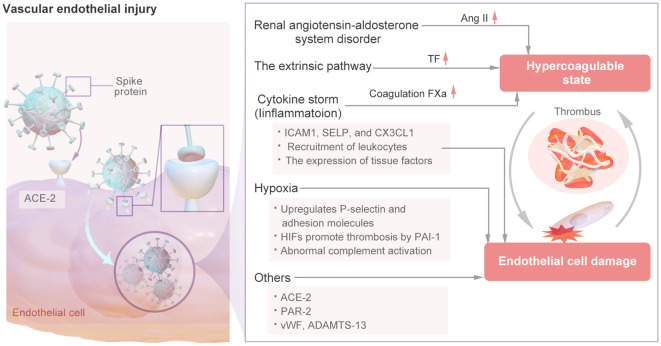 Figure 4
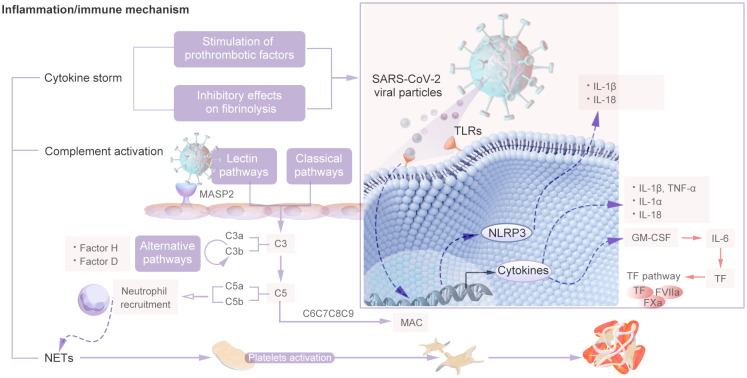 Figure 5
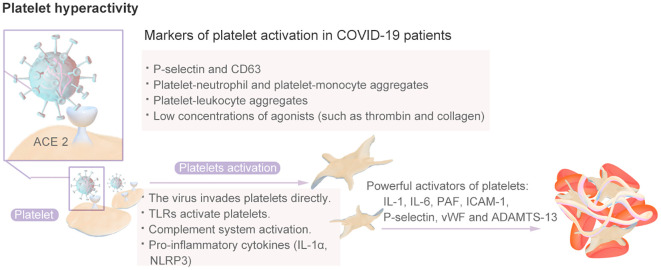 Figure 6
Peer Reviews
No public reviews on file for this paper yet. If you reviewed it on a platform where reviews are public (OpenReview, ICLR, NeurIPS, ICML), you can paste yours below so the community can read it here.
Videos
No videos yet. Explain this paper in a talk, walkthrough, or lecture? Add one.
Taxonomy
TopicsCOVID-19 Clinical Research Studies · Venous Thromboembolism Diagnosis and Management · Long-Term Effects of COVID-19