Clinical characteristics and caloric testing in patients with light or heavy cupula of the horizontal semicircular canal
Xueyan Zhang, Jiao Xu, Tao Zhou, Xue Yu, Jin Xu, Heng Yu, Guangjie Song, Lingli Wei, Xu Yang, Mei Hu, Liying Chang

TL;DR
This study compares clinical features and caloric test results in patients with two types of horizontal semicircular canal cupulopathy, finding differences in nystagmus patterns and canal paresis.
Contribution
The study identifies a specific association between sudden sensorineural hearing loss and HSC-Lcu, and highlights the limitations of using nystagmus intensity for lateralization.
Findings
A history of sudden sensorineural hearing loss is more common in HSC-Lcu than HSC-Hcu.
Nystagmus intensity during the supine roll test is unreliable for determining the affected side in both HSC-Lcu and HSC-Hcu.
HSC-Lcu shows higher rates of canal paresis, indicating more impaired function compared to HSC-Hcu.
Abstract
Persistent direction-changing positional nystagmus (DCPN) and null point (NP) are characteristic of cupulopathy of the horizontal semicircular canal (HSC). The cupulopathy can manifest as HSC-light cupula (HSC-Lcu) (geotropic DCPN) and HSC-heavy cupula (HSC-Hcu) (apogeotropic DCPN) in the supine roll test (SRT). Whether the affected side of cupulopathy could be based on the nystagmus intensity in the SRT is controversial. This study aims to explore the differences in clinical characteristics and the HSC function between the HSC-Lcu and HSC-Hcu. In this retrospective study, the disease histories of patients were collected, including those of peripheral vestibular disorders, otological diseases, and neurological diseases. We compared the nystagmus characteristics and canal paresis (CP) between the two groups. A multivariable logistic regression analysis was performed to identify…
Genes, proteins, chemicals, diseases, species, mutations and cell lines named across the full text — each resolved to its canonical identifier and authoritative record.
Click any figure to enlarge with its caption.
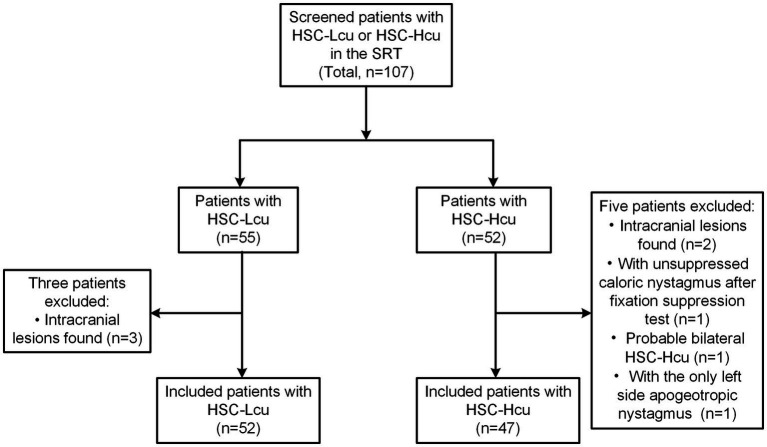 Figure 1
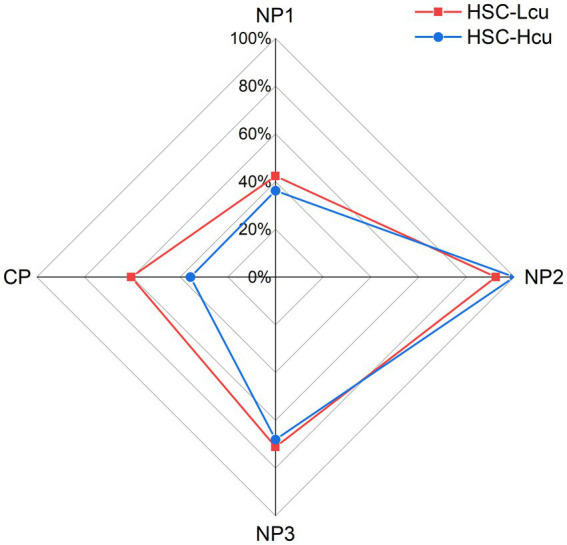 Figure 2
Peer Reviews
No public reviews on file for this paper yet. If you reviewed it on a platform where reviews are public (OpenReview, ICLR, NeurIPS, ICML), you can paste yours below so the community can read it here.
Videos
No videos yet. Explain this paper in a talk, walkthrough, or lecture? Add one.
Taxonomy
TopicsVestibular and auditory disorders · Hearing, Cochlea, Tinnitus, Genetics · Glaucoma and retinal disorders