Comparison among artificial intelligence-based age estimation from morphological analysis of the pubic symphysis versus experienced and novice practitioners using a new atlas for component labeling
Javier Irurita Olivares, Juan Carlos Gámez-Granados, Ángel Rubio Salvador, Ana García Reina, Emma Gutiérrez Pascual, Laura Castillo Jiménez, Sergio Damas Arroyo, Oscar Cordón García, Inmaculada Alemán Aguilera

TL;DR
This paper introduces a new atlas for age estimation from the pubic symphysis and compares its use by experts and novices with an AI method.
Contribution
A new atlas for component labeling and an AI-based age estimation method are proposed and evaluated for forensic use.
Findings
The new atlas reduces labeling errors for experienced practitioners compared to traditional methods.
AI-based age estimation achieves accuracy comparable to human practitioners.
Explainable machine learning techniques can reduce subjectivity in forensic age estimation.
Abstract
Traditional age estimation methods based on macroscopic observation has been criticized for being excessively dependent on the observer's experience. The aim of this technical note is to propose a new atlas to assist the forensic practitioner in labelling pubic symphysis components. Furthermore, intra- and inter-observer evaluation was conducted using both novice and experienced practitioners. Two experienced and two novice practitioners have used this atlas to label 1,127 identified pubes from autopsies. Furthermore, they have considered the phases of Todd's method (1920) to estimate the age of each pubis. A previously published, semi-automatic artificial intelligence rule-based method based on the C4.5 algorithm has also been used to recommend a specific age-at-death estimation from the human-defined labels, to be compared with the macroscopic age estimation performed by all…
Genes, proteins, chemicals, diseases, species, mutations and cell lines named across the full text — each resolved to its canonical identifier and authoritative record.
Click any figure to enlarge with its caption.
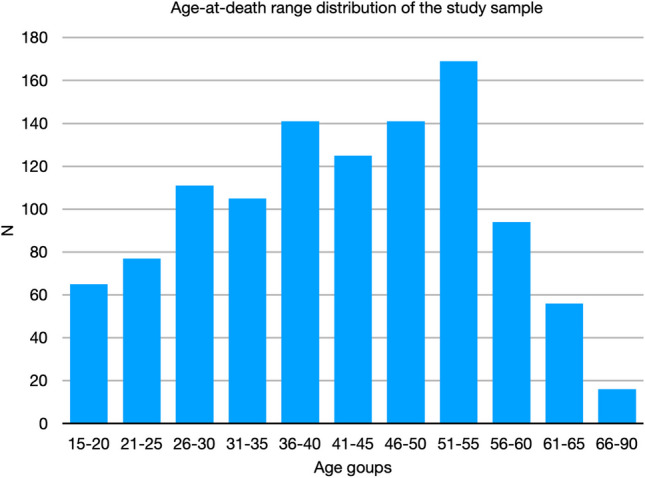 Figure 1
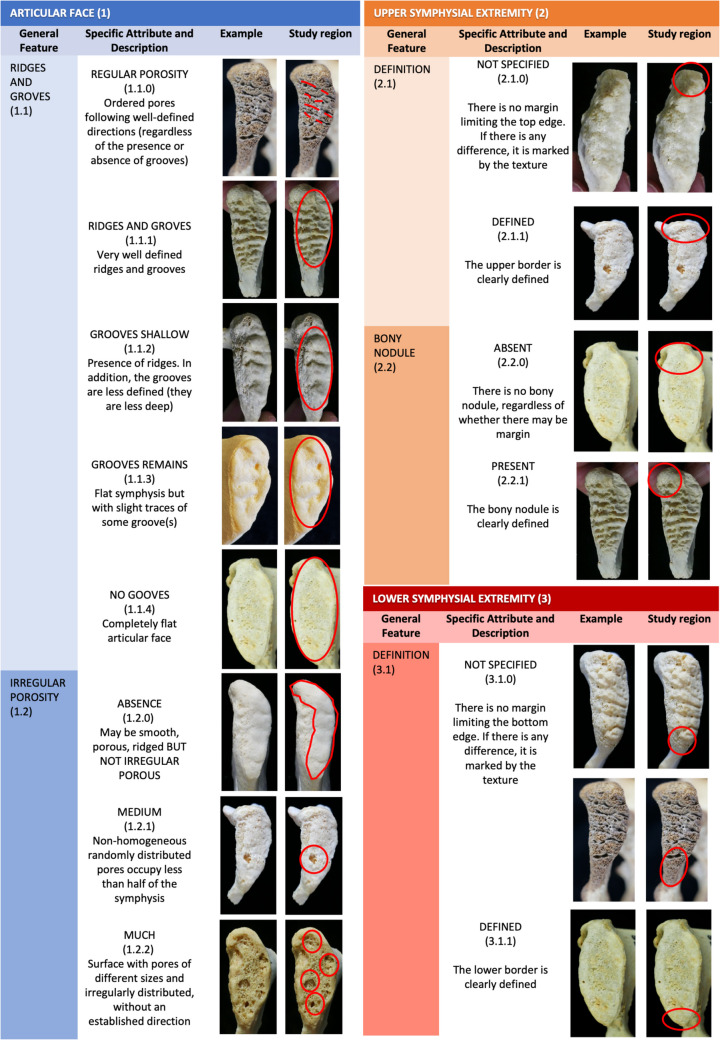 Figure 2
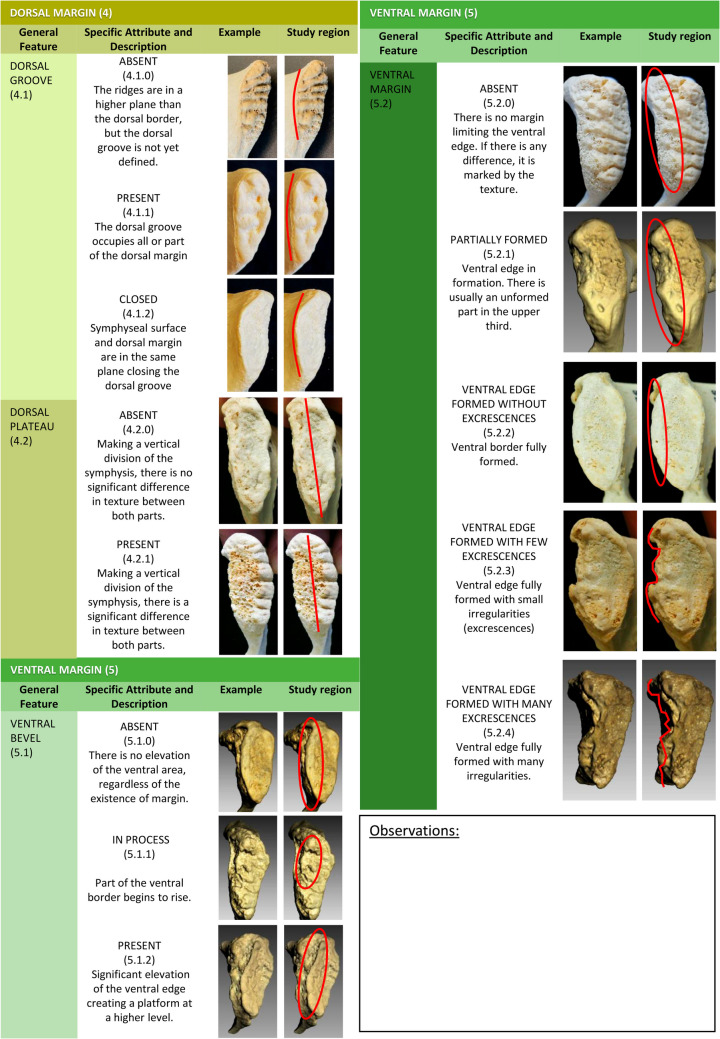 Figure 3
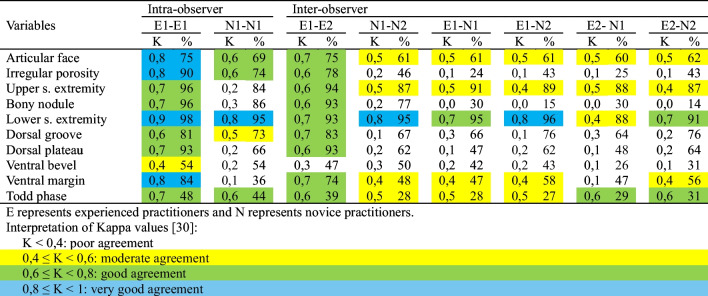 Figure 4
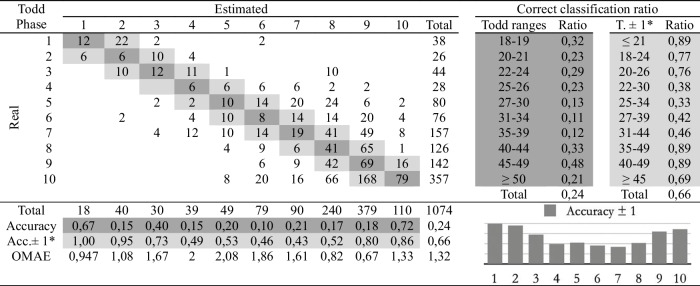 Figure 5
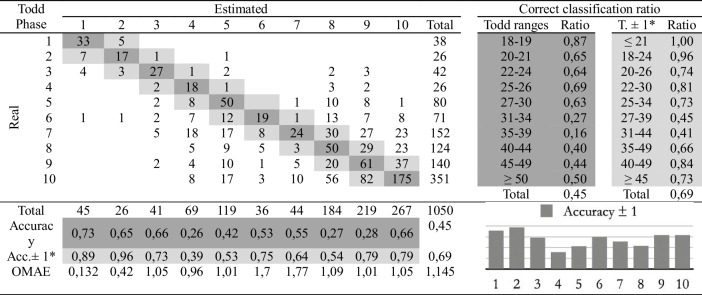 Figure 6
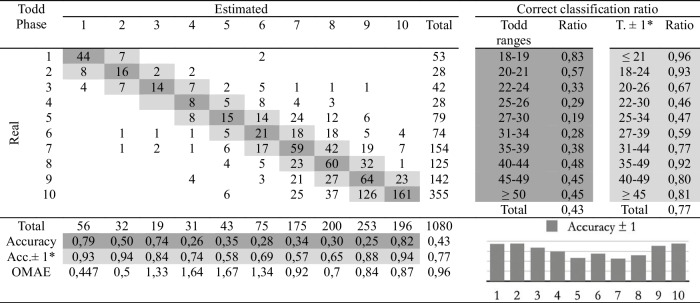 Figure 7
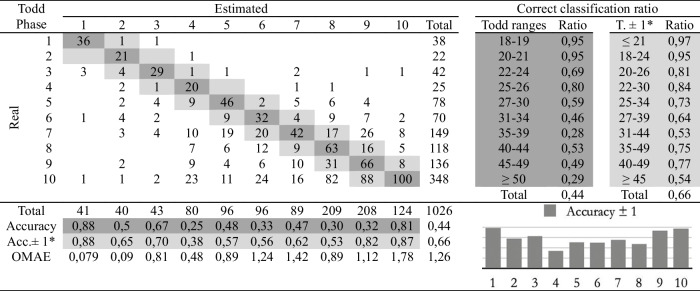 Figure 8
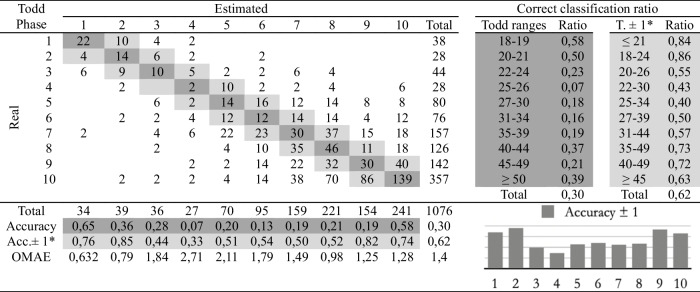 Figure 9
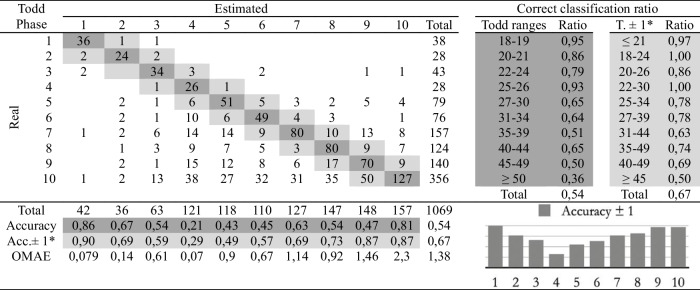 Figure 10
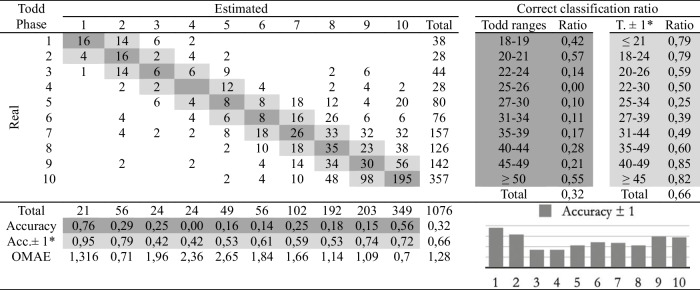 Figure 11
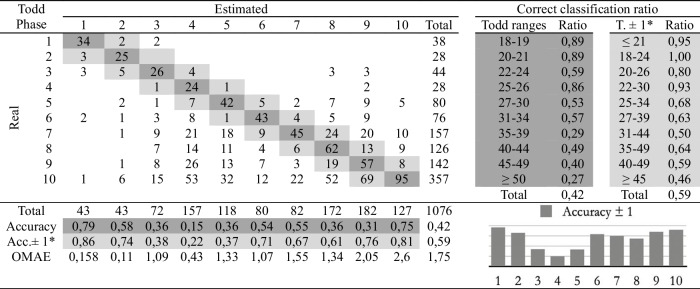 Figure 12
Peer Reviews
No public reviews on file for this paper yet. If you reviewed it on a platform where reviews are public (OpenReview, ICLR, NeurIPS, ICML), you can paste yours below so the community can read it here.
Videos
No videos yet. Explain this paper in a talk, walkthrough, or lecture? Add one.
Taxonomy
TopicsForensic Anthropology and Bioarchaeology Studies · Autopsy Techniques and Outcomes · Injury Epidemiology and Prevention