From state to change of state by type-shift
Ryan Walter Smith, Jens Hopperdietzel, Andrew Koontz-Garboden

TL;DR
The paper introduces a new linguistic analysis to explain how languages express state and change-of-state meanings without inchoative morphology.
Contribution
It proposes a type-shifting operation called Inchoative Shift combined with a Blocking Principle and structural alternatives.
Findings
The Inchoative Shift explains how inchoative semantics emerge in languages without overt inchoative morphology.
The Blocking Principle accounts for the restricted distribution of change-of-state meanings in labile languages.
Structural alternatives explain why periphrastic inchoative constructions don't always block type-shifting.
Abstract
This paper proposes a type-shifting analysis of state/change-of-state lability (Koontz-Garboden et al. in Verbhood and state/change of state lability across languages, Ms., 2023): in languages with no overt inchoative morphology, a type-shifting operation, which we dub Inchoative Shift, introduces inchoative semantics where type mismatches would otherwise occur. In combination with a Blocking Principle, drawing on Chierchia’s (Natural Language Semantics 6:339–405, 1998) proposal, the analysis explains the restricted distribution of change-of-state meaning in labile languages, and the fact that change-of-state readings of stative predicates are in complementary distribution with inchoative morphology cross-linguistically. Furthermore, once we augment the Blocking Principle with a notion of structural alternatives (Katzir in Linguistics and Philosophy 30:669–690, 2007), we can provide an…
Genes, proteins, chemicals, diseases, species, mutations and cell lines named across the full text — each resolved to its canonical identifier and authoritative record.
Click any figure to enlarge with its caption.
 Figure 1
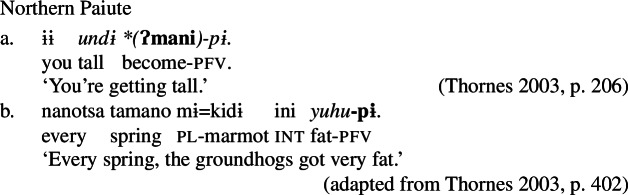 Figure 2
 Figure 3
 Figure 4
 Figure 5
 Figure 6
 Figure 7
 Figure 8
 Figure 9
 Figure 10
 Figure 11
 Figure 12
 Figure 13
 Figure 14
 Figure 15
 Figure 16
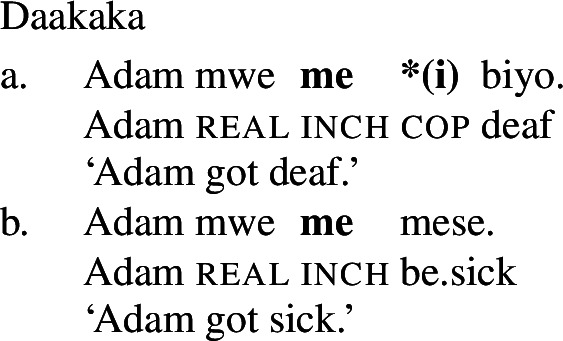 Figure 17
 Figure 18
 Figure 19
 Figure 20
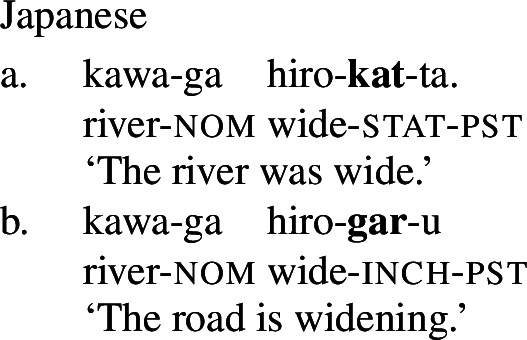 Figure 21
 Figure 22
 Figure 23
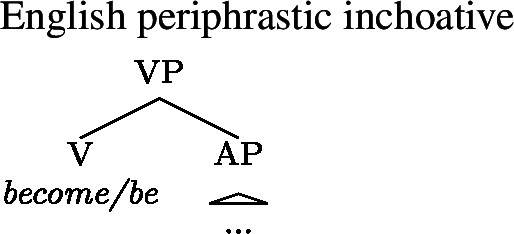 Figure 24
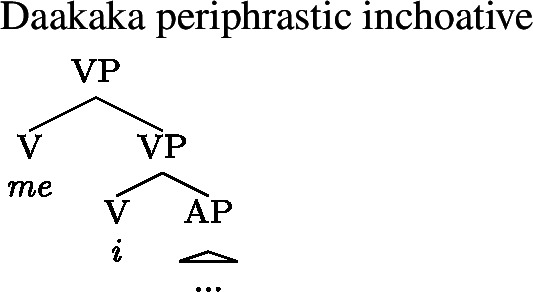 Figure 25
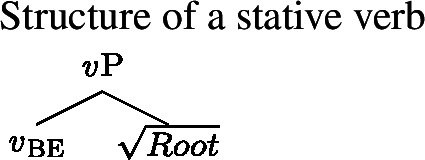 Figure 26
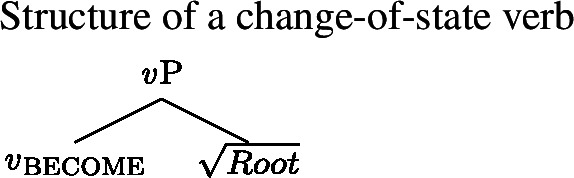 Figure 27
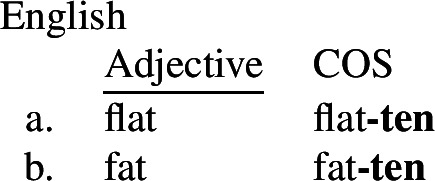 Figure 28
 Figure 29
 Figure 30
 Figure 31
 Figure 32
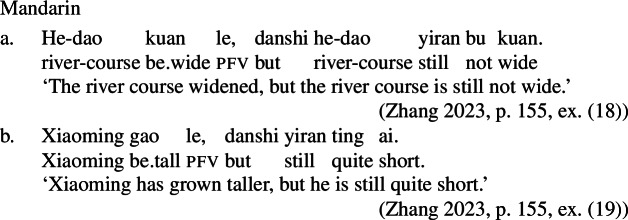 Figure 33
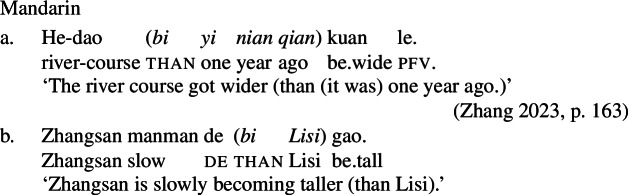 Figure 34
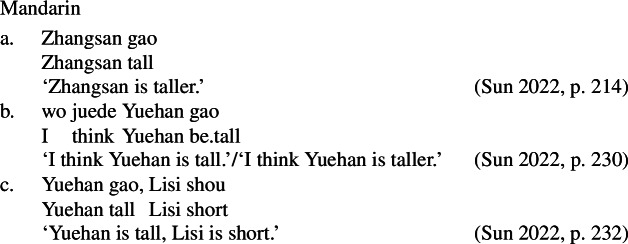 Figure 35
 Figure 36
 Figure 37
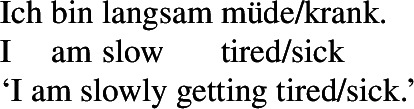 Figure 38
 Figure 39
 Figure 40
 Figure 41
 Figure 42
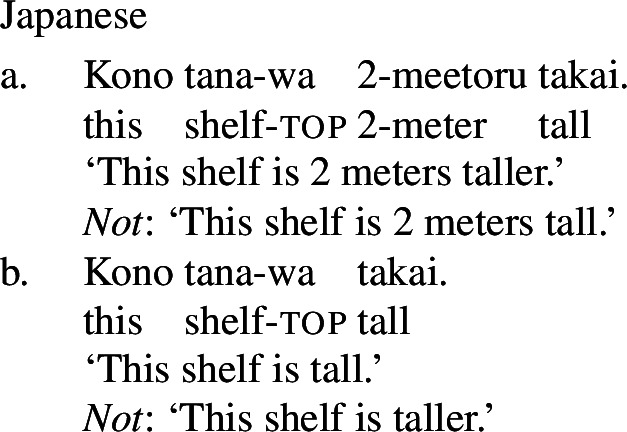 Figure 43
 Figure 44
 Figure 45
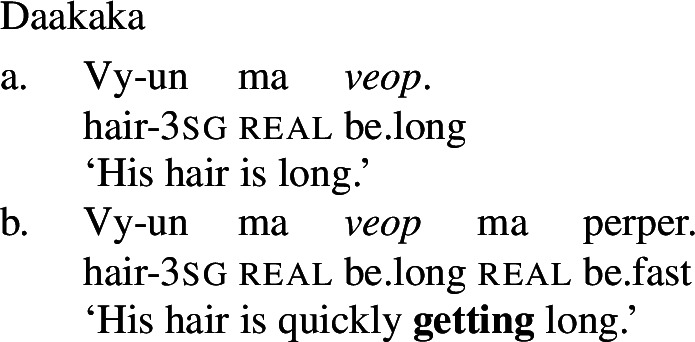 Figure 46
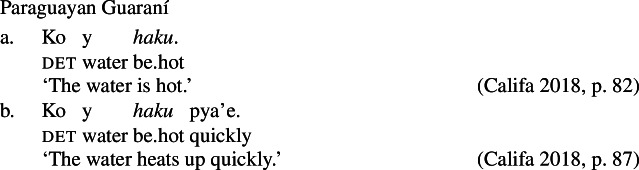 Figure 47
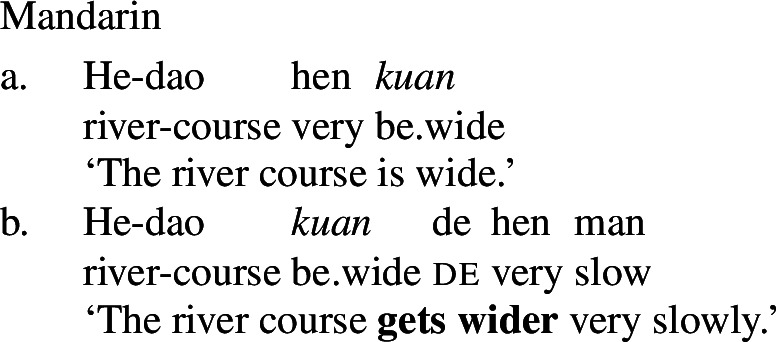 Figure 48
 Figure 49
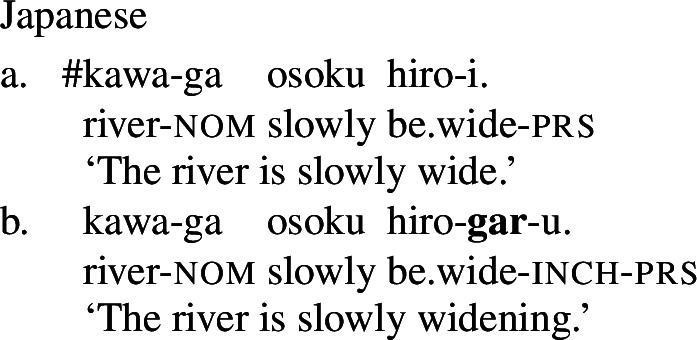 Figure 50
Peer Reviews
No public reviews on file for this paper yet. If you reviewed it on a platform where reviews are public (OpenReview, ICLR, NeurIPS, ICML), you can paste yours below so the community can read it here.
Videos
No videos yet. Explain this paper in a talk, walkthrough, or lecture? Add one.
Taxonomy
TopicsSyntax, Semantics, Linguistic Variation · Linguistic Variation and Morphology · Natural Language Processing Techniques