Hot Topics and Frontiers of Resting-State fMRI in Parkinson's Disease: Research Trends and Paradigm Shifts From a Bibliometric Perspective
Yingni Jin, Jiayi Fu, Xiaojun Guan, Tao Guo, Xiaojun Xu

TL;DR
This paper maps the research trends and shifts in resting-state fMRI studies for Parkinson's disease using bibliometric analysis, highlighting key areas and the need for new approaches.
Contribution
A comprehensive bibliometric analysis of rsfMRI in PD, identifying emerging research frontiers and a recent decline in publication growth.
Findings
China leads in publication and citation counts in rsfMRI research for Parkinson's disease.
Research frontiers include disease heterogeneity, early detection, and treatment evaluation.
A decline in publication growth in 2023 suggests a need for a research paradigm shift.
Abstract
Background: Parkinson's disease (PD), a progressive neurodegenerative disorder marked by motor and nonmotor symptoms, with resting-state fMRI (rsfMRI) proving pivotal in identifying neural circuit abnormalities and functional connectivity patterns, paving the way for a more personalized, precision medicine approach to PD diagnosis and treatment. Methods: Given its significance, this study conducted a bibliometric analysis to systematically map the intellectual landscape of rsfMRI applications in PD research. Relevant publications were sourced from the Web of Science Core Collection database from January 1, 2009, to July 18, 2024, and restricted to English-language articles and review articles. Utilizing VOSviewer and CiteSpace software, the analysis covered publication distributions across countries, institutions, and authors, along with co-citation patterns among co-authors and…
Genes, proteins, chemicals, diseases, species, mutations and cell lines named across the full text — each resolved to its canonical identifier and authoritative record.
Click any figure to enlarge with its caption.
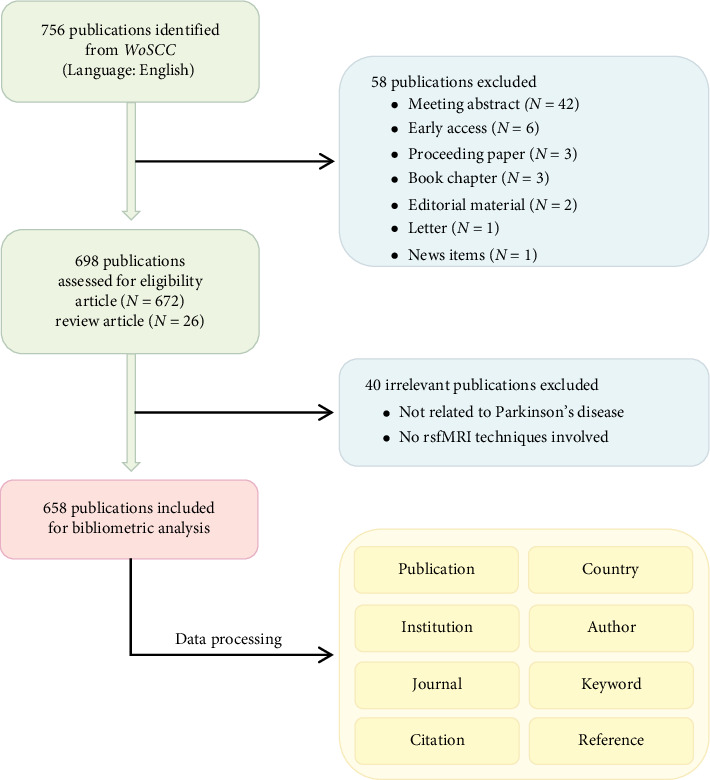 Figure 1
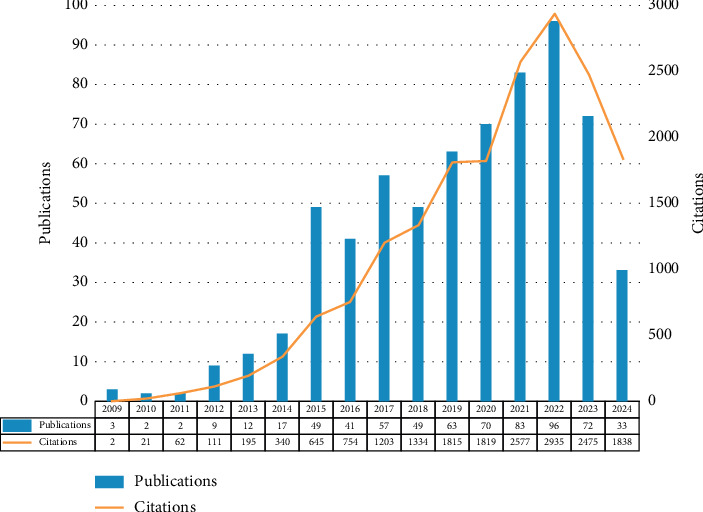 Figure 2
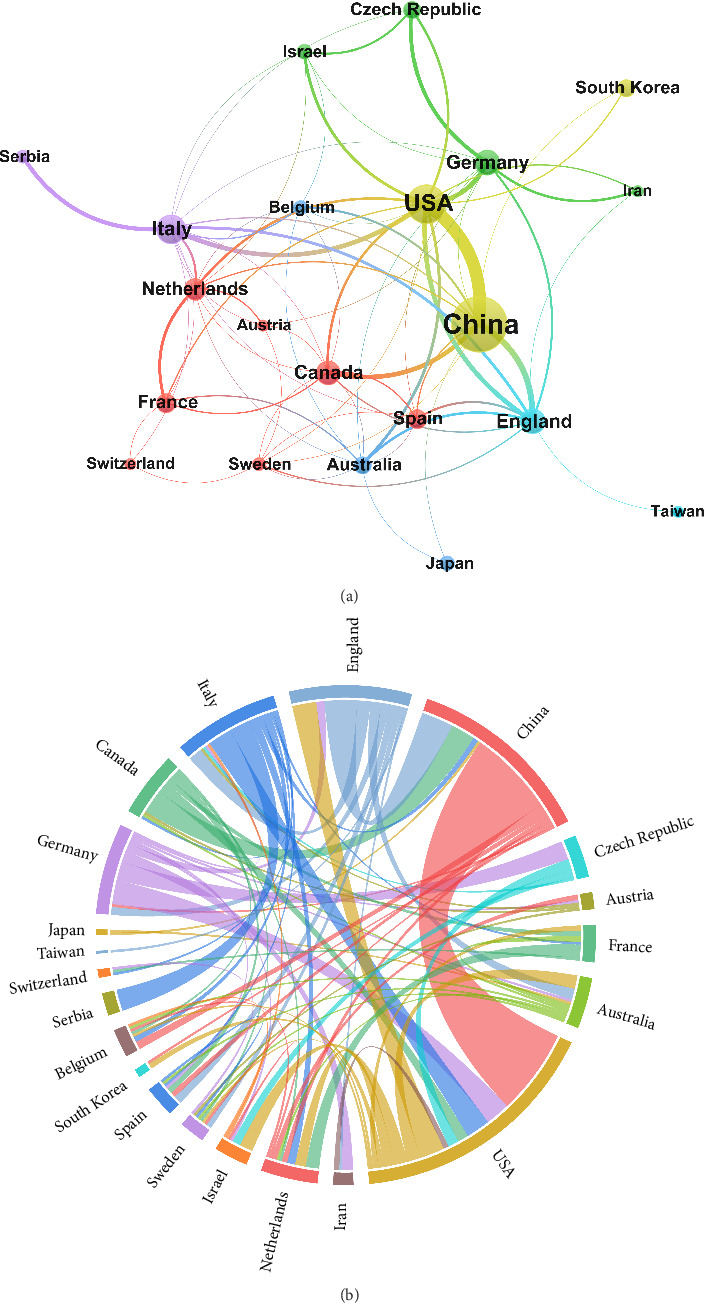 Figure 3
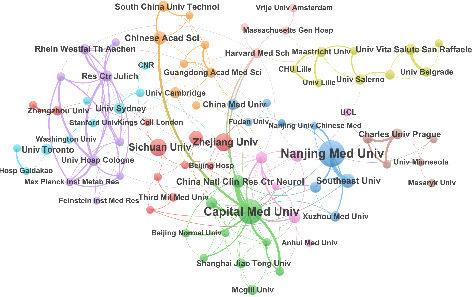 Figure 4
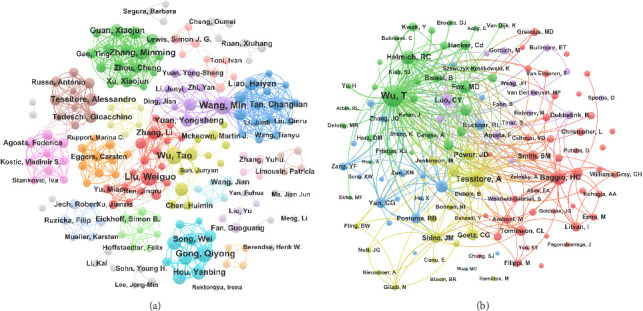 Figure 5
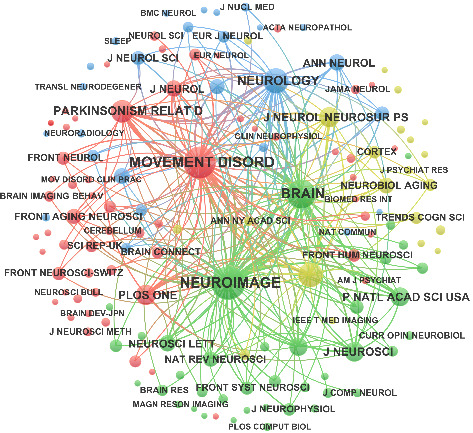 Figure 6
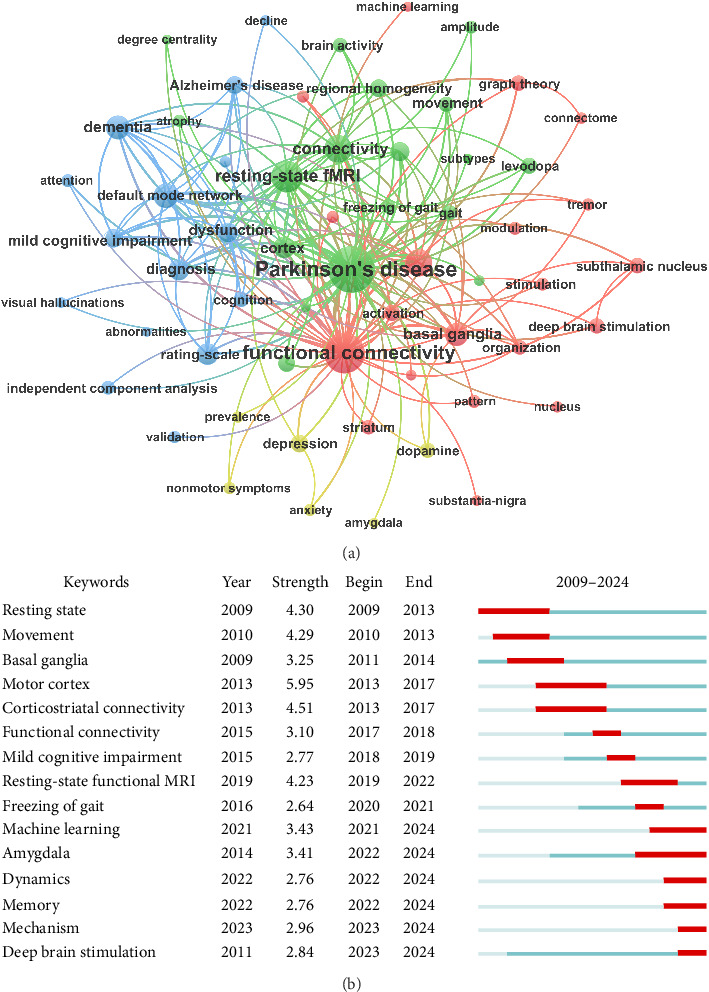 Figure 7
- —Key Research and Development Program of Zhejiang Province
- —National Natural Science Foundation of China
Peer Reviews
No public reviews on file for this paper yet. If you reviewed it on a platform where reviews are public (OpenReview, ICLR, NeurIPS, ICML), you can paste yours below so the community can read it here.
Videos
No videos yet. Explain this paper in a talk, walkthrough, or lecture? Add one.
Taxonomy
TopicsFunctional Brain Connectivity Studies · Neurological disorders and treatments · EEG and Brain-Computer Interfaces
1. Introduction
Parkinson's disease (PD) is a progressive multisystemic neurodegenerative disorder, characterized by α-synuclein aggregation and dopaminergic neurons loss in the substantia nigra pars compacta (SNpc) [1, 2]. These neuropathological changes lead to motor symptoms like bradykinesia, tremor, rigidity, and gait disturbances, along with nonmotor symptoms such as cognitive and psychiatric disturbances, which considerably impact individuals' quality of life and impose substantial socioeconomic and healthcare burdens [3, 4]. The specific biological basis and neural mechanisms of PD remain unclear, despite the fact that substantial efforts have been made to identify its pathogenic factors, clinical manifestations, and therapeutic strategies.
In recent years, resting-state functional magnetic resonance imaging (rsfMRI) has advanced our understanding of the neural pathophysiology of PD, improving diagnostic precision and enabling more personalized therapeutic strategies. Initially, rsfMRI studies focused on basic brain indicators, such as amplitude of low-frequency fluctuation (ALFF) for local activity intensity, regional homogeneity (ReHo) for local neural synchronization, and functional connectivity (FC) for inter-regional interactions and information exchange. These approaches identified spontaneous brain activity patterns, including the characterization of intrinsic functional networks (e.g., default mode network) and localized dysfunction and hyperconnectivity in neuropsychiatric disorders [5, 6]. Subsequently, graph theoretical analysis emerged, conceptualizing the brain as a complex network. This method allowed researchers to quantify both global properties (e.g., small-worldness) and nodal characteristics (e.g., hub distribution). By analyzing the attributes of brain network, research showed that PD patients exhibit significant network disruption, marked by decreased clustering coefficients and local efficiency despite the preservation of small-world topology [7], which likely underlies their cognitive and motor impairments. Further methodological advancements introduced dynamic FC (dFC) [8], which captures time-varying interactions among different brain regions and their transition. Kim et al. [8], employing dynamic FC analysis, revealed PD patients exhibited significantly reduced functional segregation in brain networks, accompanied by a marked increase in the temporal variability of network efficiency.
Despite broad recognition of rsfMRI's potential in PD, many challenges and uncertainties remain, including clinical heterogeneity at the individual level, methodological complexity and challenge of molecular biological interpretability in rsfMRI and the lack of reliable neuroimaging biomarkers for predicting disease progression and treatment outcomes [9, 10]. Currently, it is both imperative and suitable to systematically summarize and analyze the research status, as it would deepen our understanding of the main progress, pinpoint research hotspots and frontiers, and evaluate the impact of prior work, providing valuable guidance for future research endeavors.
Bibliometrics, a widely recognized and rigorous methodology for literature analysis, employs quantitative approaches to analyze and track research development in specific fields [11]. Tools like VOSviewer and CiteSpace enable the visualization of complex data through the construction of network maps, revealing structural patterns, collaborative networks, and research trends. Consequently, the primary purpose of this work was to perform a comprehensive review utilizing bibliometric analysis to clarify the historical evolution, current research state, and prospective future directions of rsfMRI studies related to PD.
2. Methods
2.1. Data Collection
The Web of Science Core Collection (WoSCC), known for its extensive repository of high-quality scientific literature, served as the source database for data retrieval. Relevant studies were identified on July 18, 2024. Although WoSCC database covers publications from 1985 to 2024 by default, the earliest relevant records in our analysis date to 2009. To maintain temporal relevance, we restricted the literature selection to articles published between January 1, 2009, and July 18, 2024. The search strategy was delineated as follows: TS = (“resting-state” or “rest” or “resting”) AND TS = (“functional magnetic resonance imaging” or “functional MRI” or “fMRI”) AND TI = (“Parkinson” or “Parkinson's disease” or “PD”). The search was limited to English-language articles and review articles. Other document types, such as meeting abstract, early access material, proceedings paper, book chapter, editorial material, letter, and news item, were excluded. Following duplicate removal, titles, abstracts, keywords, and full texts (when necessary) were manually screened by two experienced researchers to identify studies that met our inclusion criteria: (1) focused on PD; (2) rsfMRI methodology. For any literature with discrepancies, the researchers would reach a consensus through discussion or third-party opinions if necessary. Finally, the complete records and cited references for each eligible publication, including title, authors, source, times cited counts, and keywords were exported as plain text files. The whole search process is present in Figure 1.
2.2. Bibliometric Analysis
This study utilized VOSviewer (version 1.6.20) and CiteSpace (version 6.3.R1) for bibliometric visualization and quantitative analysis of published literature. Key analyses included annual publication trends, collaborative networks (e.g., countries, institutions, and authors), along with sources and authors co-citation patterns keyword clustering analysis, and burst detection. Co-citation analysis maps relationships between cited works by analyzing how often two items (e.g., authors, references, or journals) are cited together [12]. After importing data from the WoSCC database and selecting the co-citation analysis option, VOSviewer generates a network in which nodes correspond to these items and links indicate their co-citation frequency. This analytical approach enables researchers to uncover the connections and mutual influences among academic publications or authors. Keyword clustering analysis in VOSviewer identifies distinct thematic groups that capture key research trends [13]. To enhance the clarity of these themes, we merged synonymous terms and subsequently performed the initial visualization based on a minimum occurrence frequency of 10. The layout settings were adjusted to enhance graphic readability, with nodes representing keywords and colors indicating their respective clusters. Concurrently, burst detection in CiteSpace identifies terms with sudden surges in frequency to uncover shifts in research focuses and emerging trends over time within related fields [14]. In visualization maps, nodes represent items (e.g., countries, institutions, authors, and keywords), with their size indicating occurrence frequency and color corresponding to cluster affiliation. Connecting lines signify links between nodes, with line thickness reflecting connecting strength. Moreover, total link strength (TLS), automatically generated by VOSviewer, quantifies the cumulative connection strength between nodes within the constructed networks [15, 16]. In addition, Microsoft Office Excel (2021) facilitated qualification, while Origin (2021) generated the chord diagram.
3. Results
3.1. Annual Publications and Citations
A total of 658 publications selected in this study were written by 3185 authors affiliated with 865 organizations across 45 countries, published in 141 journals, and cited 16,023 citations from 178 journals. By analyzing the temporal trends of annual publications and citations in the data and chart (Figure 2), we empirically determine the three distinct developmental stages: the initial stage (2009–2013), rapid developmental stage (2014–2022), and the late stage (2023–2024). Between 2009 and 2013, there remained less than 20 publications and 400 citations annually. However, since 2014, the field has undergone rapid development and peaked in 2022 with 96 articles and 2935 citations. This trend suggested the growing interest in applying rsfMRI to PD research. In the latter phase, the number of papers published in 2023 dropped to 72 with 2475 citations, even less than in 2021, suggesting possible saturation with decreased interest. Although the data for 2024 remains incomplete, with the search ending on July 18, 2024, current indicators point to a continued downward trend compared with previous years, signaling the potential need for methodological innovation or research paradigm shifts in the field.
3.2. Analysis of Country/Region
The published literature originated from 45 countries or regions, with the top 15 countries/regions are listed in Table 1. China had the largest number of publications with 329 articles, accounting for nearly half of total publications, followed by the United States (n = 131) and Italy (n = 60). In terms of citation counts, China consistently led with 6025 citations, followed by the United States with 3925 and Italy with 2318. The United States exhibited the strongest TLS of 104, followed by China (71) and the United Kingdom (47). Figure 3(a) illustrates collaboration networks among 21 countries or regions, each having at least five relevant publications. The chord diagram (Figure 3(b)) further visualized the mutual cooperation among these countries, such as China with Canada and England, and the United States with Germany. What stands out in it is the thickest arc linking China and the United States, reflecting their tight cooperative interactions in this domain.
3.3. Analysis of Institution
The top seven institutions in Table 2 are geographically located in China, with the remaining three distributed across Germany, England, and Italy, respectively. Nanjing Medical University ranked first with 60 publications, followed by Capital Medical University (n = 52) and Chinese Academy of Sciences (n = 28). Capital Medical University achieved the highest citation count with 1625 citations and the strongest TLS of 133, indicating its pivotal role in institutional collaboration. Figure 4 illustrates institutional collaborative network, which included 81 out of the 865 institutions, applying a threshold of at least five publications. As the leading institution, Nanjing Medical University demonstrated close cooperative relationships with other institutions, including Southeast University, Nanjing University of Chinese Medicine, and Peking University.
3.4. Analysis of Authors and Co-Cited Authors
The author's analysis presented information regarding the core research strengths and representative scholars within the field. The top 15 most authoritative authors are shown in Table 3, among whom Wang Min and Gong Qiyong took the lead with 25 publications each, followed closely by Liu Weiguo (n = 24) and Wu Tao (n = 23). Wu Tao received the highest citation count with 1172 citations and Liu Weiguo had the strongest TLS of 236. The co-authorship network of those with at least 5 publications is present in Figure 5. Numerous research teams were identified, characterized by robust internal collaboration within teams but relatively limited inter-team cooperation.
Co-citation analysis is generally regarded as a better method to evaluate a scholar's academic influence within their field. Of the 10,288 co-cited authors, 12 exceeded 150 co-citations (Table 4). Wu Tao was the most cited author of co-citations (492) with his work primarily investigating FC alterations and identifying potential biomarkers for early diagnosis and therapeutic monitoring in PD patients.
3.5. Analysis of Journal and Co-Cited Journal
Table 5 illustrates the top 15 productive journals in rsfMRI research related to PD. Most journals specialize in neuroscience or its subfields with only a few exceptions being comprehensive journals. The leading 9 journals each contributed over 20 publications, with Frontiers in Aging Neuroscience at the forefront (n = 49), followed by Parkinsonism and Related Disorders (n = 38), Human Brain Mapping (n = 33), Movement Disorders (n = 33), and Frontiers in Neuroscience (n = 32). According to the 2024 Journal Citation Reports (JCR), eight of these journals in Table 5 are classified in Q1 and five in Q2, reflecting their high academic impact. As shown in Table 6, the three most-cited journals each accumulated over 2000 co-citations with Neuroimage reaching 3051. All of these were categorized in JCR Q1, indicating their prominence in this field. Figure 6 presents the co-citation network of journals with at least 30 co-citations.
3.6. Analysis of Keywords
Following synonyms merging keyword co-occurrence network was constructed with those appeared more than 10 times and subsequently segmented it into 4 clusters (Figure 7(a)). Cluster 1 (red part, including 20 items) emphasized the neural circuit mechanism and neural regulation, highlighting keywords such as “functional connectivity,” “networks,” “basal ganglia,” “deep brain stimulation,” “subthalamic nucleus,” and “graph theory.” Cluster 2 (green section with 18 items) was primarily related to disease heterogeneity and motor-related terms, underscoring terminologies like “cortex,” “progression,” “movements,” “freezing of gait,” “levodopa,” and “subtypes.” Cluster 3 (blue, with 15 items) mainly consisted of cognition-related terminology with keywords including “dementia,” “default mode network,” “mild cognitive impairment,” “dysfunction,” “rating-scale,” and “independent component analysis.” Cluster 4 (yellow, comprising 6 items) focused on emotional symptoms, covering terms such as “depression,” “anxiety,” “amygdala,” and “dopamine,”
Burst thematic terms, which play a crucial role in identifying emerging trends, often act as key indicators of frontiers research hotspots. We utilized CiteSpace to identify the top 15 keywords with the strongest burstiness (Figure 7(b)), where the term “motor cortex” exhibited the strongest burst strength of 5.95. Early neuroimaging research predominantly examined the functional role of discrete brain regions in PD, particularly structures such as the basal ganglia, motor cortex, and limbic system (e.g., the amygdala) in fundamental motor control and memory processes. More recent work has instead conceptualized the brain as large-scale integrative networks, highlighting the critical role of connectivity and dynamic interactions between regions. Advances in machine learning and multimodal neuroimaging have enabled more sophisticated analyses of brain networks, supporting the identification of biomarkers and the development of personalized therapeutic strategies. These advancements bridged the gap between basic neuroscience and clinical applications, offering new avenues for future research.
4. Discussion
4.1. Current Research Status
This bibliometric analysis of PD research with the application of rsfMRI from January 1, 2009, to July 18, 2024, yielded a substantial amount of information. The publication and citation volume evolved through the three divided stages: an initial phase of slow growth, followed by a period of rapid expansion, and ultimately transitioning into a phase marked by a potential declining trend, underscoring the dynamic trajectory of research progress. The initial growth phases reflected the establishment and development of the field, while the recent decline may indicate that rsfMRI research in PD has reached a bottleneck that failed to find groundbreaking discoveries, possibly attributed to the inherent heterogeneity of PD and limitations of current research paradigm. Moreover, as the field has matured, research may be shifting towards more focused and specialized areas, leading to the stabilization or even reduction in overall publication output.
The collaboration networks among countries, institutions, and authors reflect the geographical distribution of research output. China and the United States dominated the field, as evidenced by their substantial volumes of publications and citations. This prominence is likely due to greater access to data and resources, together with strong institutional and academic support for scientific advancements. Furthermore, the observed pattern of intensive intra-team collaboration but limited inter-team cooperation may impede innovation by restricting knowledge and resource exchange. Strengthening inter-team communication, encouraging cross-disciplinary projects, and establishing dedicated platforms for knowledge and resource sharing would mitigate these limitations and enhance cross-team collaboration and promote further progress in this field.
4.2. Research Hotspots and Frontiers
The evolution of keyword reflects the structural and dynamic progression within a knowledge domain. Based on keyword co-occurrence analysis and burst detection, we identified four research hotspots and emerging frontiers in rsfMRI studies related to PD, as described below.
4.2.1. Disease Heterogeneity in PD
PD exhibits significant clinicopathologic heterogeneity, with substantial variations observed in clinical manifestations, disease progression, therapeutic response, and neuropathological changes, suggesting the presence of distinct disease subtypes [17].
Conventional classification paradigms in PD primarily distinguish subtypes based on either age of onset [18, 19], typically demarcated at 40 or 50 years, or motor phenotypes [20], which categorize PD into tremor-dominant (TD) and postural instability and gait difficulty-dominant (PIGD) subtypes. Emerging neuroimaging evidence has highlighted the significant roles of cerebellum and thalamus in distinguishing PD motor subtypes [21, 22], with longitudinal studies revealing dynamic subtype transitions [23]. Basaia et al. identified a transition from TD to PIGD linked to alterations in the cerebro-cerebellar motor network [24]. In addition, related studies have proposed classifications dominated by nonmotor symptoms, including cognitive impairment [25, 26], affective disorders [27, 28], and rapid eye movement sleep behavior disturbances [29]. Nevertheless, these classifications depend on specific clinical symptoms and fail to account for integrating multidimensional symptoms and neurobiological correlates in PD.
Contemporary hypothesis-free, data-driven methodologies have increasingly been applied to define subgroups. Recent unsupervised clustering analysis [30] categorized PD into mild motor predominant, intermediate, and diffuse malignant subtypes based on comprehensive clinical measurements, revealing differential neurodegeneration patterns and prognostic differences [31, 32]. Similarly, Guo et al. [33] identified three PD subtypes based on the clinically relevant connectivity patterns, in which the severe depression-dominant subtype exhibited widespread disruptions both in brain function and structure. Recent advances in biological classification frameworks for PD have shifted subtyping strategies toward a more biologically grounded approach [34, 35], integrating aggregated α-synuclein and its associated neurodegeneration to better capture molecular and biological-level disease heterogeneity. However, the proposed biological frameworks are still in the clinical research stage, necessitating further validation and refinement of them prior to wider application in clinical research and potential translation into clinical practice. While data-driven approaches have been widely applied for PD subtyping, the impact of these identified subtypes on our understanding of the pathological mechanism and treatment of PD remains unclear with poor clinical applicability and reproducibility [36]. Future efforts in PD subtyping should prioritize the development of biomarker-driven frameworks, improving the precise subtype classification algorithms, and the validation of these classifications across diverse cohorts to ensure reproducibility [37]. Such advances will be pivotal in elucidating PD pathology and ultimately promoting therapeutic strategies.
4.2.2. Early Diagnosis of PD
rsfMRI has emerged as a powerful tool for early detection of PD through identifying subtle alterations in brain FC that often precede clinical manifestations, enabling timely intervention and thereby mitigating disease progression [38–40].
Significant progress has been made in early detection for differentiating PD patients from healthy controls. A connectome-level study revealed disrupted basal ganglia connectivity in PD group, particularly with the sensorimotor, default mode, and visual networks, aligning closely with the connectome spreading-based model of brain pathology [41]. Utilizing rsfMRI data, Islam et al. [42] achieved 86.07% validated accuracy employing 3D convolutional neural networks for PD diagnosis. Xu et al. [43] identified low-dimensional graph-theoretical features of FC as potential neuroimaging biomarkers, with accuracy up to 96.4%. Multimodal integration approaches combining structural MRI with rsfMRI have shown promise, though with more modest classification accuracy of 75% [44].
Differentiation of PD from multiple system atrophy (MSA) in the early stages remains clinically challenging due to overlapping clinical manifestations and the absence of specific biomarkers. Wang et al. [45] validated the efficacy of fractional ALFF in the putamen to discriminate PD from MSA, consistent with the findings reported by Hou et al. [46]. Chen et al. [47] found disrupted basal ganglia-cortical connectivity in PD patients and significant cerebellum-cortical disconnection in those with MSA, and the validation study showed a regularized logistic regression classifier outperformed conventional machine learning approaches, achieving a discriminative accuracy of 92.31%.
The existing research on diagnosis has achieved valuable results, but discrepancies in reported diagnostic accuracy and specificity of early-stage PD persist, possibly due to several potential factors. The variation in data stemming from diverse ethnic populations, different age groups, and varying disease stages may introduce bias into the results and constrain the generalizability of the classification models [48]. Meanwhile, methodological variations in feature extraction, classifier selection, and whether to perform external validation or cross-data validation further contribute to outcome variability. Resolving these challenges could advance the advancement of dependable and clinically applicable tools for early and precise PD diagnosis [49].
4.2.3. Neuropathological Mechanisms of PD
Advancements in rsfMRI have enabled precise characterization of large-scale network reorganization in PD, with growing evidence linking specific connectivity patterns, such as functional decoupling and hyperconnectivity, to its motor and nonmotor manifestations [50, 51].
Motor symptoms, such as tremor and freezing of gait (FOG), represent hallmark manifestations of PD. The “dimmer-switch” hypothesis [52] posits that tremor originates in the basal ganglia while the cerebello-thalamo-cortical circuit functions as an amplitude modulator. Shen et al. [53] validated this model by demonstrating cerebellar-sensorimotor hyperconnectivity, indicative of compensatory network reorganization. Similarly, studies on FOG implicated critical involvement of multiple neural structures, including the basal ganglia [54, 55], cerebellum [56, 57], and brainstem [58, 59], in control of human posture and gait performance. Furthermore, converging evidence has confirmed the impaired FC between the right fronto-parietal and executive-attention networks, associated with FOG severity [60].
Beyond conventional motor dysfunction, cognitive impairment represents a highly prevalent nonmotor feature of PD. Previous neuroimaging studies have consistently demonstrated reduced FC in sensory-motor networks, including the sensorimotor, visual, and auditory network, in PD patients with mild cognitive impairment (MCI) [61, 62]. Findings regarding cognitive-related networks, however, have yielded variations, and sometimes contradictory outcomes regarding connectivity changes [63]. For instance, Hou et al. [64] and Suo et al. [65] reported decreased nodal centrality within the DMN in early-stage PD-MCI patients, while Chen et al. [66] observed increased nodal centrality in the same network. These divergent findings confirmed the complexity of cognitive network dysfunction in PD which potentially reflected differential compensation patterns across disease stages and warranted further investigation. The neuropsychiatric comorbidities of PD, such as depression and anxiety, exhibit distinct neural circuit signatures. Emerging evidence reported PD with depression manifests dysfunctional prefrontal-limbic integration [67, 68], whereas anxiety symptoms correlate with amygdala hyperactivity and striatal-limbic network reorganization [69, 70].
Despite these advances, the complexity of functional networks and the heterogeneity of symptom manifestations in PD often involve multinetwork interactions or compensatory mechanisms [71]. Whether such alterations can precisely reflect specific symptom changes and the molecular biological mechanisms underlying them remains incompletely understood, which partially limit the utility of rsfMRI in elucidating symptom-specific pathology in PD. To uncover the biological basis of network disruptions and identify disease-specific molecular signatures, further studies should integrate FC changes to molecular features, such as gene expression data from the Allen Human Brain Atlas and neurotransmitter expression data from the neurotransmitter atlas. To ensure the robustness and generalizability of these findings, multicenter studies with sufficiently large sample sizes and rigorous stratification based on disease severity, duration, and specific symptomatology, combined with methodological refinements, are essential to more precisely delineate the relationship between functional network reorganization and specific symptoms in PD [72].
4.2.4. Treatment Assessment in PD
The application of rsfMRI provides a valuable framework for evaluating the efficacy of therapeutic interventions, including pharmacological treatments and neuromodulation, enabling the optimization of therapeutic strategies [73, 74].
Current anti-PD pharmacotherapy relies mainly on dopamine replacement therapies as first-line treatment, complemented by nondopaminergic agents. Serving as the dopamine precursor, levodopa supplements dopamine deficiency, demonstrating efficacy in mitigating disease progression and alleviating PD-associated complications [75]. Dopamine replacement therapy dynamically modulates dysregulated brain networks, effectively normalizing aberrant connectivity patterns [76, 77]. Wu et al. [78] indicated dopamine normalizes hyperconnectivity in motor-related networks while strengthening connectivity in salience and frontal networks, which correlates with better motor performance, revealing distinct connectome patterns underlying dopaminergic therapy. Subsequent studies confirmed levodopa's capacity to restore pathological network topology, normalizing the SMN for motor symptom alleviation [79] and modulating DMN dysregulation to enhance cognitive performance [80]. However, long-term levodopa administration carries risk of symptom fluctuations and levodopa-induced dyskinesia (LID), with emerging evidence suggesting ventral pallidum-related network involvement in LID pathogenesis [81]. These findings underscore the necessity for continued investigation into LID neurocircuitry and precision therapeutic strategies.
Neuromodulation techniques such as DBS and repetitive transcranial magnetic stimulation (rTMS) stimulate specific brain regions to alleviate symptoms and improve quality of life [82, 83]. DBS modulates cortico-basal ganglia-thalamic circuits, with rsfMRI evidence showing enhanced thalamo-cortical connectivity that correlates with motor improvement [84, 85]. Longitudinal studies comparing high- and low-frequency stimulation of the subthalamic nucleus identified two distinct neural circuits, each associated with specific symptom profiles [86]. Similarly, rTMS improves motor symptoms like bradykinesia by modulating cerebellar-thalamic neural activity [87]. Despite these advances, current neuromodulation techniques face several unresolved challenges spanning mechanistic ambiguities and procedural optimization. Key problems include precise target selection, accurate intraoperative localization, postoperative parameter optimization, and adverse effect mitigation. rsfMRI show clinical potential by mapping individualized functional networks which are further analyzed using data-driven neural network models to facilitate stimulus target selection and stimulation parameter optimization, paving the way for the development of personalized and effective treatment strategies in PD [88].
5. Limitations
This study has several limitations. Initially, while relying solely on WoSCC may have omitted important literature from other databases, this platform remains a globally recognized authoritative source that captures major research trends in this field. To avoid duplication, our study focused exclusively on articles and review articles written in English, ensuring consistency in analysis and interpretation. Furthermore, this study only included publications up to the search date; possibly ignoring some most-recently published high-quality publications and resulting in incomplete research findings. Future studies are essential to continuously track the latest data and research trends to compensate for this limitation.
6. Conclusions
This bibliometric analysis presents global collaborative relationships among scholars, institutions, and countries in advancing rsfMRI applications for PD. While earlier studies demonstrated a general upward trend, the observed decline in 2023 suggests the need for methodological innovation and research paradigm shift to drive further progress. To effectively translate rsfMRI findings in PD into clinical applications, future research should focus on refining disease subtyping and diagnostic accuracy, clarifying disease mechanism of PD at both neuropathological and molecular biology level, and developing clinically relevant biomarkers for monitoring treatment efficacy. These efforts hold the potential to deepen our understanding of PD pathophysiology and facilitate the clinical translation of rsfMRI for clinical diagnosis, progression monitoring, and therapeutic evaluation.
The reference list from the paper itself. Each links out to its DOI / PubMed record.
- 1Li B. Xiao X. Bi M. Modulating α-Synuclein Propagation and Decomposition: Implications in Parkinson’s Disease Therapy Ageing Research Reviews 202498 p. 10231910.1016/j.arr.2024.10231938719160 · doi ↗ · pubmed ↗
- 2Tapia-Arellano A. Cabrera P. Cortes-Adasme E. Riveros A. Hassan N. Kogan M. J. Tau- and α-Synuclein-Targeted Gold Nanoparticles: Applications, Opportunities, and Future Outlooks in the Diagnosis and Therapy of Neurodegenerative Diseases Journal of Nanobiotechnology 2024221 p. 24810.1186/s 12951-024-02526-0PMC 1109225738741193 · doi ↗ · pubmed ↗
- 3Armstrong M. J. Okun M. S. Diagnosis and Treatment of Parkinson Disease A Review JAMA, the Journal of the American Medical Association 2020323654856010.1001/jama.2019.2236032044947 · doi ↗ · pubmed ↗
- 4Baiano C. Barone P. Trojano L. Santangelo G. Prevalence and Clinical Aspects of Mild Cognitive Impairment in Parkinson’s Disease: A META-Analysis Movement Disorders 2020351455410.1002/mds.2790231743500 · doi ↗ · pubmed ↗
- 5Harrington D. L. Shen Q. Castillo G. N. Aberrant Intrinsic Activity and Connectivity in Cognitively Normal Parkinson’s Disease Frontiers in Aging Neuroscience 20179 p. 19710.3389/fnagi.2017.001972-s 2.0-85020940003 PMC 547455628674492 · doi ↗ · pubmed ↗
- 6Sheline Y. I. Raichle M. E. Resting State Functional Connectivity in Preclinical Alzheimer’s disease Biological Psychiatry 201374534034710.1016/j.biopsych.2012.11.0282-s 2.0-8488228512323290495 PMC 3537262 · doi ↗ · pubmed ↗
- 7Luo C. Y. Guo X. Y. Song W. Functional Connectome Assessed Using Graph Theory in Drug-Naive Parkinson’s Disease Journal of Neurology 201526261557156710.1007/s 00415-015-7750-32-s 2.0-8493100545825929663 · doi ↗ · pubmed ↗
- 8Kim J. Criaud M. Cho S. S. Abnormal Intrinsic Brain Functional Network Dynamics in Parkinson’s Disease Brain 2017140112955296710.1093/brain/awx 2332-s 2.0-8503478464729053835 PMC 5841202 · doi ↗ · pubmed ↗