Viral diversity in urban feline swab samples recovered using metagenomics
Taehyung Kwon, Brett Youtsey, Nelson Ruth, Jeanne M. Fair, Cheryl D. Gleasner, Migun Shakya, Azra Marghoob, Andrew W. Bartlow

TL;DR
This study used metagenomics to discover new viral genomes in urban cat samples, which could help understand virus transmission between cats and humans.
Contribution
The study reports six high-quality draft viral genomes from feline swab samples using metagenomics.
Findings
Six high-quality draft genomes of felid alphaherpesvirus 1 were identified.
Feline foamy virus genomes were also detected in the samples.
The findings suggest potential for virus transmission between cats and humans.
Abstract
The relationship between domestic cats and humans may facilitate transmission of viruses between the two hosts. Metagenomic analyses of 70 urban feline swab samples identified six high-quality draft genomes from felid alphaherpesvirus 1 and feline foamy virus.
Genes, proteins, chemicals, diseases, species, mutations and cell lines named across the full text — each resolved to its canonical identifier and authoritative record.
Click any figure to enlarge with its caption.
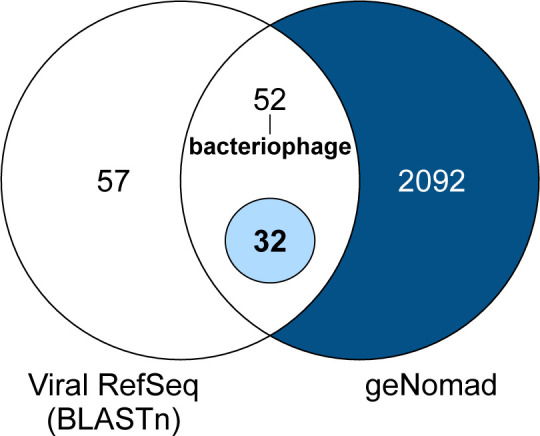 Fig 1
Fig 1| Sample ID | Sample type | RefSeq reference for consensus genome | RefSeq reference accession | Length of reference (bp) | Base coverage to reference | NCBI accession of consensus genome | Top hit in GenBank | Accession | BLAST % identity |
|---|---|---|---|---|---|---|---|---|---|
| 006 | Throat | Felid |
| 135,797 | 92.6% |
| Felid |
| 99.99% |
| 029 | Rectal | Feline foamy virus |
| 11,700 | 78.8% |
| Feline foamy virus |
| 97.36% |
| 030 | Throat | Feline foamy virus |
| 11,700 | 76.9% |
| Feline foamy virus |
| 95.56% |
| 033 | Rectal | Feline foamy virus |
| 11,700 | 78.7% |
| Feline foamy virus |
| 98.03% |
| 042 | Throat | Feline foamy virus |
| 11,700 | 70.6% |
| Feline foamy virus |
| 98.34% |
| 053 | Rectal | Feline foamy virus |
| 11,700 | 78.8% |
| Feline foamy virus |
| 97.90% |
- —Laboratory Directed Research and Developmenthttp://dx.doi.org/10.13039/100007000
- —Laboratory Directed Research and Developmenthttp://dx.doi.org/10.13039/100007000
Peer Reviews
No public reviews on file for this paper yet. If you reviewed it on a platform where reviews are public (OpenReview, ICLR, NeurIPS, ICML), you can paste yours below so the community can read it here.
Videos
No videos yet. Explain this paper in a talk, walkthrough, or lecture? Add one.
Taxonomy
TopicsHerpesvirus Infections and Treatments · Virus-based gene therapy research · HIV Research and Treatment
ANNOUNCEMENT
Domestic cats (Felis catus) are in close contact with humans as household pets and can carry various pathogens. Spillover events can occur from cats to humans, but reverse zoonotic transmission from humans to cats is also reported (1, 2). Viral diversity in domestic cats should be actively monitored using unbiased diagnostic tools, such as metagenomics.
We collected rectal and throat swabs from Companions Animal Clinic in Merrick, NY, between April and August 2020 from 33 domesticated cats (31 household cats, two strays) and collected two rectal and throat swabs from one cat visiting the clinic twice, totaling 70 samples. Swabs were placed in Viral Transport Media (VTM; ThermoFisher Scientific), frozen, and shipped to Los Alamos, NM for sequencing. Total nucleic acid was extracted from 140 µL VTM using the Qiagen QIAmp Viral RNA Mini Kit (Cat. #52904) and eluted in 60 µL AVE buffer. rRNAs were depleted from 50 µL of total RNA using the TruSeq Stranded Total RNA Library Prep Globin Kit (Illumina Cat. #20020613). Library quantification of the pool was determined using the Library Quantification Kit—Illumina/Universal Kit (KAPA Biosystems, KK4824), which was sequenced on NextSeq 500 High Output flow cells to generate approximately 50 million paired-end 151 bp reads for each sample using NextSeq 500 High Output Kit v2.5 (300 cycles) (Illumina, Cat. #20024908).
For each sample, we QCed reads using FaQCs v2.09 (3), then mapped them against the Felis catus reference genome (GCF_018350175.1) using Bowtie2 v2.5.2 (4). The unmapped reads were de novo assembled using MEGAHIT v1.2.9 (5), creating 559,288 contigs. We selected 45,368 contigs of 1 kb or larger and processed them through geNomad v1.1.0 end-to-end mode (6), which classified 2,176 contigs as viruses. We also compared these 45,368 contigs against NCBI’s Viral RefSeq database (accessed 9 May 2024), resulting in 141 contigs with significant BLAST hits to viruses (percent identity >80%; linear coverage >0.5). Eighty-four of these were also classified as viruses by geNomad, including 32 non-bacteriophages (Fig. 1). We focused on recovering longer consensus genomes from 12 samples that contained the 32 contigs by mapping reads to their top RefSeq hits using minimap2 v2.24 (7) in EDGE Bioinformatics (8). If more than 50% of a reference genome was covered and the recovered consensus genome had less than 50% ambiguous bases, the genome was deposited in GenBank and was taxonomically classified by performing a BLASTn search against the entire GenBank database (accessed 29 May 2025).
Summary of viral contig annotation. Venn diagram of BLASTn-based and geNomad-based viral taxonomy annotations for assembled contigs (≥1,000 bps).
We report six consensus genomes representing two viral species, including one cat pathogen (felid alphaherpesvirus 1) and one non-pathogenic cat virus (feline foamy virus [FFV]) (Table 1). Felid alphaherpesvirus 1 is a highly contagious pathogen of domestic cats and wild felids and causes upper respiratory tract disease (9). Among the five FFVs, they were 94.4%–100% similar to each other. This study offers an overview of viral diversity in urban domestic cats, providing viral genome sequences, including one cat pathogen, as a resource for future feline virome studies.
The reference list from the paper itself. Each links out to its DOI / PubMed record.
- 1Gerhold RW, Jessup DA. 2013. Zoonotic diseases associated with free-roaming cats. Zoonoses Public Health 60:189–195. doi:10.1111/j.1863-2378.2012.01522.x 22830565 · doi ↗ · pubmed ↗
- 2Barrs VR, Peiris M, Tam KWS, Law PYT, Brackman CJ, To EMW, Yu VYT, Chu DKW, Perera RAPM, Sit THC. 2020. SARS-Co V-2 in quarantined domestic cats from COVID-19 households or close contacts, Hong Kong, China. Emerg Infect Dis 26:3071–3074. doi:10.3201/eid 2612.20278632938527 PMC 7706951 · doi ↗ · pubmed ↗
- 3Lo C-C, Chain PSG. 2014. Rapid evaluation and quality control of next generation sequencing data with Fa Q Cs. BMC Bioinformatics 15:366. doi:10.1186/s 12859-014-0366-225408143 PMC 4246454 · doi ↗ · pubmed ↗
- 4Langmead B, Salzberg SL. 2012. Fast gapped-read alignment with Bowtie 2. Nat Methods 9:357–359. doi:10.1038/nmeth.192322388286 PMC 3322381 · doi ↗ · pubmed ↗
- 5Li D, Liu C-M, Luo R, Sadakane K, Lam T-W. 2015. MEGAHIT: an ultra-fast single-node solution for large and complex metagenomics assembly via succinct de Bruijn graph. Bioinformatics 31:1674–1676. doi:10.1093/bioinformatics/btv 03325609793 · doi ↗ · pubmed ↗
- 6Camargo AP, Roux S, Schulz F, Babinski M, Xu Y, Hu B, Chain PSG, Nayfach S, Kyrpides NC. 2024. Identification of mobile genetic elements with ge Nomad. Nat Biotechnol 42:1303–1312. doi:10.1038/s 41587-023-01953-y 37735266 PMC 11324519 · doi ↗ · pubmed ↗
- 7Li H. 2018. Minimap 2: pairwise alignment for nucleotide sequences. Bioinformatics 34:3094–3100. doi:10.1093/bioinformatics/bty 19129750242 PMC 6137996 · doi ↗ · pubmed ↗
- 8Li P-E, Lo C-C, Anderson JJ, Davenport KW, Bishop-Lilly KA, Xu Y, Ahmed S, Feng S, Mokashi VP, Chain PSG. 2017. Enabling the democratization of the genomics revolution with a fully integrated web-based bioinformatics platform. Nucleic Acids Res 45:67–80. doi:10.1093/nar/gkw 102727899609 PMC 5224473 · doi ↗ · pubmed ↗