Polycystic ovary syndrome (PCOS) management using a nutrition recommender mobile application: identifying key requirements
Fahimeh Solat, Sharareh Rostam Niakan Kalhori, Goli Arji, Meysam Rahmani Katigari, Jebraeil Farzi, Mobina Zeinalabedini, Leila Shahmoradi, Leila Azadbakht

TL;DR
This paper explores the development of a mobile app to help manage PCOS through personalized nutrition recommendations, focusing on identifying essential app features.
Contribution
The study identifies key requirements for a scientifically validated PCOS nutrition recommender app based on expert and stakeholder input.
Findings
75 items across four categories were identified for the app's design and content.
56 items were prioritized for inclusion based on content validity ratio analysis.
Expert validation confirmed the reliability of the questionnaire with a Cronbach’s alpha of 74%.
Abstract
Polycystic Ovary Syndrome (PCOS) is a complex endocrine disorder that affects 5–18% of women worldwide. Adopting a healthier lifestyle, especially by making nutritious dietary choices, can significantly improve the management of symptoms and reduce complications associated with this condition. Despite the growing number of mobile health (mHealth) applications, most existing tools for PCOS lack scientific validation and dietary recommendations. This study aims to identify key requirements for developing a nutritional recommender mobile application for PCOS management. This cross-sectional study was conducted in three stages: (1) Systematic review of articles and review of available mobile applications, (2) Data collection tool design, and (3) Validation of mobile application requirements based on the opinion of experts to provide nutritional recommendations for individuals with PCOS.…
Genes, proteins, chemicals, diseases, species, mutations and cell lines named across the full text — each resolved to its canonical identifier and authoritative record.
Click any figure to enlarge with its caption.
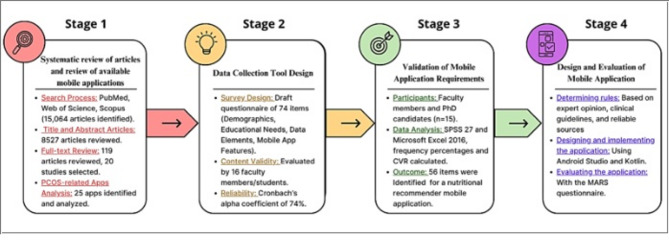 Figure 1
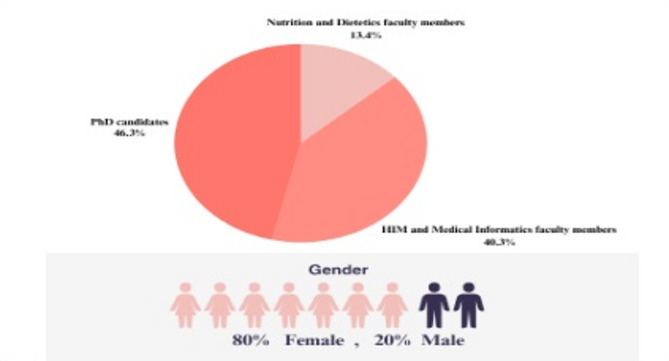 Figure 2
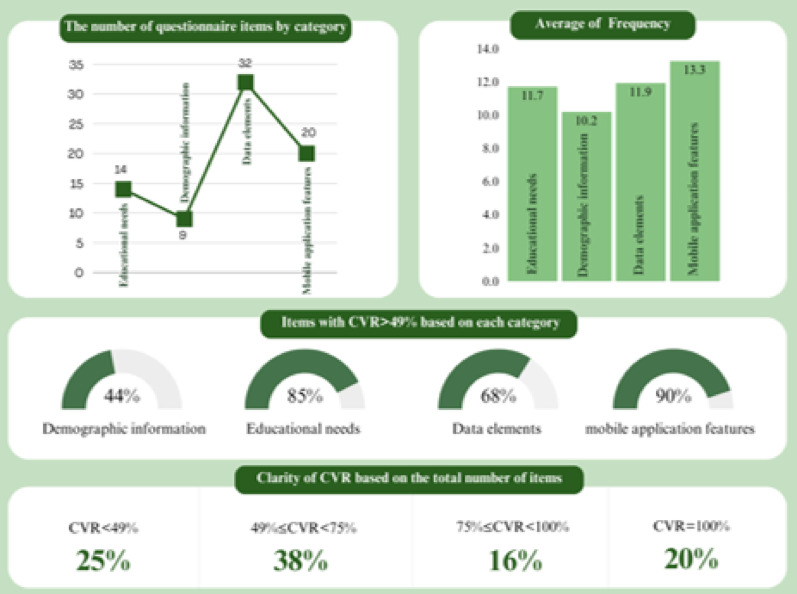 Figure 3
Peer Reviews
No public reviews on file for this paper yet. If you reviewed it on a platform where reviews are public (OpenReview, ICLR, NeurIPS, ICML), you can paste yours below so the community can read it here.
Videos
No videos yet. Explain this paper in a talk, walkthrough, or lecture? Add one.
Taxonomy
TopicsMobile Health and mHealth Applications · Ovarian function and disorders
Introduction
Polycystic Ovary Syndrome (PCOS) is a complex hormonal disorder that affects 5–18% of women globally [1]. This syndrome is characterized by irregular ovulation, obesity, insulin resistance, and the formation of ovarian cysts [2]. In addition to increasing the risk of reproductive issues such as infertility, ovarian disorders, endometrial cancer, and early menopause, those affected by PCOS are also at heightened risk for mental health challenges, including depression, low self-confidence, and anxiety [3]. Furthermore, these patients may face a range of metabolic disorders, such as hypertension and cardiovascular diseases [4].
Changing patients’ lifestyles is considered the first step of treatment for these individuals. Regular physical activity, maintaining a healthy weight, avoiding smoking, and following a diet should be prioritized in lifestyle modifications [6]. A low Glycemic Index (GI) diet, a reduction in saturated fats, and increased fiber intake can effectively reduce inflammation and body fat while helping to stabilize blood sugar levels [7]. Therefore, adhering to a healthy eating pattern is crucial for regulating blood sugar and body fat, which helps manage this syndrome [5].
The use of mobile applications with recommendation features for addressing health-related issues, promoting lifestyle changes, and enhancing overall wellness has gained traction as a viable solution. Some apps focusing on diet management, physical activity tracking, and mental health support have shown positive effects on user engagement and health outcomes [21]. One of the technologies utilized in the healthcare field is the Clinical Decision Support System (CDSS), which assists various users in diagnosing and treating diseases [6]. A recommender system is a type of CDSS that simplifies the decision-making process by suggesting the best options based on the user’s preferences and individual circumstances [22]. The results of a previous study showed that CDSS has a positive impact on nutrition and quality of life for people with PCOS [5].
The design of mobile applications for customizable care is crucial, as these tools enable users to tailor care services based on their individual needs and preferences [8, 9]. This customization can encompass selecting schedules, types of services, and specific geographic areas [10, 11]. By utilizing user-friendly applications, individuals can easily and quickly respond to their needs, gaining a greater sense of control over the care they receive [12]. Additionally, analyzing the data collected through these applications can help service providers enhance the quality of services and improve the overall user experience. Therefore, well-designed applications not only improve user interaction with medical and caregiving services but can also lead to a better quality of life [13–16]. Thorough evaluation of mobile applications in the context of customizable care is essential, as this process helps identify both the strengths and weaknesses of the applications, fostering continuous improvement in user experience [17, 18]. Furthermore, evaluations can provide developers with valuable insights into the actual needs and preferences of users, enabling them to deliver better services and increase user satisfaction [19, 20].
Given the widespread use and capabilities of mobile phones in communities, developing a mobile application specifically for patients with polycystic ovary syndrome (PCOS) can be highly effective. However, many existing apps related to PCOS have faced criticism for lacking evidence-based content, expert involvement, and user validation [6]. So, we did four-step research. A systematic review we previously conducted (step one) found that although there are numerous programs available, few have been developed using rigorous frameworks or have been validated by stakeholders. Also, few of these provide dietary recommendations. To address these gaps, the current study focuses on steps two and three of a multi-step research plan. These steps involve data collection tool design and Validation of mobile application requirements on the basis of the opinions of experts specifically tailored to PCOS management. Unlike prior studies, this work combines expert knowledge with structured analysis to ensure that app development is more systematic and scientifically grounded. The validated requirements produced in this study will guide the future design and evaluation of a mobile application (step four) aimed at improving self-care and patient engagement for those with PCOS.
To address these issues, we conducted a four-step research process. In the first step, a systematic review revealed that while numerous programs are available, few have been developed using rigorous frameworks or validated by stakeholders. Additionally, very few of these apps provide dietary recommendations. The current study focuses on steps two and three of our multi-step research plans. These steps involve designing data collection tools and validating the mobile application requirements based on the opinions of experts specifically tailored to PCOS management. Unlike previous studies, this research combines expert knowledge with structured analysis to ensure that app development is systematic and scientifically grounded. The validated requirements produced in this study will guide the future design and evaluation of a mobile application aimed at improving self-care and patient engagement for individuals with PCOS.
Related works
This study reviews various mHealth interventions aimed at promoting lifestyle changes, specifically for women with polycystic ovary syndrome (PCOS). The outcomes measured include Body Mass Index (BMI) as well as clinical, metabolic, and hormonal parameters. The findings indicate that following a healthy diet al.one can lead to a significant reduction in BMI. However, one major limitation of this study is the small number of studies available that demonstrate the effectiveness of lifestyle modifications in patients with PCOS, highlighting the need for further research to confirm these results [7]. The research also evaluates the impact of a smartphone app designed to assist with lifestyle modifications, focusing on dietary choices and exercise improvements for managing PCOS. According to the results, mobile applications that provide personalized support, accessibility, and affordability can help alleviate caregiving challenges for women with PCOS. Nevertheless, more research is required to explore the long-term effects of such interventions [8]. The primary objective of this study was to identify the essential features for applications aimed at training and facilitating self-care for patients with PCOS. To achieve this, we distributed a specially designed questionnaire among 45 patients and 17 doctors at the Fatemieh Educational and Medical Center in Hamedan. The limitations of the study included a restricted statistical population of patients from Hamedan and a lack of cooperation from some doctors and patients [9].
Recent surveys indicate that while self-care applications have been developed, there is a notable absence of tools specifically focused on modifying dietary habits and providing practical recommendations in Iran. Furthermore, most existing programs do not sufficiently emphasize nutrition.
Materials and methods
This cross-sectional study was conducted in three stages: (1) Systematic review of recommender systems [5] and available mobile applications, (2) Data collection tool design, and (3) Validation of mobile application requirements was performed on the basis of the opinions of experts to provide nutritional recommendations for individuals with PCOS (Fig. 1).
During the preparation of the study, the authors used “Grammarly” to fix grammar and writing problems. After using this tool, the authors reviewed and edited the content as needed and took full responsibility for the content of the publication.
Fig. 1. Study methodology at a glance
First stage: systematic review of articles and review of available mobile applications
A study titled “Nutritional Management Recommendation Systems in PCOS: A Systematic Review” was conducted at this stage. After defining the entry and exit criteria, the research team searched PubMed, Web of Science, and Scopus, identifying a total of 15,064 articles. Of these, 8,408 articles were excluded based on the inclusion and exclusion criteria. The remaining 119 articles underwent a full-text review, resulting in the selection of 20 studies. The research team extracted relevant data, including publication details and study findings [5]. Additionally, we examined 25 applications related to PCOS available on the Google Play Store, Galaxy Store, and Apple App Store. We searched for the terms “PCOS” and “polycystic ovary syndrome,” identifying and analyzing the 25 PCOS-related applications from these major app stores, while documenting their key features and relevance.
Second stage: data collection tool design
Based on the results from the previous stage and feedback from experts, a questionnaire was created consisting of 75 items. We evaluated its validity by consulting five experts: two in nutrition and diet therapy and three in health information management at Tehran University of Medical Sciences. Content modifications were made based on their input. The reliability of all sections of the questionnaire was confirmed with a Cronbach’s alpha coefficient of 0.74.
Third step: validation of mobile application requirements on the basis of the opinions of experts
At this stage, the study included six faculty members from health information management and medical informatics, two faculty members from nutrition and diet therapy, and seven PhD candidates in nutrition and diet therapy.
In needs assessment studies, particularly those utilizing purposive or convenience sampling, smaller sample sizes can effectively uncover key themes and user priorities [10]. Participants were selected for their direct experience with PCOS care and digital health, ensuring that the findings remain pertinent despite the limited number of participants.
Once the questionnaires were collected, the data were input into SPSS 27 and Microsoft Excel 2016. We calculated the frequency percentage and the Content Validity Ratio (CVR) for each item, removing any unnecessary items from the analysis. According to Lawshe’s criteria for CVR analysis, when there are 15 experts involved, the acceptable CVR for a data element is 0.49 [11]. Ultimately, we identified the requirements needed to design and develop a nutritional recommender mobile application.
Fourth step: design and evaluation of mobile application
Based on the results of this study, a nutrition recommendation application has been developed for individuals with PCOS. The methodology used in this phase will be detailed in a future study. It is important to note that the application was designed using the programming language Kotlin and the Visual Studio Code editor.
Results
Systematic review of articles and review of available mobile applications
The characteristics of the studies included in the initial stage of our research have been documented in a systematic review article [5]. We examined 25 applications related to PCOS. The general and specific features of these applications are presented in Table 1. Overall, most of the applications focus on lifestyle modifications for individuals affected by PCOS, offering tools to monitor physical activity, nutrition, and sleep. With respect to food recommendations, the majority guided healthy eating through videos, text, and educational materials. However, only two applications offered a specific meal plan.
Table 1. General and specific characteristics of related applicationsNameDeveloperAccess linkPurposeYearFree or paidFunctional requirementThematic communicationEducationDiagnosisManagementFreeIn-app paymentFeedingSelf-carePolycystic ovary syndromePCOS TrackerHello PCOS https://pcostracker.app/ 2019*Pedometer, Connecting to a smartwatchCysterhoodPCOS weight loss https://pcosweightloss.org/enroll-cysterhood-membership/ 2022Communication with other patients, Gluten-free recipes, Sports exercisesPCOSPCOS fertility nutrition https://pcosfertilitynutrition.com/ 2022Educational materials about proper nutrition, stress control, and lifestyle in the form of text, podcast, and videoUvi HealthUvi health https://uvihealth.in/ 2021Menstrual tracking, Consultation with Indian doctors, Interactive and live sports training, Meal plansPCOS DietEdutainment ventures https://www.edutainmentventures.com/ 2022*Articles related to nutrition, cooking training channels, cooking video tutorials, Sleep and water drinking trackers, Pedometers, Calorie counters, BMI calculatorSocial boatSocial boat https://www.socialboat.live/ 2022Lose weight with a diet plan, weight tracking and Health recommendationsCycleSeashore https://www.cicle.health/ 2021Menstrual period tracker, Monthly Calendar, RemindersClueHello clue https://helloclue.com/ 2014Menstrual period tracker, Pregnancy follow-upAsk PCOSAsk PCOS https://www.askpcos.org/ 2021The possibility of self-diagnosis of the disease, Tracking symptoms, personal dashboardnatural CyclesFDA https://www.naturalcycles.com/ 2014Body temperature tracking, ovulation and pregnancy tracker, menstrual cycle trackerNabtaNabta health https://nabtahealth.com/ 2020Order a blood test at home, menstrual cycle managementPCOS 1Panchanite jas https://drzio.com/ 2021*Yoga training, daily diet tracker, Exercise reminderPCOS And PCOD HelpOneLife2Care https://www.onelife2care.com/ 2021Providing a daily meal planPCOS Revolution Lifestyle AppTrainerize https://www.trainerize.com 2023*Sports training exercises, offer meals, Pressure reminder, Connect to wearable appsEasy PCOS Diet CookbookKevin Ton https://play.google.com/store/apps/ 2022Display a list of the GI of foodsOvieThe PCOS Nutritionist https://thepcosnutritionist.com/ovie-app/ 2023*Access to experts, interactive tests, dietary guidelines, providing sports exercisesPCOS Sisters TelehealthTrainerize https://pcossisters.trainerize.com/app/Logon.aspx 2022*Remote video visit, telephone consultationPCOSManoj Upreti https://freedomfrompcos.com/about-us.php 2021*-PolliePollie https://www.pollie.co/ 2023*Supportive care team, Access to a nutritionist, Track symptoms, trainingMayaPlackal https://www.maya.live/ 2011Menstrual cycle trackingThe PCOS PtTrainerize https://thepcospt.trainerize.com/app/Logon.aspx 2022Track meals and exercisePCOS And BlessedTrainerize https://gracefulfitness.trainerize.com/app/Logon.aspx 2022Track meals and exerciseVeera PCOSVeeraheath https://veerahealth.com/ 2021Online clinicCloverWachanga https://wachanga.com/ 2018Menstrual cycle calculator, reminder of the beginning and end of the cyclePCOS DivaKari Thorstenson https://pcosdiva.com/app/ 2023Lifestyle modification programs, planning food supplements, automatic reminder**
Data collection tool design
The draft of the questionnaire included 75 items divided into four sections: demographic information (9 items), educational needs (14 items), data elements (32 items), and mobile application features (20 items). For the final version of the questionnaire, please refer to the supplementary file provided (Table S1).
Validation of mobile application requirements on the basis of experts
The CVR was calculated for all the items. The items whose CVR was less than 0.49 were given a lower priority. The questionnaire was distributed to seven PhD candidates and eight faculty members: two (13%) from the Nutrition and Dietetics Department and six (40%) from the Health Information Management and Medical Informatics Department. Seven PhD candidates (46%) and all faculty members completed the questionnaire with satisfaction. Figure 2 presents the demographic characteristics of the respondents.
Fig. 2demographic characteristics of the respondents
In the second column of Table 2, the frequency and percentage of responses are listed According to respondents. Figure 3 shows the questionnaire results. 25% of the items had a CVR of less than 49%, which highlights the low necessity of these items to design and create mobile applications. Only 20% of the items were recognized as essential by all the experts (CVR = 100%). The other questionnaire items were in the range of 49–100%, which highlights the importance of these items.
In the category of educational needs, the average response frequency was 11.7. Among the 14 items assessed, 12 items (85%) were identified as highly necessary (with a Content Validity Ratio, or CVR, of 49% or higher). The items “news from Iran’s PCOS society” and “experiences of patients with PCOS” were classified as low necessity and therefore excluded.
The category of demographic information had the lowest average response frequency, at 10.2. Experts recognized five items (55%) in this category as low necessity, which were subsequently removed. However, the items “age,” “weight,” “height,” and “name and family name” had suitable CVR values (CVR ≥ 49%) and were selected for inclusion.
In the data elements category, the average frequency was 11.9. CVR calculations indicated that 22 items (69%) were deemed highly necessary for the design and development of the mobile application. Ten items (31%) were identified as low necessity and were removed.
The mobile application features category had the highest average frequency at 13.3, indicating strong consensus among the experts regarding these features. Out of 20 items in this category, 18 items (90%) had a CVR value of at least 49%, while items with CVR values below 49%, such as “ability to recommend medication” and “ability to recommend food supplements,” were considered low necessity and were excluded.
Table 2. Items extracted from the questionnaireCategoryItems of each categoryCVRFrequency(percentage)low-necessityEducational needsPCOS and its types73%13 (87%)Cause, symptoms of PCOS73%13 (87%)Risk factors for PCOS73%13 (87%)Common problems of PCOS patients60%12 (80%)The importance of a healthy diet100%15 (100%)Smoking60%12 (80%)Fluid intake70%8 (53%)The importance and purpose of self-care in illness73%13 (87%)The importance of physical activity100%15 (100%)The importance of stress control60%12 (80%)News of Iran’s PCOS society−20%6 (40%)*Ways to diagnose the disease73%13 (87%)Types of disease treatment73%13 (87%)Experiences of patients with PCOS−20%6 (40%)*Demographic informationAge100%15 (100%)Weight100%15 (100%)Height100%15 (100%)Race−33%5 (33%)*Place of residence−7%7 (47%)*Job20%9 (60%)*Level of education20%9 (60%)*Name and family name70%8 (53%)Contact number20%9 (60%)*Data elementsBlood group33%10 (67%)*Existence of stress and anxiety60%12 (80%)Heavy bleeding during menstruation−7%7 (47%)*Duration of diagnosis73%13 (87%)Patient symptoms (acne, facial hair, Hair loss, oily skin, the presence of dark spots skin)87%14 (93%)Current medications and dosage100%15 (100%)Drug sensitivity100%15 (100%)Comorbidities such as diabetes and hypertension87%14 (93%)Records of family diseases73%13 (87%)Hospitalization records100%15 (100%)Surgical interventions100%15 (100%)Fluids consumed daily87%14 (93%)Blood test history (LH, FSH, SHBG, PRL, PRGc)70%8 (53%)Menstrual history70%8 (53%)History of alcohol use73%13 (87%)History of urinalysis60%12 (80%)History of ovarian checkup100%15 (100%)The size of the ovaries33%10 (67%)*History of sports and physical activity20%9 (60%)*History of smoking and tobacco use100%15 (100%)History of heart rate and blood pressure87%14 (93%)Body weight history−7%7 (47%)*Blood glucose history−7%7 (47%)*Record body temperature20%9 (60%)*Daily urination100%15 (100%)Food sensitivities100%15 (100%)Fast food consumption33%10 (67%)*Amount of fruit and vegetable consumption per day47%11 (73%)*Food preferences73%13 (87%)Favorite foods87%14 (93%)Length of menstrual cycle−7%7 (47%)*The amount of physical activity73%13 (87%)Mobile application featuresAbility to recommend medication47%11 (73%)*The ability to remember the drug used73%13 (87%)Ability to recommend food supplements33%10 (67%)*Ability to warn about drug side effects73%13 (87%)Ability to recommend drug dosage100%15 (100%)The ability to display the name of the forgotten drug87%14 (93%)Ability to warn about drug interactions87%14 (93%)Ability to recommend meals87%14 (93%)The possibility of recommending the elimination of harmful foods73%13 (87%)The possibility of recommending foods based on the glycemic index87%14 (93%)Ability to recommend drinks87%14 (93%)The possibility of recommending food alternatives73%13 (87%)Ability to recommend healthy snacks73%13 (87%)Ability to recommend meals based on weight73%13 (87%)The possibility of recommending meals based on the symptoms of the disease100%15 (100%)The possibility of communication with specialists and nutrition experts87%14 (93%)Ability to store information on a central database87%14 (93%)Ability to display cooking instructions60%12 (80%)Ability to calculate BMI73%13 (87%)Ability to count steps73%13 (87%)
Figure 3 analyzes questionnaire items across four categories: Educational Needs, Demographic Information, Data Elements, and Mobile Application Features. Most items in the “Mobile Application Features” (90%) and “Educational Needs” (85%) categories were validated with a CVR above 49%. In contrast, only 44% of items in the “Demographic Information” category met this criterion. 25% of all items had a CVR below 49%, while 20% achieved full agreement with a CVR of 100%.
Fig. 3. Analysis of the questionnaire data
The Pearson correlation coefficient was used to measure the correlation between different categories of the questionnaire. The results shown in Table 3 indicate significant positive correlations among the four sections of the questionnaire. Section one exhibits statistically significant correlations with Category Two (r = 0.647), Category Three (r = 0.622), and Category Four (r = 0.620), all at the 0.05 significance level. This suggests that participants who scored higher in Category One also tended to score higher in the other categories.
Additionally, Category Two has a strong and significant correlation with Category Three (r = 0.685, p = 0.005), while its correlation with Category Four (r = 0.409, p = 0.130) is not statistically significant. This may indicate a conceptual or structural difference between Categories two and four that warrants further investigation or revision. Lastly, Category Three and Category Four are positively correlated with a significance level (r = 0.537, p = 0.039).
Overall, the results demonstrate acceptable internal consistency among most categories of the questionnaire; however, the non-significant correlation between Category Two and Category Four highlights a potential area for improvement.
Table 3. Correlations among the four categories of the questionnaireAverage of Cat 1Average of Cat 2Average of Cat 3Average of Cat 4Average of Cat 1Pearson Correlation10.6470.6220.620Sig. (2-tailed)–0.0090.0130.014N15151515Average of Cat 2Pearson Correlation0.64710.6850.409Sig. (2-tailed)0.009–0.0050130N15151515Average of Cat 3Pearson Correlation0.622*0.68510.537Sig. (2-tailed)0.0130.005–0.039N15151515Average of Cat 4Pearson Correlation0.6200.4090.5371Sig. (2-tailed)0.0140.1300.039–N15151515** Correlation is significant at the 0.01 level (2-tailed) Correlation is significant at the 0.05 level (2-tailed)
Design and evaluation of the mobile application
The findings from this step will be detailed in a future study. This mobile application offers general recommendations based on clinical guidelines.
Discussion
To design a user-friendly self-care application with maximum efficiency, it is necessary to identify the content of this mobile-based application scientifically. For this purpose, a systematic review of CDSSs in the field of PCOS and designed mobile-based applications is needed [12–18]. While the first step of our research, previously published, focused on a systematic review of the literature and existing mobile applications related to PCOS [5], the current study advances the process by addressing steps two and three. These steps involve the development of a structured needs assessment tool and the validation of app requirements through expert input. The findings offer a practical and evidence-informed foundation that will directly support the design and evaluation of a user-centered mobile application in the next phase of the research. In the current study, we identified the requirements for designing a mobile application aimed at providing nutritional recommendations. These requirements were categorized into four groups: demographic information, data requirements, educational needs, and application capabilities. Out of the 75 identified items, 56 were determined to be essential for the application.
Key features of the application included recommending meals, food supplements, and foods based on their glycemic index (GI), all of which align with the functionality of existing applications. New features were also introduced, such as recommending food alternatives, suggesting meals based on disease symptoms, providing meal recommendations based on weight, suggesting drinks, advising on the elimination of harmful foods, and recommending healthy snacks. These enhancements could significantly improve the nutrition recommendation application.
In the study regarding educational needs, it was found that all items, except for “news of the Iran PCOS Society” and “experiences of patients with PCOS,” were considered necessary by the experts. The expert panel rated these two items as low-necessity, likely due to their limited direct impact on dietary behavior change or personal health management, which were the primary focus areas of our proposed application. In the study conducted by Sheikh Taheri et al. [9], an application with a self-care approach was developed based on two major requirements: educational needs and necessary skills. Among the 28 educational components, “causes of disease” were deemed unnecessary. However, in the present study, experts identified this component as necessary (CVR = 73%). Hajivandi et al. [19] reported that promoting healthy nutritional behaviors through an educational intervention program can improve the nutritional health of individuals with PCOS. Our study identified several essential educational needs related to PCOS, emphasizing the importance of prevention and healthy eating.
In the study conducted by Sinem Aslan et al. [20], deep learning algorithms were used to accurately estimate the caloric content of various foods. The researchers concluded that calorie counting should be excluded from the application, as they observed a decline in specialist referrals and an increase in false therapeutic beliefs related to calorie counting. Consequently, this feature was removed from the questionnaire. In the current study, 18 essential features for the mobile application were identified. Experts indicated that seven items related to drug consumption were considered less necessary.
In the study conducted by Sheikh Taheri et al. [9], similar to our current research, there was no section dedicated to providing drug recommendations. However, six essential items focused on managing drug consumption were included. Additionally, Rajdeep Kaur et al. [21] mployed Convolutional Neural Networks (CNN) to identify nutrients in food, suggesting that this approach could help patients with PCOS consume essential nutrients. In contrast, our study did not utilize any algorithms or AI techniques; instead, we focused on identifying the necessary features for designing and developing a nutrition recommendation system. We identified nine features related to food consumption that align with the objectives outlined by Rajdeep Kaur et al. [21], such as healthy food recommendations, advice for eliminating unhealthy foods, and dietary suggestions based on digestive health, symptoms, and body weight.
In another study, Rajdeep Kaur et al. [22] developed an artificial intelligence framework to help manage weight in patients with PCOS. In the research conducted by Sheikh Taheri et al. [9], it was noted that, in terms of nutrition and diet management, certain capabilities, such as “registration of daily food consumption” and “the ability to compare nutritional status with set goals,” need further investigation. However, the study did not provide specific nutritional recommendations tailored to the patient’s condition. In this study, we aimed to identify the essential requirements for designing a nutritional recommendation system that can guide patients in adopting a healthy eating pattern. Effectively managing eating habits can aid in weight management for these patients and also improve other symptoms and complications associated with PCOS.
In one study, Shanmugavadivel et al. [23] developed an AI-based diagnostic system for classifying patient and healthy referrals. This study used two types of clinical datasets and ultrasound image sets. According to the performance evaluation of machine learning models, the Support Vector Machines (SVM) model achieved the highest accuracy with 94.44%. The most important clinical features extracted were follicles, hair growth, weight gain, and ultrasound images for automatic diagnosis. This study proved that these diagnostic methods reduce the number of clinical tests and workload and save time. In the present study, our goal was to determine the requirements for the design and development of a recommender system focusing on patient nutrition, while the goal of the study above was to create a diagnostic system for PCOS patients. The use of SVM and machine learning models was also seen in other similar studies for prediction and classification. Zad et al. [24] proposed a machine learning approach (including SVM) for PCOS prediction using patient health records. Rajpurkar et al. [25] demonstrated the application of deep learning and SVM in diagnostic image classification for pneumonia detection. Esteva et al. [26] used machine learning models for skin cancer classification, showing comparable performance to dermatologists. The use of AI (such as SVM) in this study has not yet been implemented, but the studies [27] show that it has potential in PCOS-related applications.
Our study stands out due to its specific focus on “nutrition,” which distinguishes it from similar research, such as the studies conducted by Percy et al. [10]. In their work, nutrition is often considered just one aspect of a broader lifestyle. In contrast, our paper presents a more innovative approach by emphasizing nutrition as the primary focus for women with polycystic ovary syndrome (PCOS).
In terms of methodology, utilizing health experts through the Delphi method or a specialized survey with a needs assessment approach aligns with the strategy of Muhamad Jamil et al. [28], thereby reinforcing the scientific validity of the study. Similar to our study, this study used the CVR index and expert opinion. Our recommendations align with related studies [29, 30] regarding user interface simplicity.
Study limitations: This study has several limitations. Notably, it lacks real user (patient) involvement, and it employs a cross-sectional design. In similar studies focused on needs assessment in program development, researchers typically start by gathering input from health professionals before moving on to later stages [31]. Like previous mHealth design studies [32], we used a cross-sectional approach in the needs assessment phase. This approach is commonly applied in early-stage development to identify user and expert requirements before proceeding to the prototyping and validation phases. The academic levels of the respondents—faculty members versus PhD students—may contribute to differing viewpoints. Faculty members often rely on years of clinical or teaching experience, while PhD candidates typically offer fresher perspectives influenced by recent literature or exposure to digital health. While this diversity can enrich our findings, we acknowledge that it may also introduce biases stemming from different perspectives. For future studies, a longer duration should be considered, along with the inclusion of expert and patient feedback, to ensure that the minimum necessary data are collected more accurately.
Conclusion
In this study, we identified 56 essential requirements in four categories for designing and developing a nutrition recommender mobile application for patients with PCOS, based on expert opinions. Given the rise in smartphone usage in recent decades, this study serves as a practical guide for nutritionists, researchers, and developers of health-focused mobile applications.
The reference list from the paper itself. Each links out to its DOI / PubMed record.
- 1Singh S, Pal N, Shubham S, Sarma DK, Verma V, Marotta F et al. Polycystic ovary syndrome: etiology, current management, and future therapeutics. J Clin Med. 2023;12(4).10.3390/jcm 12041454 PMC 996474436835989 · doi ↗ · pubmed ↗
- 2Lee H, Lee SH. Effectiveness of an integrated mobile application for lifestyle modifications in overweight women with polycystic ovarian syndrome: a randomized controlled trial. Life (Basel). 2023;13(7).10.3390/life 13071533 PMC 1038178737511908 · doi ↗ · pubmed ↗
- 3Chatzipavlou IA, Christoforidou SA, Vlachopoulou M. A recommended guideline for the development of m Health. Apps m Health. 2016;2.10.21037/mhealth.2016.05.01PMC 534415028293597 · doi ↗ · pubmed ↗