Disruptive behavior and emotional problems in children screened in routine health care: prevalence and effectiveness of indicated prevention
Cornelia Beate Siegmund, Julia Zink, Patricia Theresa Porst, Max Weniger, Susanne Knappe, Maria McDonald, Veit Roessner, Katja Beesdo-Baum

TL;DR
This study finds that disruptive behavior and emotional problems in children are common and impact quality of life, with prevention programs showing some effectiveness.
Contribution
The study evaluates the effectiveness of two indicated prevention programs for children with disruptive behavior and emotional problems.
Findings
37% of children showed disruptive behavior or emotional problems, linked to lower quality of life.
Children in prevention programs showed better symptom reduction and quality of life improvements compared to non-participants.
Tiger training showed clear effectiveness, while Baghira training needs further evaluation.
Abstract
Disruptive behavior and emotional problems are common in children and often reduce quality of life. This study aimed to screen for these problems and to examine the effectiveness of child-based indicated prevention. N = 3231 children`s disruptive behavior and emotional problems were screened using the Strengths and Difficulties Questionnaire (SDQ) during routine pediatric health check-ups for usually 5- to 10-year old’s. We examined the prevalences of disruptive behavior and emotional problems (n = 2825) and its association with quality of life (KINDL; n = 1104). If indicated, children were recommended to participate in the prevention program “Baghira training” (nine 90 min group sessions and one parents’ evening) or “Tiger training” (two one-on-one and nine group sessions of 60 min each). To evaluate the training effectiveness of the two indicated prevention programs, SDQ and KINDL…
Genes, proteins, chemicals, diseases, species, mutations and cell lines named across the full text — each resolved to its canonical identifier and authoritative record.
Click any figure to enlarge with its caption.
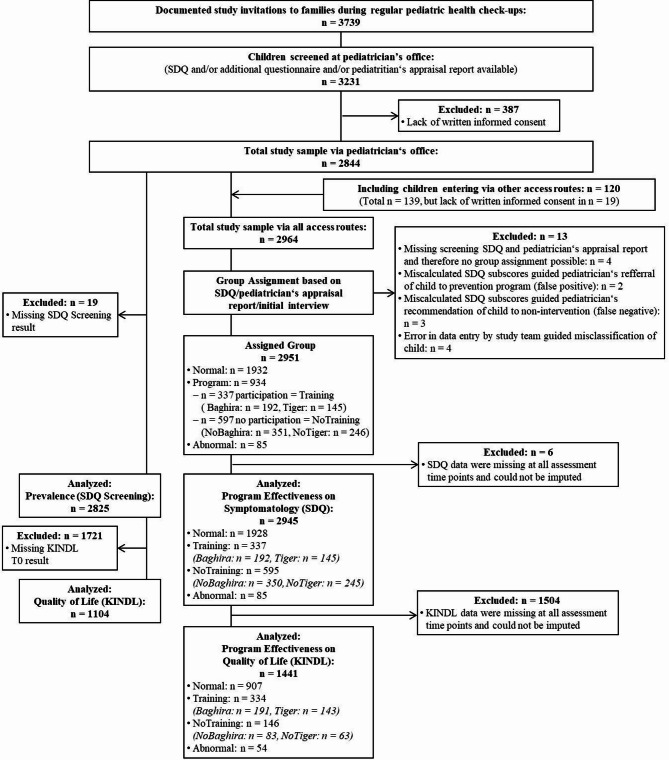 Figure 1
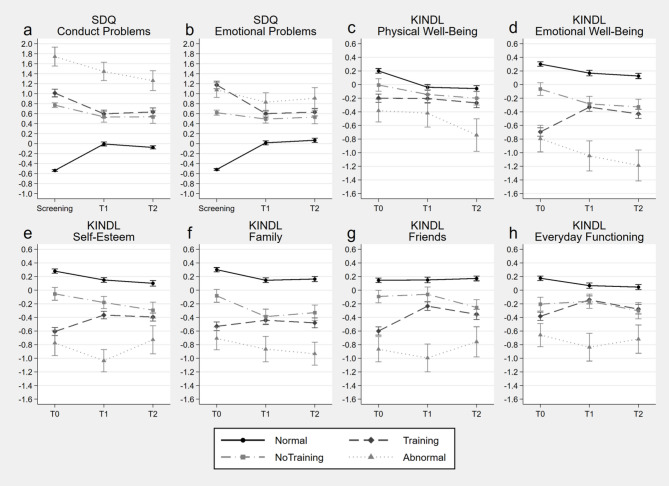 Figure 2
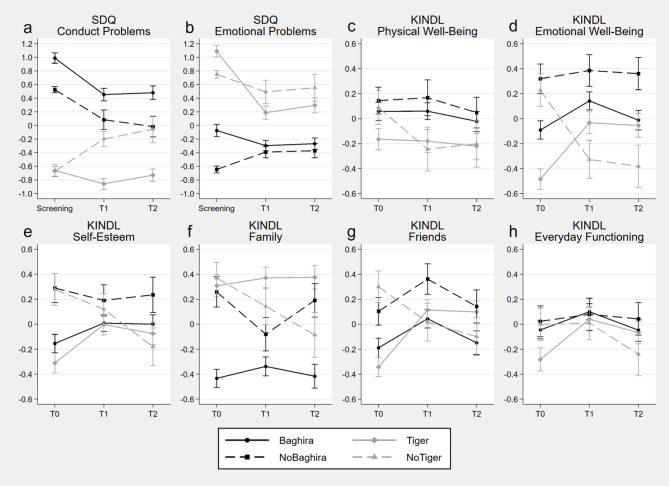 Figure 3
Peer Reviews
No public reviews on file for this paper yet. If you reviewed it on a platform where reviews are public (OpenReview, ICLR, NeurIPS, ICML), you can paste yours below so the community can read it here.
Videos
No videos yet. Explain this paper in a talk, walkthrough, or lecture? Add one.
Taxonomy
TopicsChild and Adolescent Psychosocial and Emotional Development · Child and Adolescent Health · Infant Health and Development