Acute safety, cardiovascular, perceptual and neuromuscular responses to autoregulated and non-autoregulated blood flow restriction training during elbow rehabilitation in people with hemophilia
Daniel C. Ogrezeanu, Andrea Tur-Boned, Nicholas Rolnick, Juan J. Carrasco, Carlos Cruz-Montecinos, Joaquín Calatayud, Santiago Bonanad, Sofía Pérez-Alenda

TL;DR
This study finds that autoregulated blood flow restriction training is safe and may offer better cardiovascular and muscle responses in people with hemophilia.
Contribution
First study to assess autoregulated and non-autoregulated BFR safety and responses in people with hemophilia.
Findings
Both autoregulated and non-autoregulated BFR conditions were safe for people with hemophilia.
Autoregulated BFR showed hypotensive and hypoalgesic effects and increased triceps activation.
No major differences in perceptual responses were found between the two BFR conditions.
Abstract
Low-load resistance training with concurrent blood flow restriction (BFR) provides strength and hypertrophy benefits to healthy individuals and some clinical populations. This is the first study assessing safety and physiological responses of autoregulated (AUTO) and non-autoregulated (NAUTO) BFR protocols in people with hemophilia (PWH). Therefore, this study aimed to evaluate the acute safety, cardiovascular, neuromuscular and perceptual responses during AUTO and NAUTO BFR training in PWH. Eleven severe PWH under prophylaxis performed two sessions of elbow flexion and extension using elastic bands at 50% of the limb occlusion pressure (LOP) with different BFR settings (AUTO vs. NAUTO). Safety, cardiovascular parameters, rating of perceived exertion, elbow pain and pressure algometry were assessed at different timepoints. High-density surface electromyography activity and its spatial…
Genes, proteins, chemicals, diseases, species, mutations and cell lines named across the full text — each resolved to its canonical identifier and authoritative record.
Click any figure to enlarge with its caption.
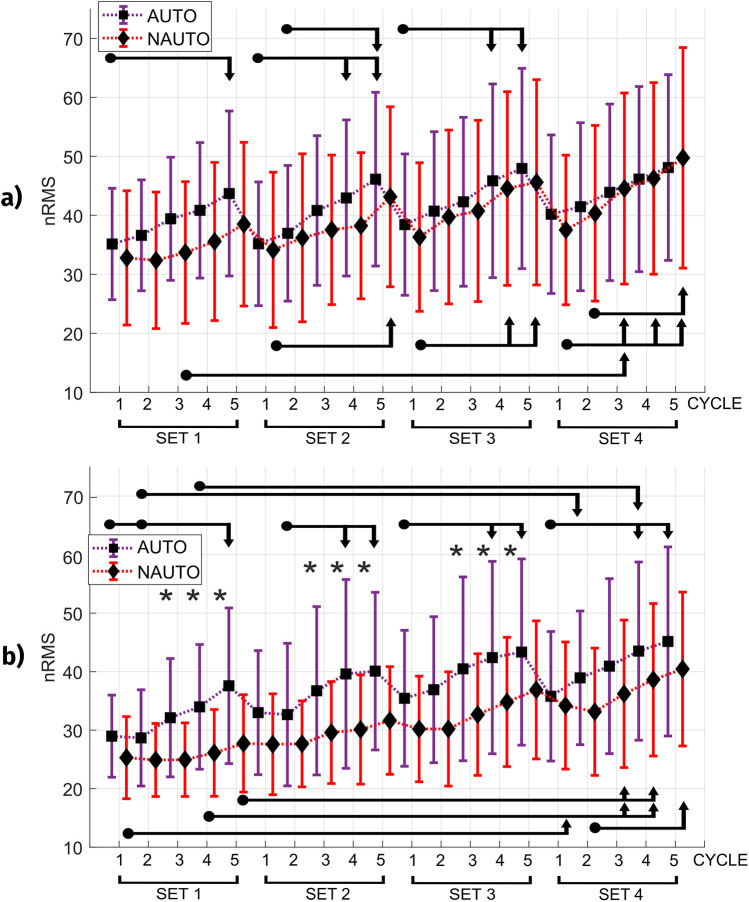 Figure 1
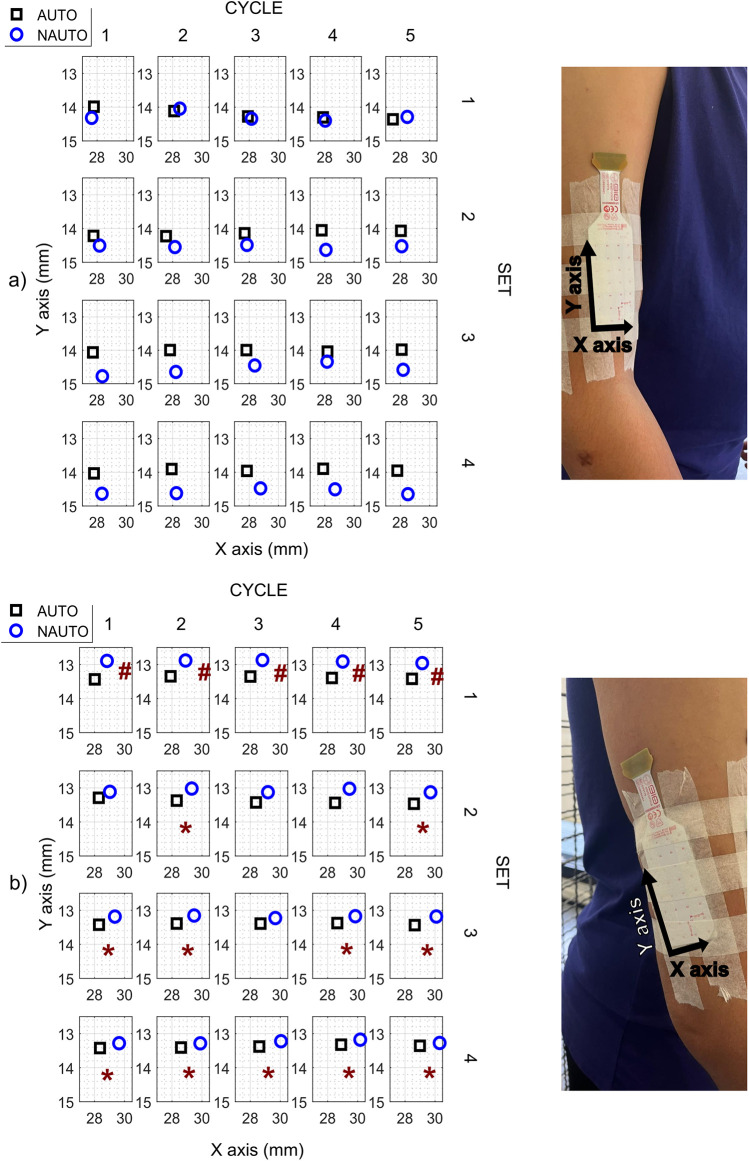 Figure 2
Peer Reviews
No public reviews on file for this paper yet. If you reviewed it on a platform where reviews are public (OpenReview, ICLR, NeurIPS, ICML), you can paste yours below so the community can read it here.
Videos
No videos yet. Explain this paper in a talk, walkthrough, or lecture? Add one.
Taxonomy
TopicsMechanical Circulatory Support Devices · Heart Failure Treatment and Management · Cardiovascular and exercise physiology