Transient Ischaemic Attacks in a Girl with Subclavian Steal Syndrome
Agnieszka Szmigielska, Michał Buczyński, Aleksandra Śledziewska, Małgorzata-Pańczyk-Tomaszewska, Mariusz Ireneusz Furmanek

TL;DR
A 10-year-old girl experienced transient neurological symptoms due to subclavian steal syndrome and a rare aortic configuration.
Contribution
This case highlights subclavian steal syndrome as a rare cause of pediatric transient ischemic attacks.
Findings
The girl had a right-sided aortic arch with an atypical cephalic vessel configuration.
Reversed flow in the left vertebral artery and stenosis in the left subclavian artery were identified.
Surgical correction was recommended for the vascular ring and subclavian artery stenosis.
Abstract
A Transient Ischemic Attack (TIA) in children results from a temporary interruption of blood flow to the brain, leading to brief neurological symptoms. The most common causes of pediatric TIA include congenital heart defects and vascular anomalies. We present a 10-year-old girl with neurological symptoms due to subclavian steal syndrome. Physical examination revealed an asymmetry in blood pressure measurements between the upper limbs, exceeding 30 mmHg. Echocardiography revealed a right-sided aortic arch (RAA) with an atypical configuration of the cephalic vessels. Ultrasound of the vertebral arteries demonstrated reversed flow direction in the left vertebral artery. CT angiography confirmed RAA and an atypical branching pattern. The left subclavian artery was narrower with critical stenosis in its proximal segment, adjacent to the origin of the ductus arteriosus. The girl was qualified…
Genes, proteins, chemicals, diseases, species, mutations and cell lines named across the full text — each resolved to its canonical identifier and authoritative record.
Click any figure to enlarge with its caption.
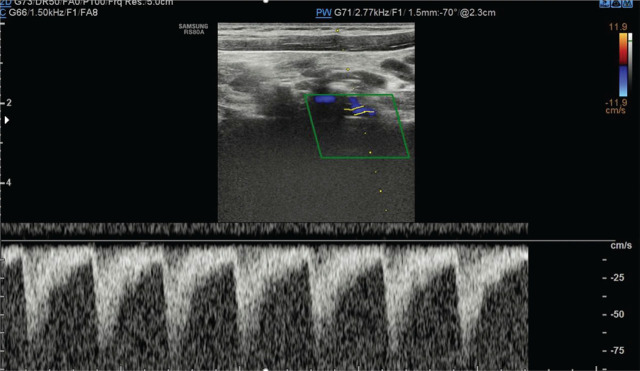 Figure 1
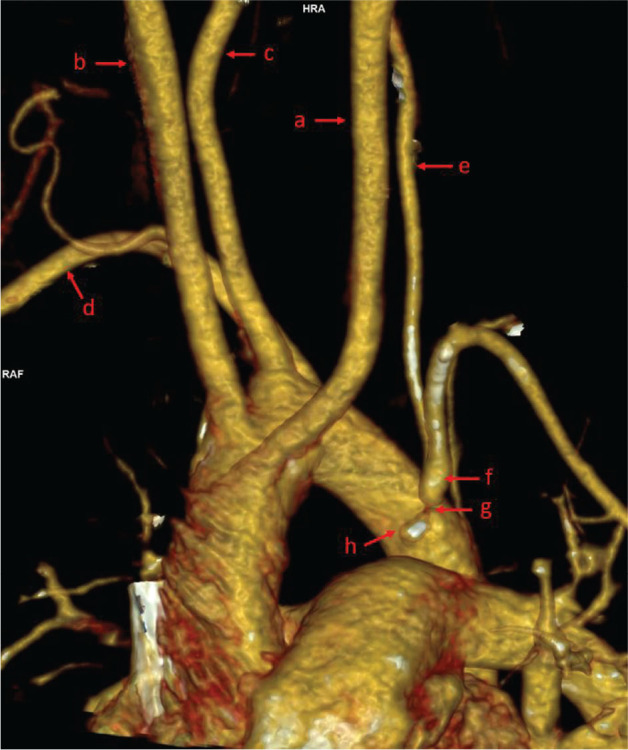 Figure 2
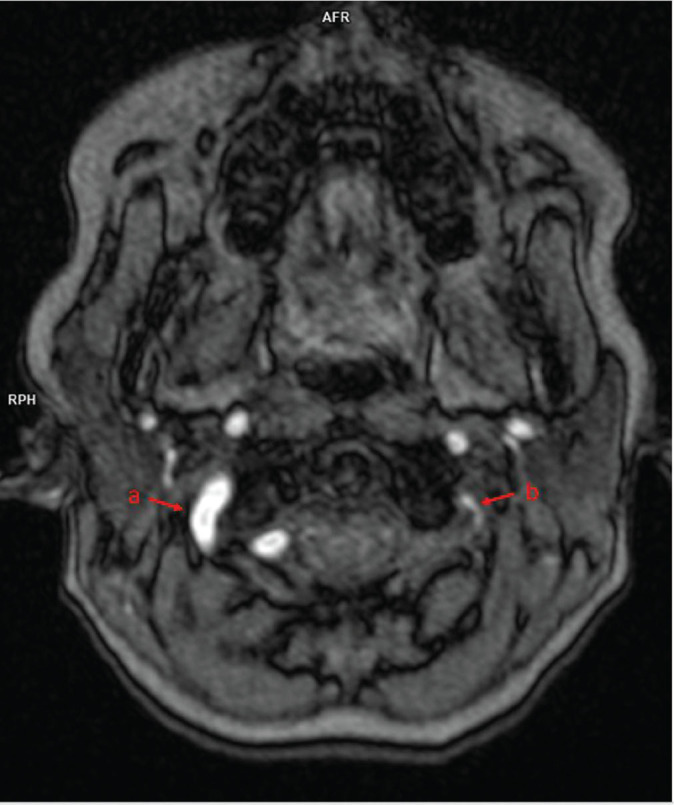 Figure 3
Peer Reviews
No public reviews on file for this paper yet. If you reviewed it on a platform where reviews are public (OpenReview, ICLR, NeurIPS, ICML), you can paste yours below so the community can read it here.
Videos
No videos yet. Explain this paper in a talk, walkthrough, or lecture? Add one.
Taxonomy
TopicsOropharyngeal Anatomy and Pathologies · Cerebrovascular and Carotid Artery Diseases · Blood Coagulation and Thrombosis Mechanisms