Anti‐inflammatory and Gastroprotective Effects of the Chamaerops humilis L. (DOUM) Fruit Aqueous Extract in Experimental Models of Edema and Gastric Ulcer
Yasmina Jaouhari, Hamid Kabdy, Ouijdane El hatimy, Hajar Azraida, Baslam Abdelmounaim, Abdelfattah Aitbaba, Laadraoui Jawad, Yassine Chait, Rachida Aboufatima, Soad Moubtakir, Loubna El Yazouli, Stefania Garzoli, Abderrahman Chait

TL;DR
This study shows that an extract from Chamaerops humilis fruit can reduce inflammation and protect the stomach in animal models, supporting its traditional use.
Contribution
The study provides empirical evidence for the anti-inflammatory and gastroprotective effects of Chamaerops humilis aqueous extract in experimental models.
Findings
AECH significantly reduces paw and ear edema in a dose-dependent manner.
AECH achieves up to 100% inhibition of gastric ulcer lesions at higher doses.
The extract validates traditional use of C. humilis for gastrointestinal disorders.
Abstract
Chronic inflammation can lead to various diseases, including gastric ulcers, highlighting the need for effective therapeutic strategies. The traditional use of Chamaerops humilis in Moroccan folk medicine for treating gastrointestinal disorders underscores its potential as a valuable natural remedy. This study rigorously evaluates the anti‐inflammatory and gastroprotective effects of the aqueous extract of C. humilis (AECH) through a series of well‐established animal models, including carrageenan‐induced paw edema, xylene‐induced ear edema, and ethanol/hydrochloric acid (EtOH/HCL)‐induced gastric ulcers. The results reveal that AECH significantly reduces inflammation and ulcer severity in a dose‐dependent manner, demonstrating potent efficacy in decreasing paw and ear edema while markedly mitigating ulceration induced by EtOH/HCL exposure. Notably, AECH achieved up to 100% inhibition of…
Genes, proteins, chemicals, diseases, species, mutations and cell lines named across the full text — each resolved to its canonical identifier and authoritative record.
Click any figure to enlarge with its caption.
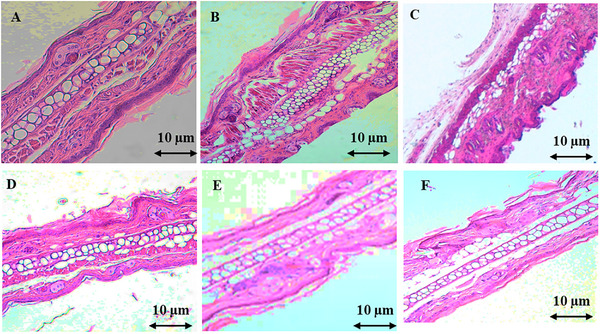 Figure 1
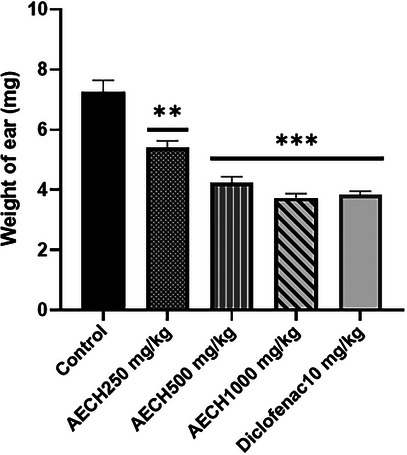 Figure 2
 Figure 3
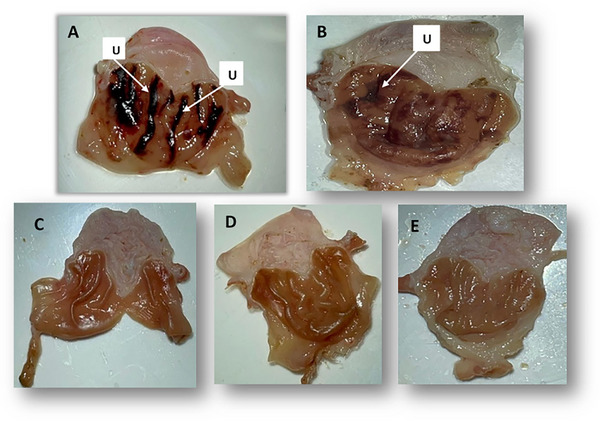 Figure 4
Peer Reviews
No public reviews on file for this paper yet. If you reviewed it on a platform where reviews are public (OpenReview, ICLR, NeurIPS, ICML), you can paste yours below so the community can read it here.
Videos
No videos yet. Explain this paper in a talk, walkthrough, or lecture? Add one.
Taxonomy
TopicsPhytochemicals and Medicinal Plants · Phytochemistry and Bioactive Compounds · Essential Oils and Antimicrobial Activity