Effective RNA Complexation by [2]Catenanes Confers Enhanced Resistance to Enzymatic Degradation
Dimitri Delcourt, José García Coll, Fabien B. L. Cougnon, Sébastien Ulrich

TL;DR
Researchers created [2]catenanes that protect siRNA from being broken down by enzymes, which could improve RNA-based therapies.
Contribution
The study introduces [2]catenanes with arginine residues that are stable against proteases and effective at siRNA complexation.
Findings
Cationic [2]catenanes resist proteolytic degradation and bind siRNA effectively.
The mechanical bond in [2]catenanes enhances their ability to protect siRNA from nucleases.
Multivalency and preorganization in the [2]catenanes improve RNA complexation.
Abstract
Cationic [2]catenanes bearing l ‐arginine residues were synthesized via dynamic covalent self‐assembly in water. These peptide‐based mechanically interlocked molecules (MIMs) exhibit proteolytic stability, efficiently complex small‐interfering RNA (siRNA), and protect it from nuclease degradation. Their performance in siRNA binding is attributed to multivalency and preorganization enforced by the mechanical bond. Peptide‐based cationic [2]catenanes are resistant to proteases and efficiently complex siRNA, providing protection from degradation by nucleases.
Genes, proteins, chemicals, diseases, species, mutations and cell lines named across the full text — each resolved to its canonical identifier and authoritative record.
Click any figure to enlarge with its caption.
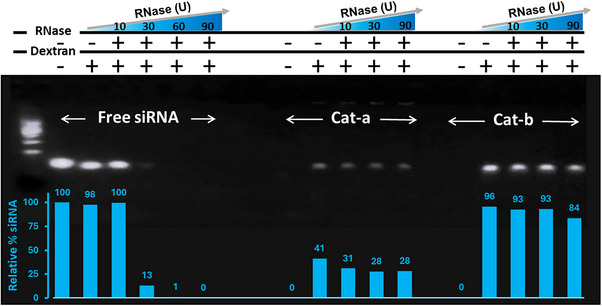 Figure 1
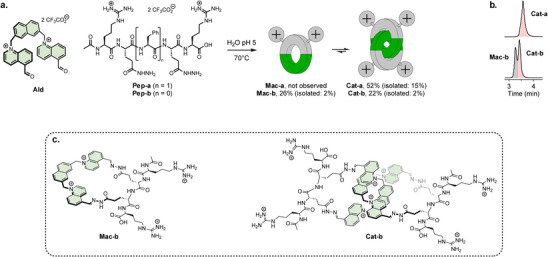 Figure 2
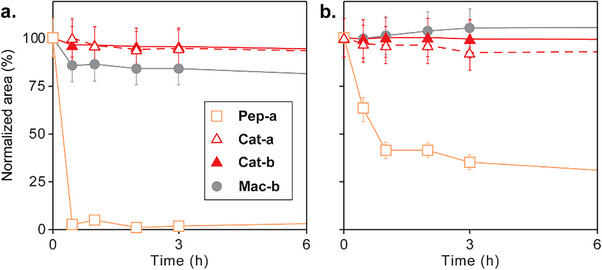 Figure 3
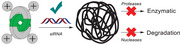 Figure 4
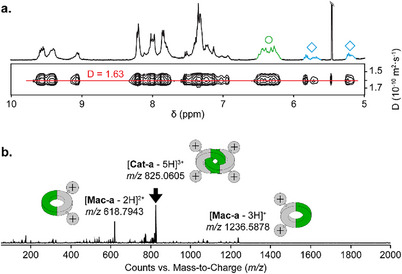 Figure 5
 Figure 6
Peer Reviews
No public reviews on file for this paper yet. If you reviewed it on a platform where reviews are public (OpenReview, ICLR, NeurIPS, ICML), you can paste yours below so the community can read it here.
Videos
No videos yet. Explain this paper in a talk, walkthrough, or lecture? Add one.
Taxonomy
TopicsSupramolecular Chemistry and Complexes · Supramolecular Self-Assembly in Materials · RNA Interference and Gene Delivery