Polarization and Dipole Moment Effects on Sigma‐Hole Potential in Tin(IV)‐Porphyrins
Rafia Siddiqui, Raphael F. Ligorio, Hatem M. Titi, Sushil Kumar Pandey, Anna Krawczuk, Ranjan Patra

TL;DR
This paper explores how molecular polarization and dipole moments affect halogen bonding in tin(IV)-porphyrin complexes.
Contribution
The study reveals that axial fluorination has a negligible effect on sigma-hole potential due to orthogonal molecular orientation.
Findings
Increased fluorine substitution reduces dipole moments and polarizability of tin in metalloporphyrins.
Axial fluorination does not significantly impact sigma-hole potential at iodine atoms.
Orthogonal orientation suppresses resonance interactions between porphyrin core and phenyl rings.
Abstract
This study investigates how electron‐withdrawing substitution, molecular polarization, and dipole moment influence the σ‐hole potential in six‐coordinate metalloporphyrins. To evaluate halogen bonding tendencies, we synthesized a series of five Sn(IV)‐5,10,15,20‐meso‐tetrakis(4‐iodophenyl)porphyrin complexes with various fluorinated phenolate axial ligands. Single‐crystal X‐ray diffraction analysis revealed distinct halogen‐bonded supramolecular motifs, which vary depending on the degree of fluorination at the axial ligands. Our findings highlight the critical role of ligand‐induced polarization and dipole moment variations in modulating the σ‐hole characteristics of the equatorial iodine atoms. Computational modelling showed that increased fluorine substitution reduces both the atomic dipole moments of fluorine and the polarizability of the central tin ion. However, despite these…
Genes, proteins, chemicals, diseases, species, mutations and cell lines named across the full text — each resolved to its canonical identifier and authoritative record.
Click any figure to enlarge with its caption.
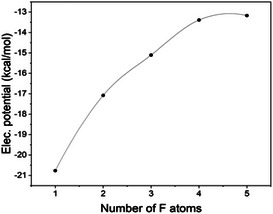 Figure 1
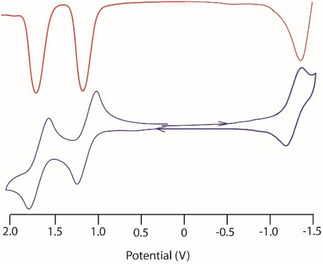 Figure 2
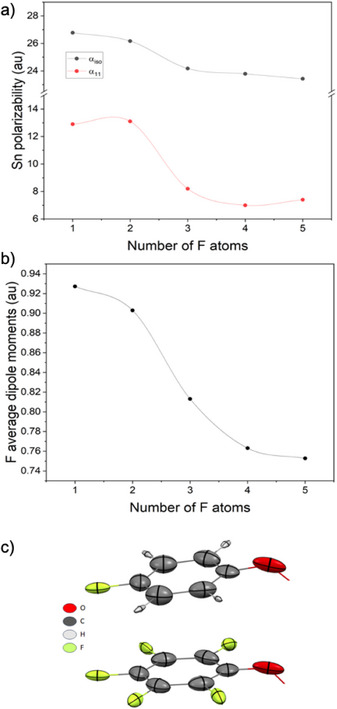 Figure 3
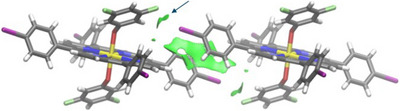 Figure 4
 Figure 5
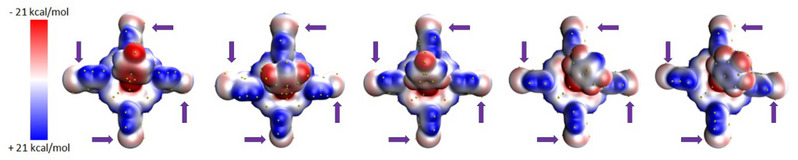 Figure 6
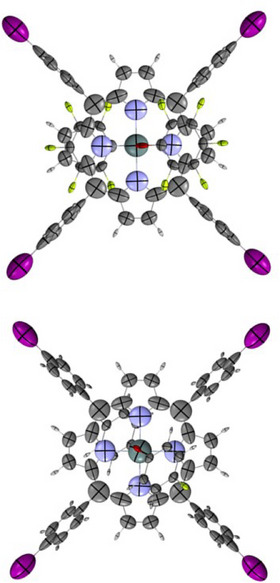 Figure 7
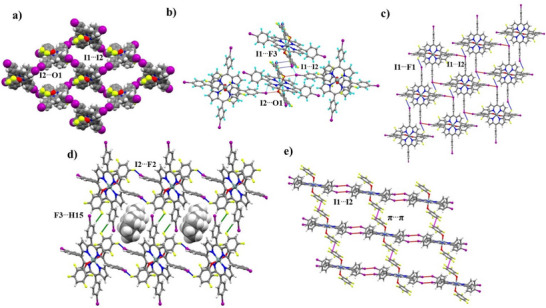 Figure 8
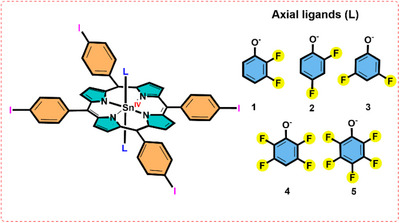 Figure 9
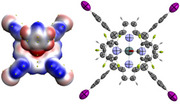 Figure 10
Peer Reviews
No public reviews on file for this paper yet. If you reviewed it on a platform where reviews are public (OpenReview, ICLR, NeurIPS, ICML), you can paste yours below so the community can read it here.
Videos
No videos yet. Explain this paper in a talk, walkthrough, or lecture? Add one.
Taxonomy
TopicsPorphyrin and Phthalocyanine Chemistry · Crystallography and molecular interactions · Advanced Chemical Physics Studies