Robot-assisted Kidney Transplantation from Deceased Donor: The European Experience
Thomas Prudhomme, Lluis Peri, Alessio Pecoraro, Angelo Territo, Begoña Etcheverry, Milla Ortved, Andreas Røder, Idu Mirza, Graziano Vignolini, Malene Rohrsted, Byron López de Mesa Rodriguez, Jeremy Mercier, Nicolas Doumerc, Lorenzo Masieri, Francesc Vigues, Alberto Breda

TL;DR
Robot-assisted kidney transplants from deceased donors are safe and effective, offering a viable option for patients with end-stage kidney disease.
Contribution
The study reports outcomes of deceased donor robotic-assisted kidney transplantation across seven European centers, highlighting its feasibility and safety.
Findings
DD-RAKT is feasible and safe at experienced centers, with a graft survival rate of 92.6%.
Major postoperative complications occurred in 16% of patients, and 27% experienced delayed graft function.
Recipient selection and organ matching are key to achieving optimal outcomes in DD-RAKT.
Abstract
In the context of deceased donors, robotic-assisted kidney transplantation presents satisfactory results and provides a viable way of expanding transplantation access to patients with end-stage renal disease considered at risk of open kidney transplantation. A careful selection of potential recipients is of utmost importance. In the context of deceased donors (DDs), robotic-assisted kidney transplantation (RAKT) is underutilized due to specific logistical and technical challenges. The aim of this study was to report the outcomes of DD-RAKT performed in centers involved in the European Association of Urology Robotic Urology Section (ERUS)-RAKT working group. This retrospective analysis is based on a prospectively collected multicenter database including data on DD-RAKT performed at seven referral ERUS-RAKT European centers from July 2015 to April 2024. Intraoperative, perioperative,…
Genes, proteins, chemicals, diseases, species, mutations and cell lines named across the full text — each resolved to its canonical identifier and authoritative record.
Click any figure to enlarge with its caption.
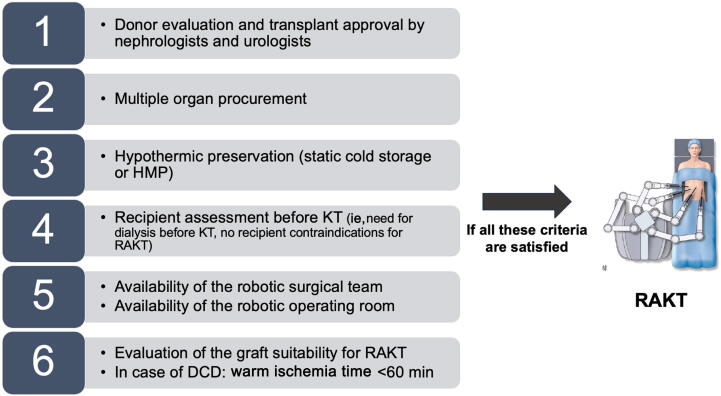 Figure 1
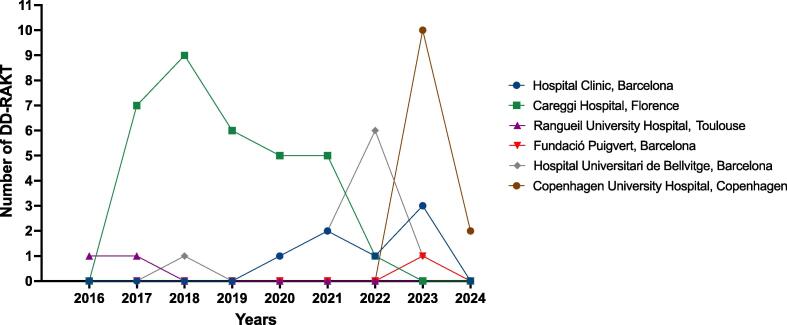 Figure 2
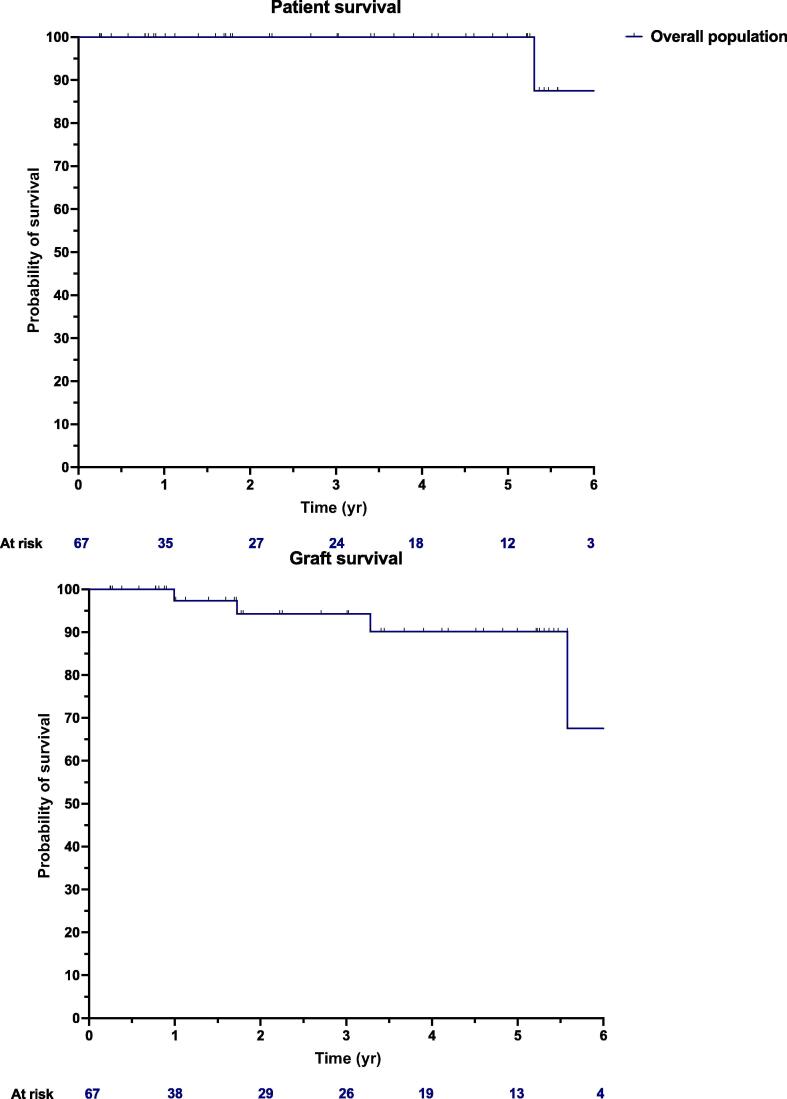 Figure 3
Peer Reviews
No public reviews on file for this paper yet. If you reviewed it on a platform where reviews are public (OpenReview, ICLR, NeurIPS, ICML), you can paste yours below so the community can read it here.
Videos
No videos yet. Explain this paper in a talk, walkthrough, or lecture? Add one.
Taxonomy
TopicsOrgan Donation and Transplantation · Renal and Vascular Pathologies · Renal Transplantation Outcomes and Treatments