Efficient and Symmetric Temperature Control in Capillary Electrophoresis II: Thermal Performance When Cooling Capillaries Are Tied Around Analytical Capillaries
Leonel Bortolotto Macedo, Cristian Bonatto, Tarso B. Ledur Kist

TL;DR
This paper introduces a new cooling system for capillary electrophoresis that provides efficient and symmetric temperature control.
Contribution
A novel cooling system using microtubes tied around analytical capillaries for centrosymmetric temperature control is presented.
Findings
A pressure gradient of 0.25 bar/cm in the cooling liquid efficiently removes heat.
The system allows for very high and stable electric currents under strong electric fields.
The new system outperforms traditional cooling methods in terms of symmetry and efficiency.
Abstract
Current commercially available capillary electrophoresis instruments lack centrosymmetric and efficient temperature control along the whole extend of the capillary. Here we studied the characteristics and thermal performance of a cooling system that consists of cooling capillaries (fused silica microtubes) which are tied around the complete extent of the analytical capillaries. Six cooling capillaries with only 75 µm inner diameter (320 µm outer diameter—without polyimide) were tied around the outer surface of 320 µm outer diameter analytical capillaries (also without polyimide). The tying process is detailed in a previous publication (J Sep Sci. 2025; 48: e70081. https://doi.org/10.1002/jssc.70081). The application of a pressure gradient of 0.25 bar/cm in the cooling liquid was enough to efficiently remove heat and control temperature. Very strong electric fields could be applied,…
Genes, proteins, chemicals, diseases, species, mutations and cell lines named across the full text — each resolved to its canonical identifier and authoritative record.
Click any figure to enlarge with its caption.
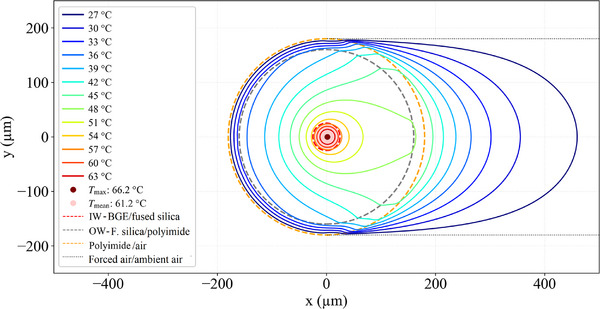 Figure 1
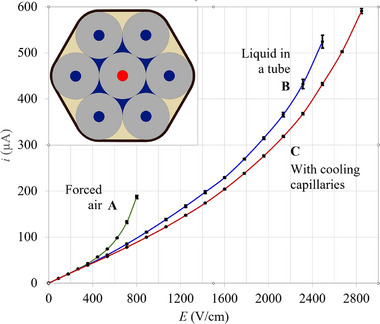 Figure 2
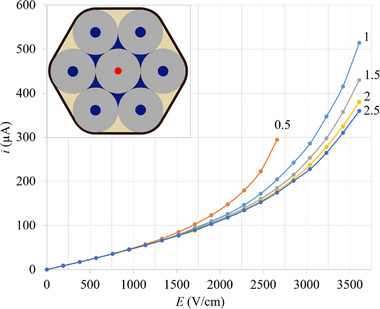 Figure 3
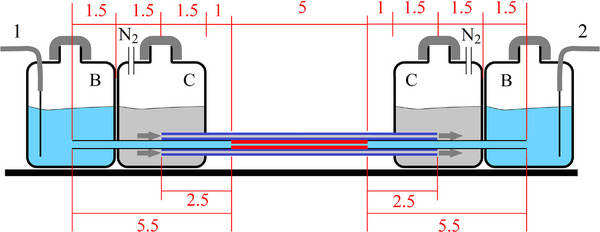 Figure 4
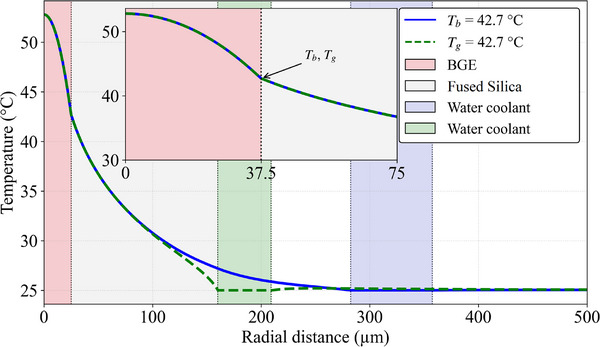 Figure 5
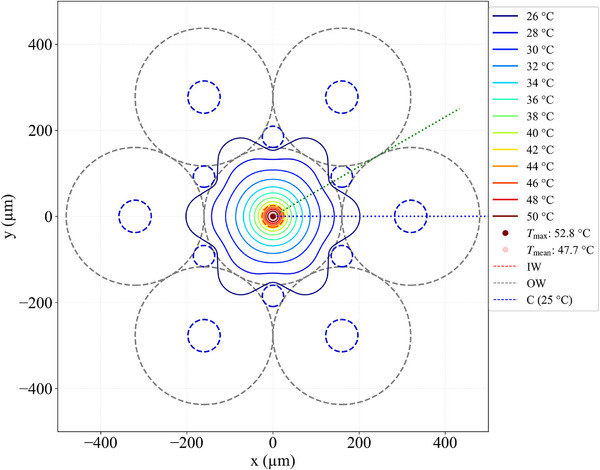 Figure 6
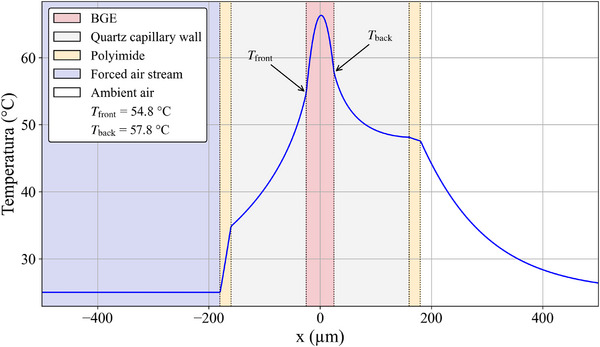 Figure 7
Peer Reviews
No public reviews on file for this paper yet. If you reviewed it on a platform where reviews are public (OpenReview, ICLR, NeurIPS, ICML), you can paste yours below so the community can read it here.
Videos
No videos yet. Explain this paper in a talk, walkthrough, or lecture? Add one.
Taxonomy
TopicsMicrofluidic and Capillary Electrophoresis Applications · Electrowetting and Microfluidic Technologies · Innovative Microfluidic and Catalytic Techniques Innovation