Neural network-based method for measuring the impacts of epileptic brain activities on cardiac cycles
Cândida H. L. Alves, Gilberto S. Alves, Rômulo Kunrath, Mariélia Barbosa L. de Freitas, João Pedro G. Castor, Allan Kardec Barros, Diego Dutra Sampaio, Jonathan Araújo Queiroz

TL;DR
This paper introduces a wearable ECG-based method using neural networks to monitor epileptic brain activity through heart signals, offering an accessible alternative to traditional EEG.
Contribution
A novel neural network-based computational model using ECG to detect brain activity changes before heart rate variability.
Findings
The model achieved 100% sensitivity, specificity, and accuracy using statistical features like variance, skewness, and kurtosis.
ECG is shown as a viable, affordable alternative to EEG for monitoring epileptic brain activity.
The method enables non-invasive epilepsy monitoring with potential benefits for vulnerable populations.
Abstract
Although electroencephalogram (EEG) is widely used to monitor brain activity in epilepsy, limitations related to the accessibility and reproducibility of measurements may restrict its everyday use. Conversely, wearable methods, easily accessible, such as electrocardiogram (ECG), represent an alternative for indirectly monitoring brain activity through cardiac cycles. A computational model was developed based on statistical cycles and neural networks to measure changes in the morphology of ECG waves. The advantage of this approach over heart rate variability analysis is the detection of brain activity before changes in heart rate occur. In addition, using variance, skewness, and kurtosis centered on the median allowed us to achieve 100% sensitivity, specificity, and accuracy in our analyses, even using less complex algorithms, due to selecting these optimal characteristics. These…
Genes, proteins, chemicals, diseases, species, mutations and cell lines named across the full text — each resolved to its canonical identifier and authoritative record.
Click any figure to enlarge with its caption.
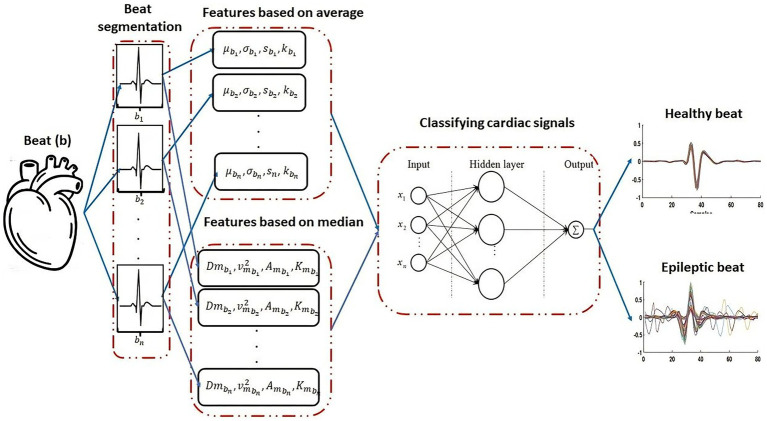 Figure 1
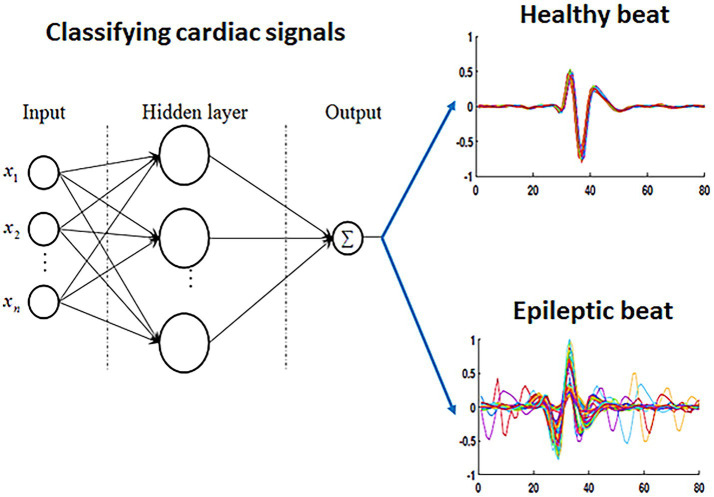 Figure 2
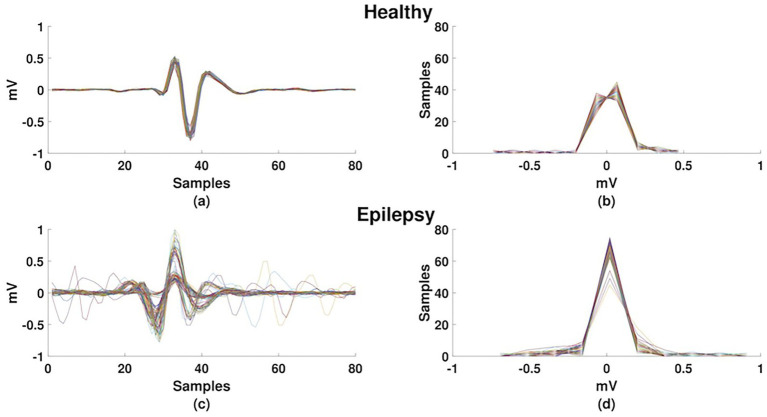 Figure 3
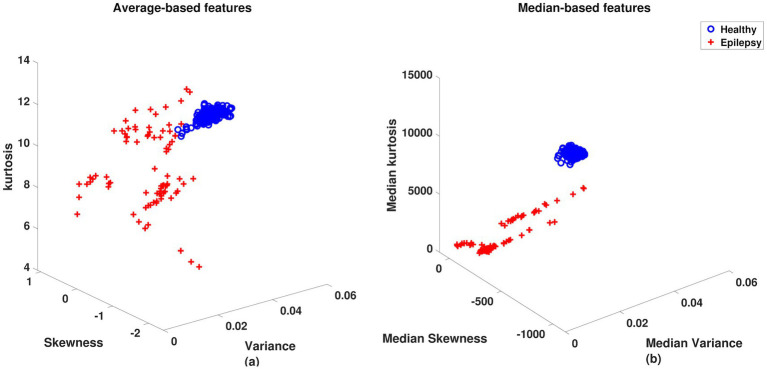 Figure 4
Peer Reviews
No public reviews on file for this paper yet. If you reviewed it on a platform where reviews are public (OpenReview, ICLR, NeurIPS, ICML), you can paste yours below so the community can read it here.
Videos
No videos yet. Explain this paper in a talk, walkthrough, or lecture? Add one.
Taxonomy
TopicsEEG and Brain-Computer Interfaces · Functional Brain Connectivity Studies · Epilepsy research and treatment