Tea Polyphenol Modulates Mitochondria‐Associated Endoplasmic Reticulum Membrane of Hippocampal Neurons Targeting Grp75 to Ameliorate Memory Impairment in the Aged T2DM Rats
Mengqian Shi, Le Cheng, Chenhui Lv, Wenjuan Feng, Xi Wang, Shuangzhi Chen, Chenyang Li, Lushan Xue, Cheng Zhang, Xuemin Li, Haifeng Zhao

TL;DR
Tea polyphenol improves memory in aged diabetic rats by targeting a protein called Grp75 to regulate a cellular structure called MAM.
Contribution
This study reveals a novel molecular mechanism by which tea polyphenol protects memory through Grp75 and MAM in T2DM.
Findings
TP and EGCG reduce memory impairment and insulin resistance in aged T2DM rats.
EGCG interacts with Grp75 to regulate MAM and reduce mitochondrial calcium levels and apoptosis.
Grp75-siRNA combined with EGCG inhibits mitochondrial calcium overload and cell death.
Abstract
Tea polyphenol (TP), as the most abundant and unique functional substance of tea, has been widely studied for the neuroprotective effects. Previous studies also found that TP improves the memory impairment of the aged T2DM rats, but the underlying molecular mechanism has not been fully clarified. The model of aged T2DM was induced by injecting D‐galactose and STZ intraperitoneally, as well as feeding with a high‐glucose‐fat diet in rats, and D‐galactose and D‐glucose were used in PC12 cells. Memory function, mitochondrial damage, mitochondria‐associated endoplasmic reticulum membrane (MAM), Ca2+, and apoptosis were detected to investigate the role of TP and its main functional component EGCG in the association between mitochondria and the endoplasmic reticulum. In addition, to further verify whether EGCG reduces apoptosis by regulating MAM, molecular docking and Grp75‐siRNA were used.…
Genes, proteins, chemicals, diseases, species, mutations and cell lines named across the full text — each resolved to its canonical identifier and authoritative record.
Click any figure to enlarge with its caption.
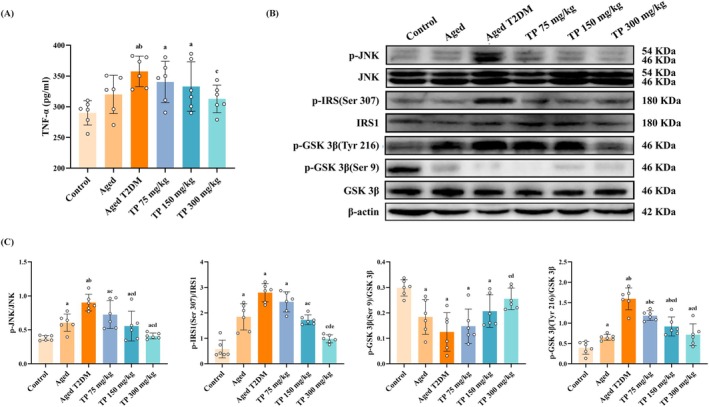 Figure 1
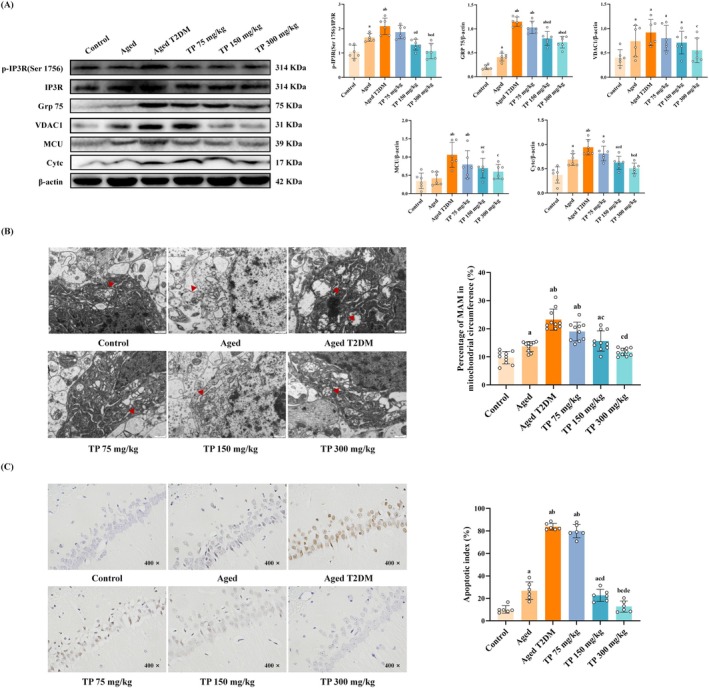 Figure 2
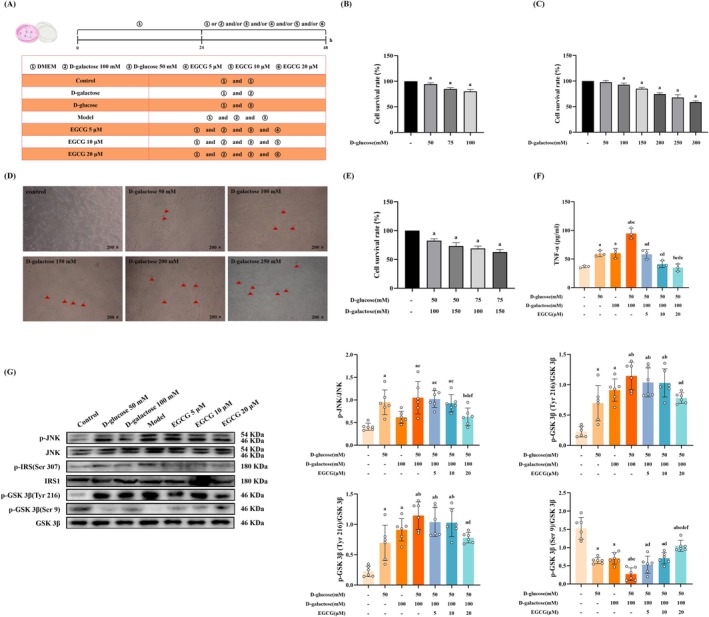 Figure 3
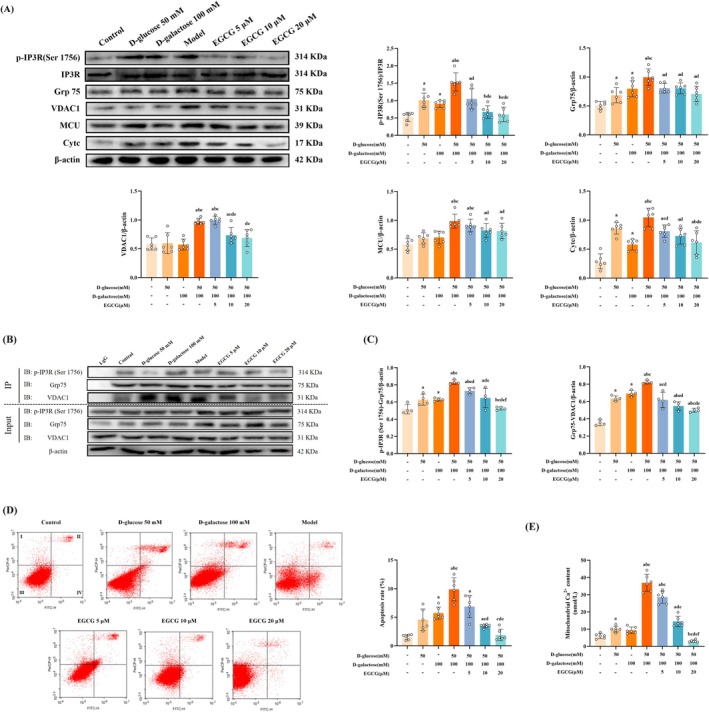 Figure 4
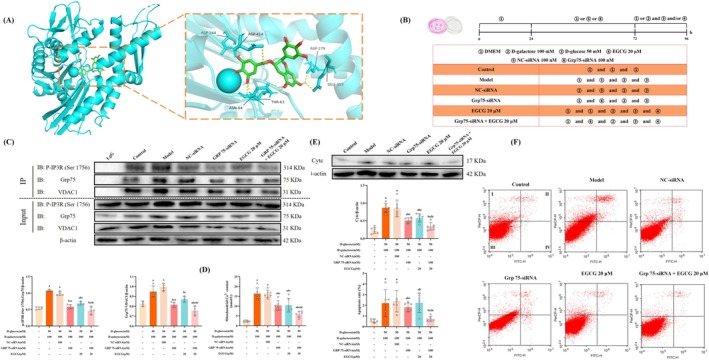 Figure 5
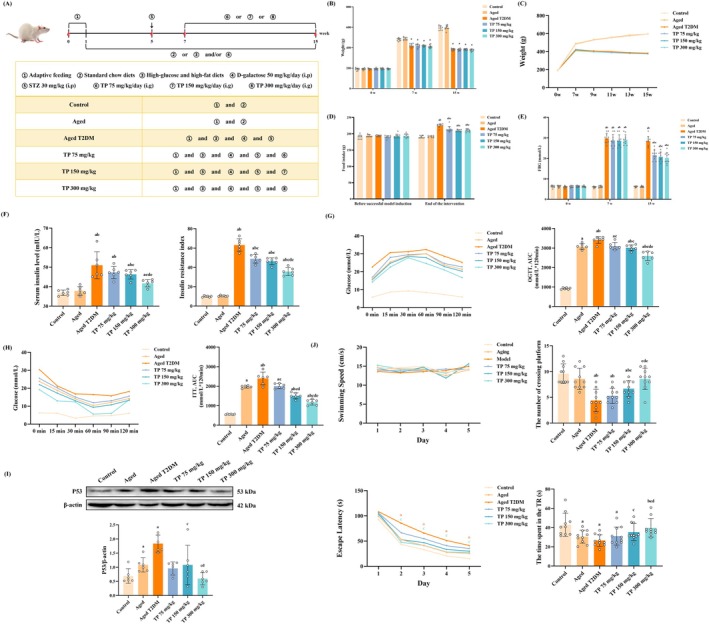 Figure 6
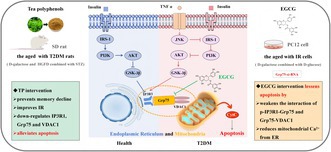 Figure 7
Peer Reviews
No public reviews on file for this paper yet. If you reviewed it on a platform where reviews are public (OpenReview, ICLR, NeurIPS, ICML), you can paste yours below so the community can read it here.
Videos
No videos yet. Explain this paper in a talk, walkthrough, or lecture? Add one.
Taxonomy
TopicsAlzheimer's disease research and treatments · Mitochondrial Function and Pathology · Tryptophan and brain disorders