Planned Tunnel Convergence for Concomitant Posterior Cruciate Ligament Reconstruction and Meniscal Root Repair
Nicholas Newcomb, Ryan Price, Kathryn Yeager, Colin Carroll, Joseph Esquibel, Dustin Richter, Christopher Shultz, Gehron Treme

TL;DR
This paper introduces a surgical technique for reconstructing the posterior cruciate ligament and repairing meniscal roots using planned tunnel convergence to avoid damaging grafts or fixation devices.
Contribution
The novel contribution is a method for safely converging tunnels during posterior cruciate ligament reconstruction and meniscal root repair.
Findings
A planned tunnel convergence technique allows for simultaneous posterior cruciate ligament and meniscal root procedures.
The method uses a shared tibial tunnel aperture to avoid graft or fixation damage.
The technique is applicable for both medial and lateral meniscal roots.
Abstract
Meniscal root injuries frequently occur in the setting of multiligamentous knee injuries. These present a complicating factor for planned tunnels and fixation owing to their proximity to the posterior cruciate ligament (PCL) tibial tunnel. Techniques typically aim to avoid tunnel convergence to reduce the risk of damage to grafts and/or fixation devices and decrease the risk of osteolysis or loss of fixation. We describe a method for planned tunnel convergence for PCL reconstruction and meniscal root repair. The PCL tibial tunnel is first drilled in the typical trajectory. An anterior cruciate ligament drill guide is then placed at the appropriate footprint for the medial or lateral meniscal root, with the starting point at the proximal tibia sharing the same external tibial tunnel aperture as the PCL. Sutures capturing the meniscal root and the PCL graft can then both be passed and…
Genes, proteins, chemicals, diseases, species, mutations and cell lines named across the full text — each resolved to its canonical identifier and authoritative record.
Click any figure to enlarge with its caption.
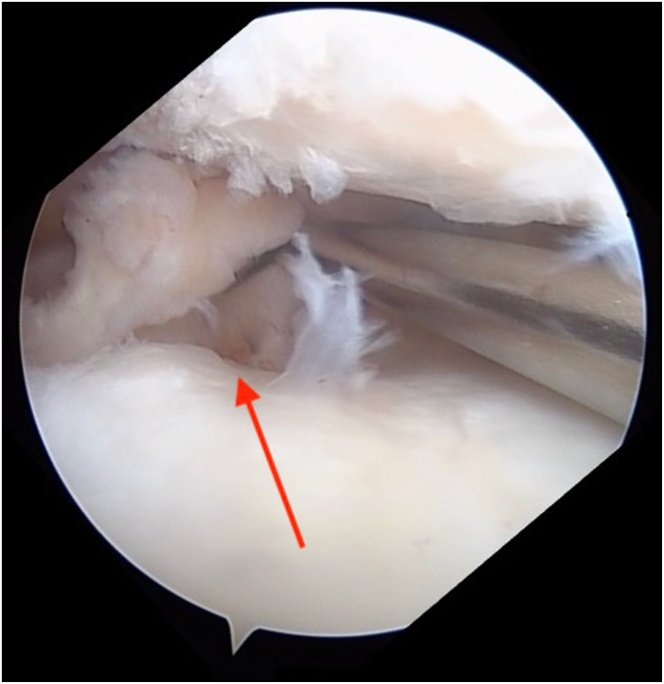 Figure 1
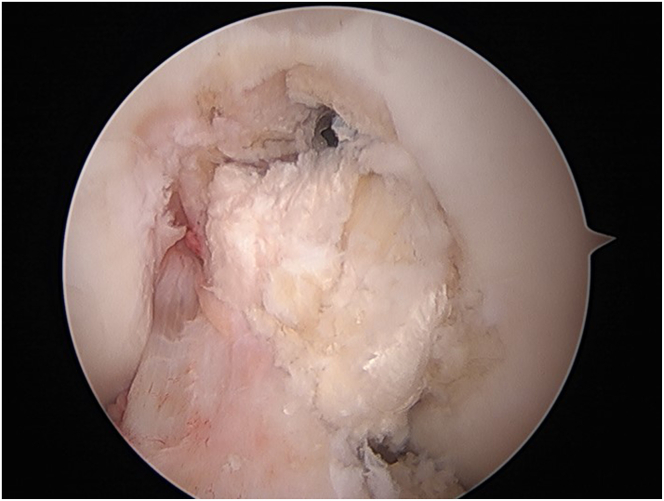 Figure 2
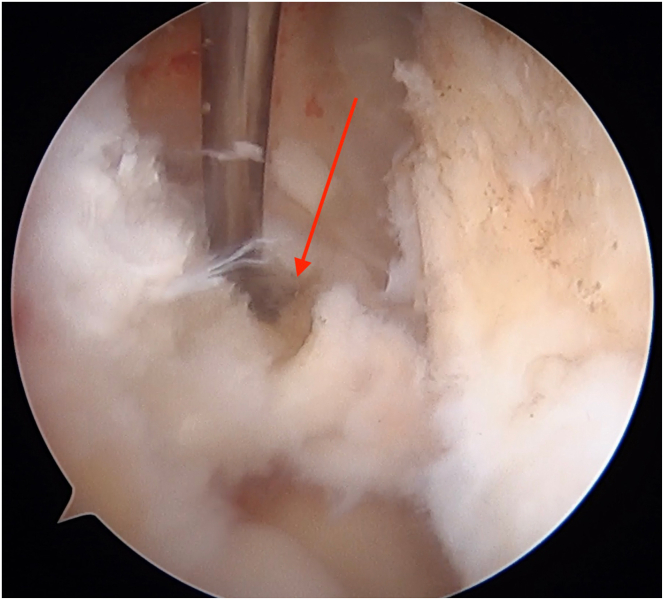 Figure 3
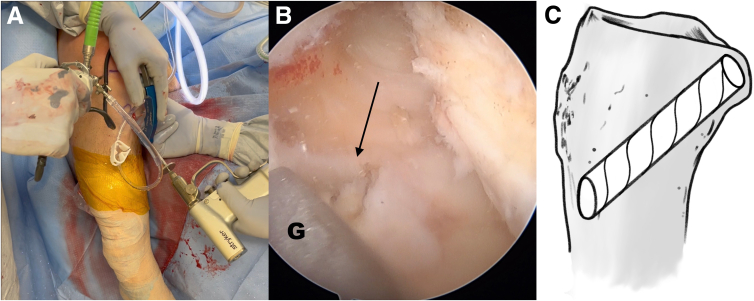 Figure 4
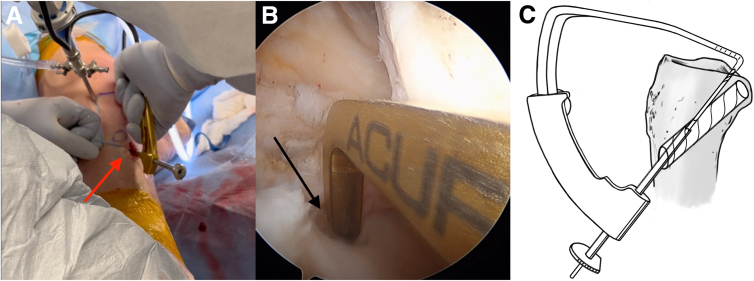 Figure 5
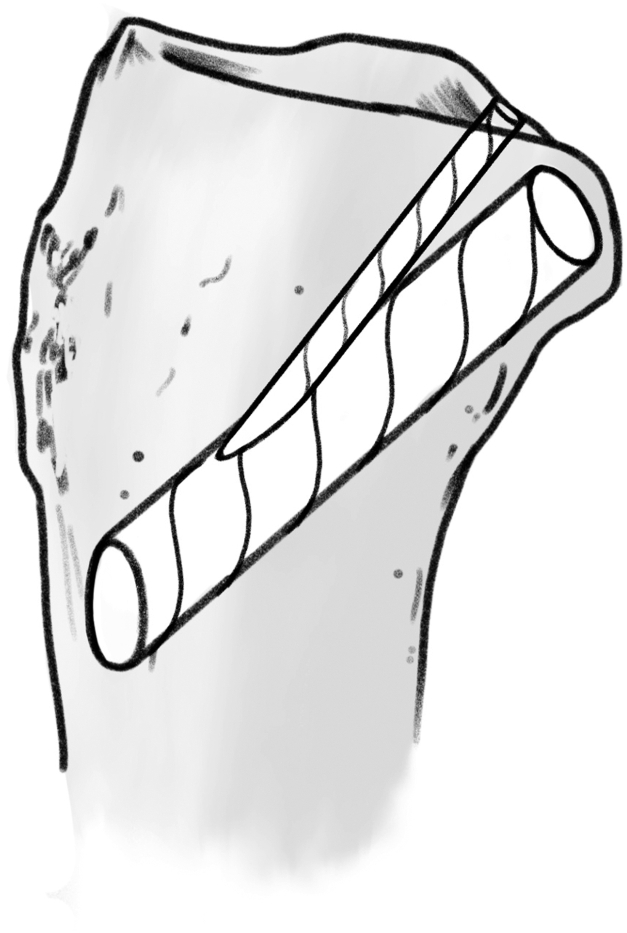 Figure 6
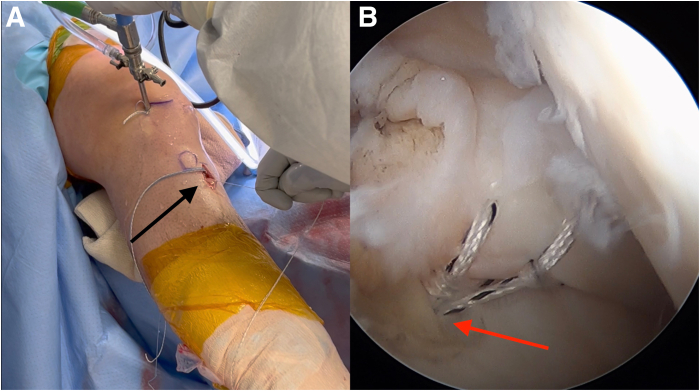 Figure 7
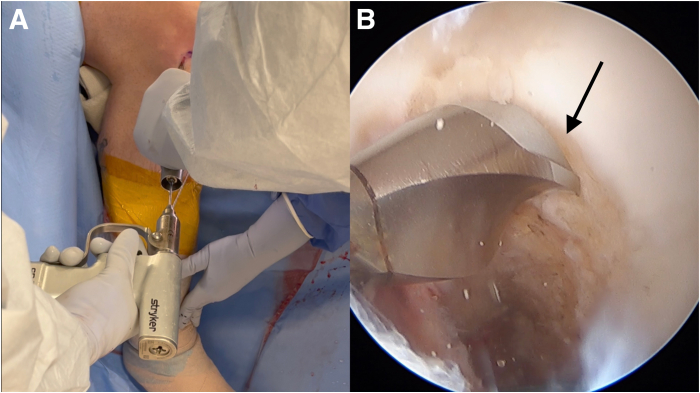 Figure 8
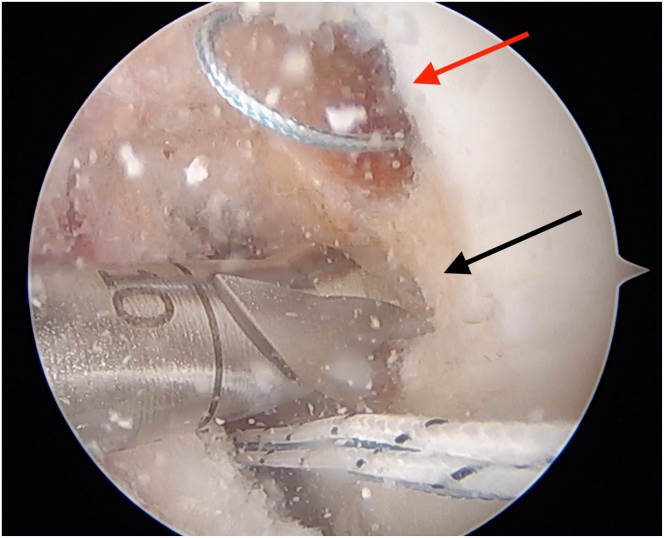 Figure 9
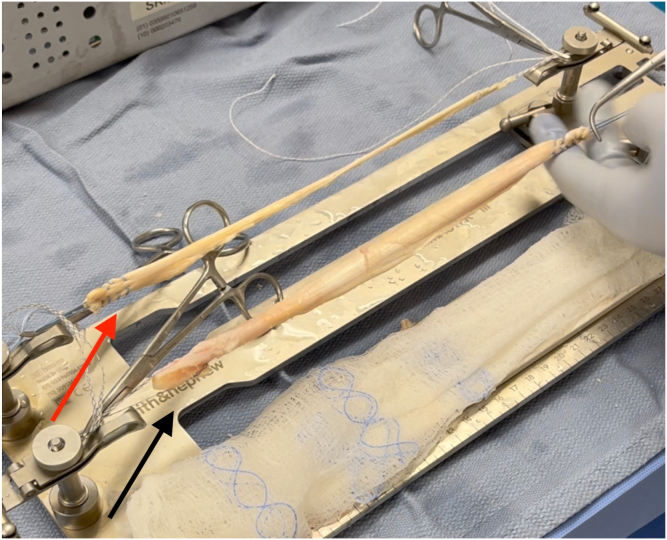 Figure 10
Peer Reviews
No public reviews on file for this paper yet. If you reviewed it on a platform where reviews are public (OpenReview, ICLR, NeurIPS, ICML), you can paste yours below so the community can read it here.
Videos
No videos yet. Explain this paper in a talk, walkthrough, or lecture? Add one.
Taxonomy
TopicsKnee injuries and reconstruction techniques · Total Knee Arthroplasty Outcomes · Lower Extremity Biomechanics and Pathologies