Evaluating a program to prevent anxiety in children of anxious parents: a randomized controlled trial
Sigrid Elfström, Anna Rosengren, Rebecca Andersson, Johanna Engelbrektsson, Albin Isaksson, Micaela Meregalli, Livia van Leuven, Maria Lalouni, Lars‐Göran Öst, Ata Ghaderi, Johan Åhlén

TL;DR
A program for anxious parents aimed at preventing anxiety in their children showed mixed results, with some benefits for younger children but no overall significant effect after 12 months.
Contribution
The study evaluates a novel parent-focused intervention to prevent anxiety disorders in children of anxious parents through a randomized controlled trial.
Findings
No significant difference in clinical severity ratings between the intervention and control groups overall.
Children aged 5–6 years in the intervention group showed lower risk of increased anxiety severity and diagnosis.
CPBC children had larger decreases in anxiety symptoms compared to controls, but parental self-efficacy improved similarly in both groups.
Abstract
Pediatric anxiety disorders are prevalent, particularly among children with anxious parents. This trial evaluated a program for anxious parents aimed at preventing offspring anxiety disorders and symptoms over 12 months. This parallel, randomized, controlled, open‐label trial was conducted at Karolinska Institutet, Stockholm, Sweden. Inclusion criteria comprised heightened parental anxiety and the child (5–9 years old) not currently meeting criteria for an anxiety disorder. The program, Confident Parents–Brave Children (CPBC) involves six video conferencing group sessions. An external researcher randomly allocated (1:1) participants to CPBC or a self‐help control. The primary outcome was change in clinical severity ratings (CSR) between pre‐ and 12‐month assessments, assessed by the Anxiety Disorders Interview Schedule. Secondary outcomes included parent‐rated child anxiety symptoms…
Genes, proteins, chemicals, diseases, species, mutations and cell lines named across the full text — each resolved to its canonical identifier and authoritative record.
Click any figure to enlarge with its caption.
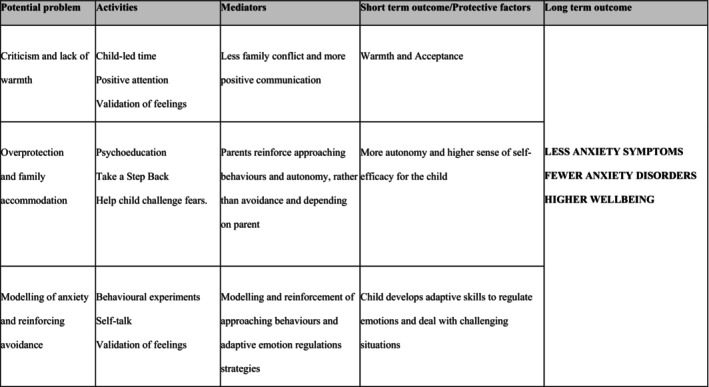 Figure 1
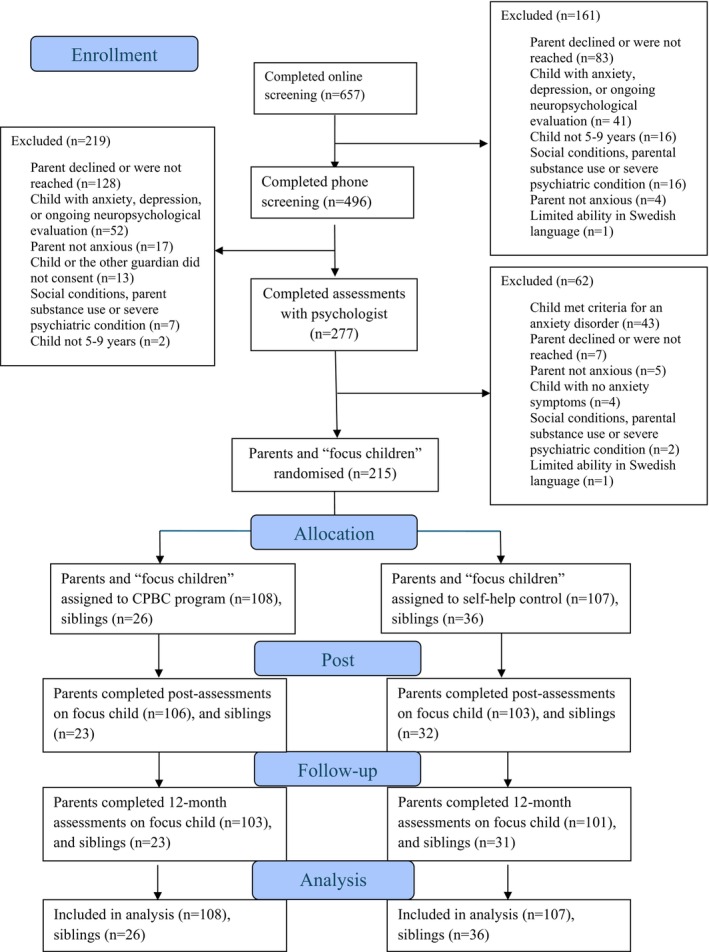 Figure 2
Peer Reviews
No public reviews on file for this paper yet. If you reviewed it on a platform where reviews are public (OpenReview, ICLR, NeurIPS, ICML), you can paste yours below so the community can read it here.
Videos
No videos yet. Explain this paper in a talk, walkthrough, or lecture? Add one.
Taxonomy
TopicsChild and Adolescent Psychosocial and Emotional Development · Maternal Mental Health During Pregnancy and Postpartum · Infant Development and Preterm Care