A fluorescence lifetime-based FLIM-timer for measuring the protein turnover of transcription factor Nrf2 in live cells
Dina Dikovskaya, Claudia Bento-Pereira, Kanade Shiga, Andrea Corno, Maureen Higgins, Rachel Toth, Adrian T. Saurin, Albena T. Dinkova-Kostova

TL;DR
A new FLIM-timer method allows measuring protein turnover of low-expression proteins like Nrf2 in live cells using fluorescence lifetime imaging.
Contribution
A genetically encoded FLIM-timer tag enables intensity-independent measurement of protein turnover for low-abundance proteins.
Findings
FLIM-timer accurately measures Nrf2 turnover in different cellular compartments with equal precision.
FLIM-timer confirmed Nrf2 stabilization by sulforaphane and destabilization during mitotic exit in cyclin B.
The FLIM-timer expands fluorescent timer applicability to proteins with low or variable expression.
Abstract
Measuring protein turnover in cells has been greatly assisted by fluorescent timers (FT). However, FT quantification requires relatively high fluorescence intensity samples, prohibiting their use for proteins with low or non-uniform expression like transcription factor Nrf2, the master regulator of redox homeostasis. To visualise changes in stability/turnover of Nrf2, we constructed a genetically encoded tag combining sfGFP and mCherry and used intensity-independent Fluorescence Lifetime Imaging (FLIM) to measure Förster Resonance Energy Transfer (FRET) within the tag (named FLIM-timer). We show that the ability of mCherry to act as a FRET-acceptor develops as the protein matures, allowing the use of FLIM-FRET as a readout of the FLIM-timer. FLIM-timer-tagged Nrf2 allowed to observe differences in its turnover between cellular compartments with equal precision in regions of high and low…
Genes, proteins, chemicals, diseases, species, mutations and cell lines named across the full text — each resolved to its canonical identifier and authoritative record.
Click any figure to enlarge with its caption.
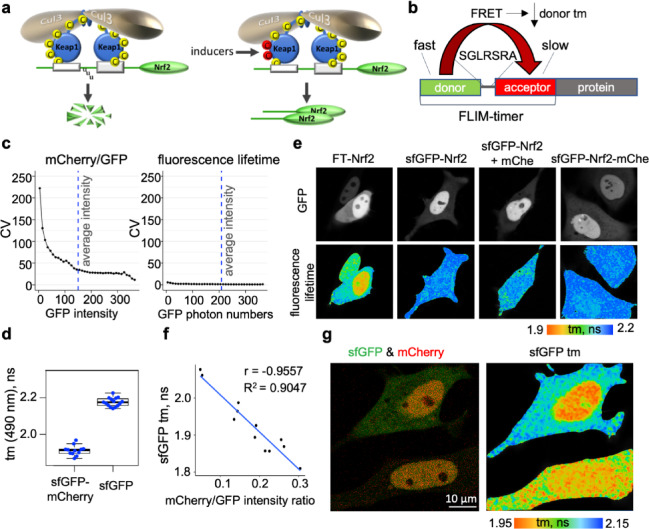 Figure 1
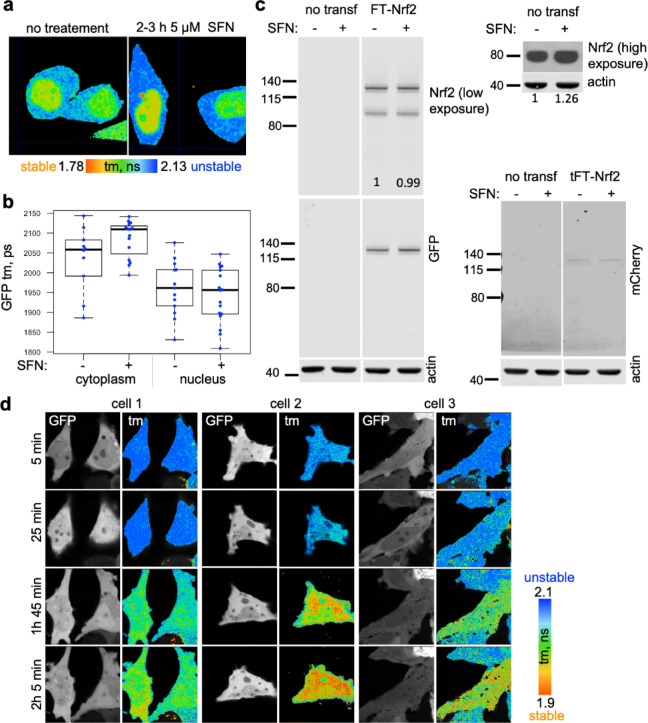 Figure 2
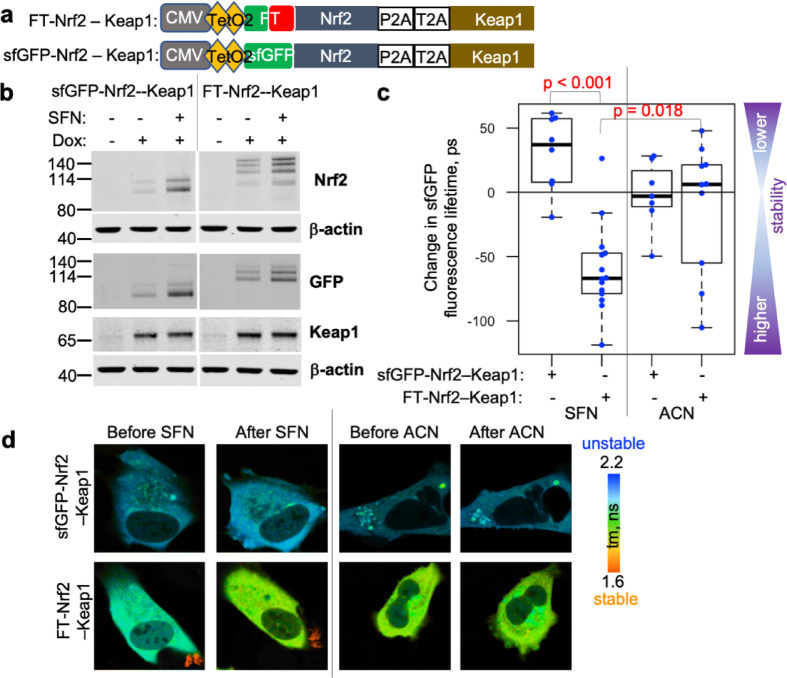 Figure 3
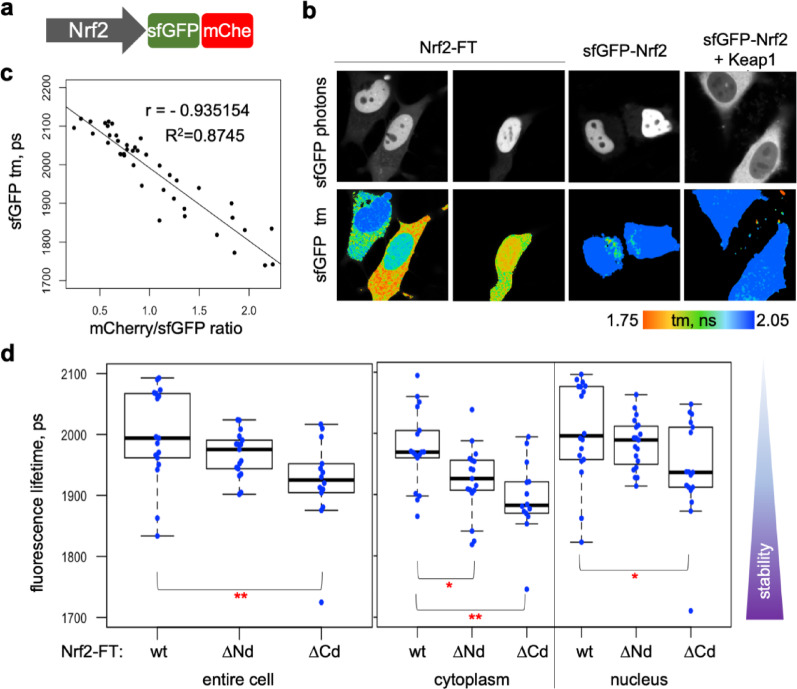 Figure 4
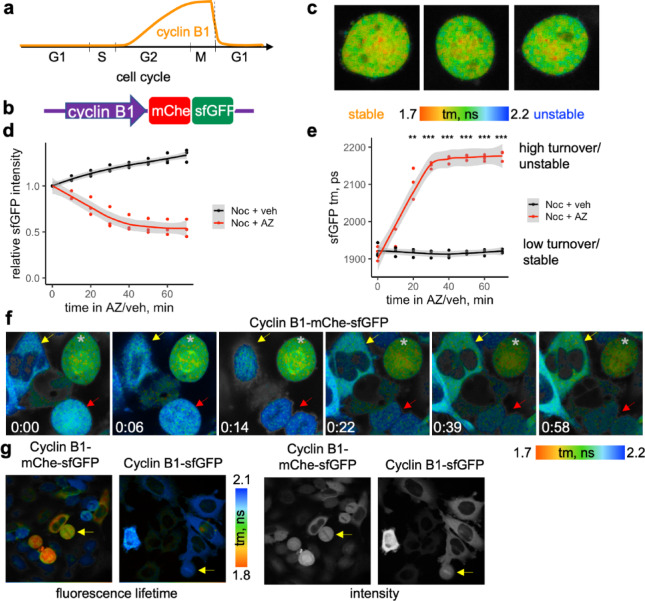 Figure 5
Peer Reviews
No public reviews on file for this paper yet. If you reviewed it on a platform where reviews are public (OpenReview, ICLR, NeurIPS, ICML), you can paste yours below so the community can read it here.
Videos
No videos yet. Explain this paper in a talk, walkthrough, or lecture? Add one.
Taxonomy
TopicsGenomics, phytochemicals, and oxidative stress · Light effects on plants · Coenzyme Q10 studies and effects