Hydrodynamic activities and lifestyle preferences synergistically drive prokaryotic community assembly processes in the dual fronts system of the Yangtze River Estuary
Han Lu, Zhonglin Ma, Lei Su, Yunfei Du, Kun Zhou, Peng Wang

TL;DR
This study explores how hydrodynamic forces and microbial lifestyle preferences shape prokaryotic communities in the Yangtze River Estuary's dual fronts system.
Contribution
The study pioneers linking dual frontal hydrodynamics with lifestyle-specific microbial assembly mechanisms.
Findings
Hydrodynamic activities and lifestyle preferences jointly influence prokaryotic community assembly in the Yangtze River Estuary.
Particle-associated prokaryotes dominate between the sediment and plume fronts, while free-living prokaryotes dominate elsewhere.
Stochastic dispersal and deterministic selection are key assembly mechanisms for free-living and particle-associated prokaryotes, respectively.
Abstract
The dual fronts system of the Yangtze River Estuary plays a critical role in the hydrodynamic-biological coupling mechanisms, whose frontal effects stimulate marine microorganisms to adapt to environmental fluctuation. However, the synergistic mechanisms driving prokaryotic community assembly in the dual fronts system remain poorly conceptualized, particularly regarding lifestyle preferences (free-living vs. particle-associated). By integrating physicochemical parameter analysis and high-throughput 16S rRNA amplicon sequencing, we described the unique prokaryotic community and quantified the assembly processes of particle-associated and free-living prokaryotic sub-communities. The effects of the dual fronts reshaped the prokaryotic community by differentiating the abundant and rare species of the particle-associated and free-living communities. Rhodobacteraceae, Flavobacteriaceae, and…
Genes, proteins, chemicals, diseases, species, mutations and cell lines named across the full text — each resolved to its canonical identifier and authoritative record.
Click any figure to enlarge with its caption.
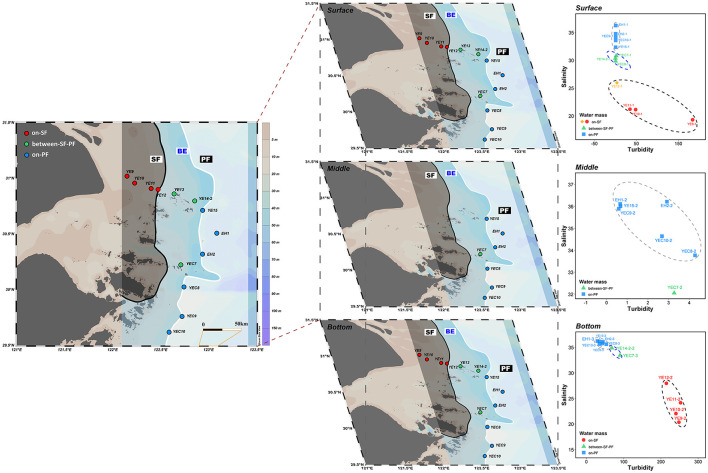 Figure 1
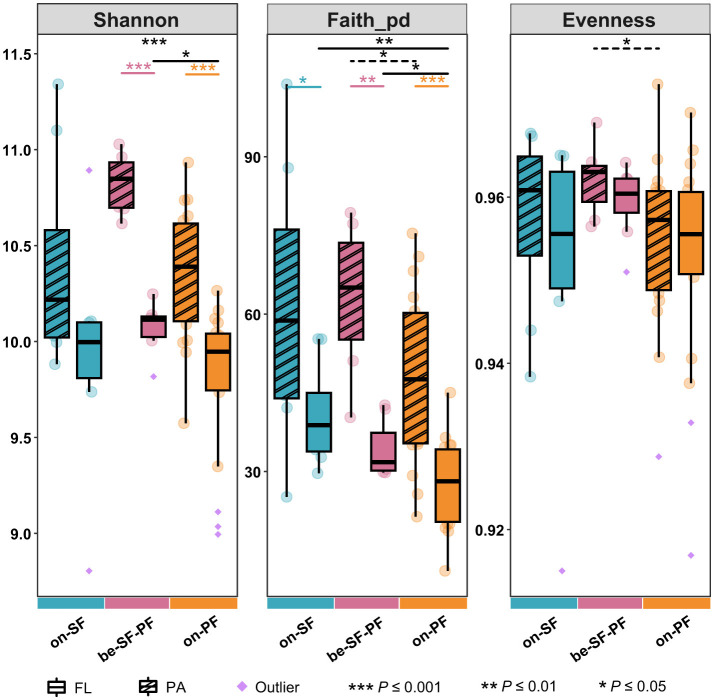 Figure 2
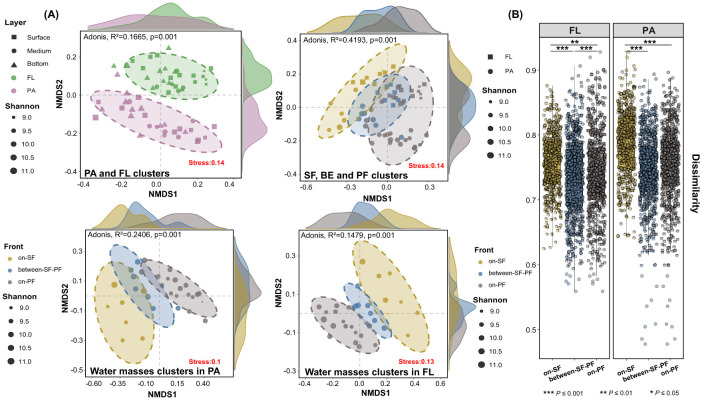 Figure 3
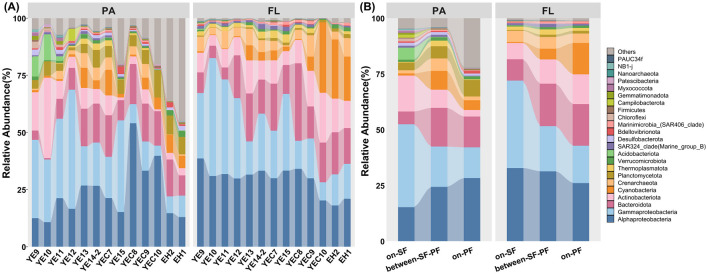 Figure 4
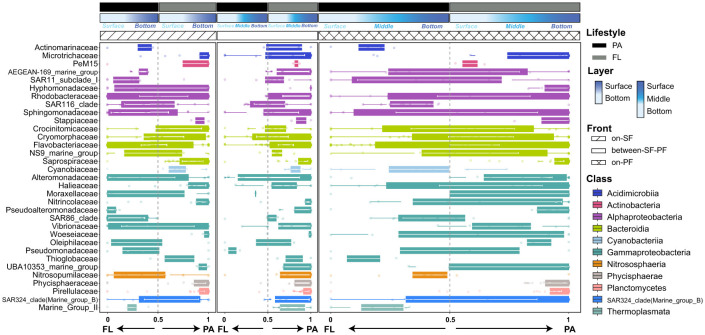 Figure 5
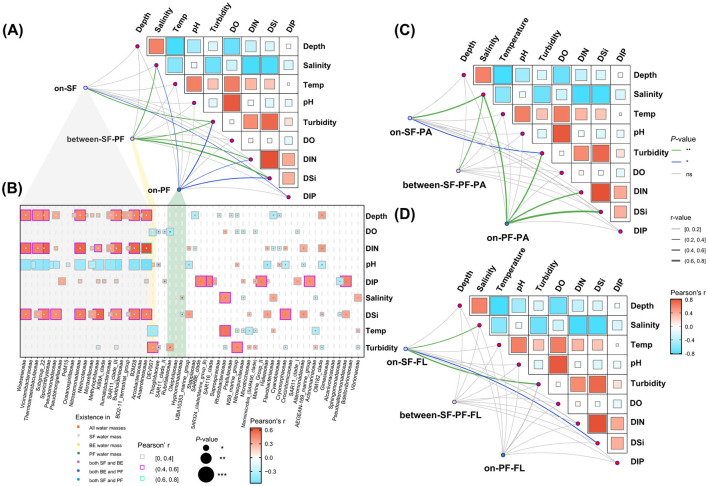 Figure 6
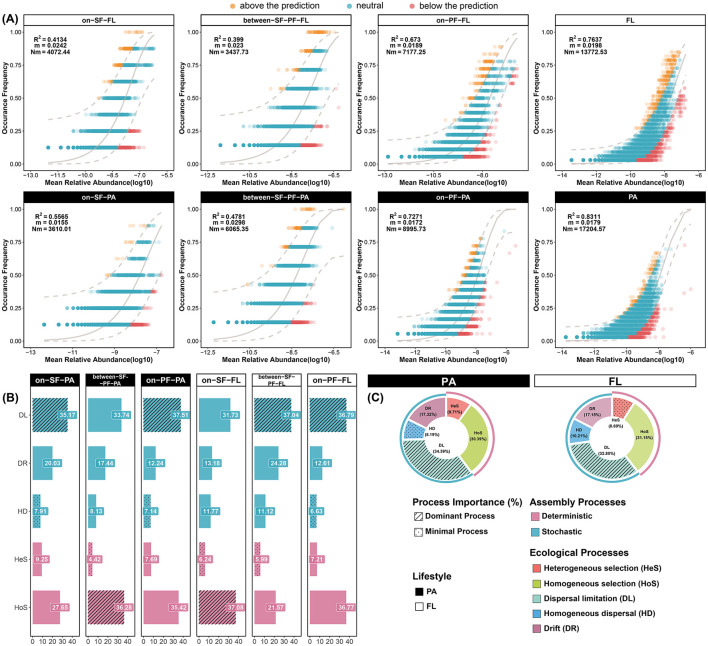 Figure 7
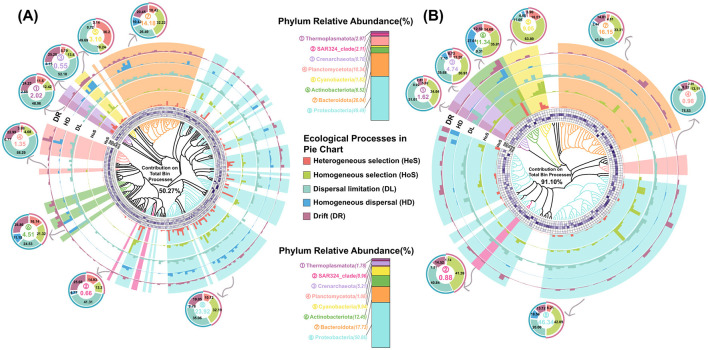 Figure 8
Peer Reviews
No public reviews on file for this paper yet. If you reviewed it on a platform where reviews are public (OpenReview, ICLR, NeurIPS, ICML), you can paste yours below so the community can read it here.
Videos
No videos yet. Explain this paper in a talk, walkthrough, or lecture? Add one.
Taxonomy
TopicsMicrobial Community Ecology and Physiology · Gut microbiota and health · Genomics and Phylogenetic Studies