Leveraging sequential least-cost modelling to uncover multiple introductions: a case study of an invasive wild bee species
Christa Rohrbach, Gudrun Wallentin, Jovana Bila Dubaić, Julia Lanner

TL;DR
This study uses a new modeling approach to track the spread of an invasive bee species in Europe, revealing multiple introductions and expansion rates.
Contribution
A novel spatio-temporal method is introduced to delineate invasive populations without prior genetic knowledge.
Findings
Two populations of the Sculptured Resin Bee align with known genetic groups in France, Switzerland, and Austria.
Additional populations were identified in Italy and Serbia, with expansion rates up to 89.7 km/year.
The method improves expansion rate estimation and supports targeted management of invasive species.
Abstract
Invasive species pose a significant threat to biodiversity, creating a need for accurate methods to assess their spread. Although multiple introductions are common, estimates of expansion rates often assume a single introduction site due to limited knowledge of population structure. This multidisciplinary study aimed to develop a novel spatio-temporal approach to delineate potential populations without prior knowledge of population structure. We applied this approach to the Sculptured Resin Bee, Europe’s first non-native bee species, providing regional expansion rate estimates for its spread across Europe. Observation data from 2008 to 2024 were analysed. Based on an environmental suitability map, sequential least-cost modelling was applied in annual time steps, linking each new observation to the nearest known observation via a least-cost path. Populations were delineated by…
Genes, proteins, chemicals, diseases, species, mutations and cell lines named across the full text — each resolved to its canonical identifier and authoritative record.
Click any figure to enlarge with its caption.
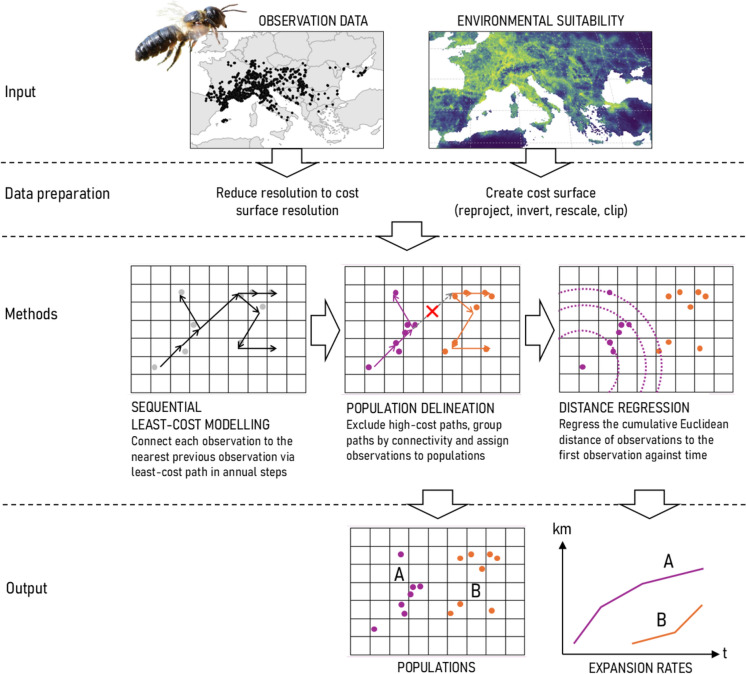 Figure 1
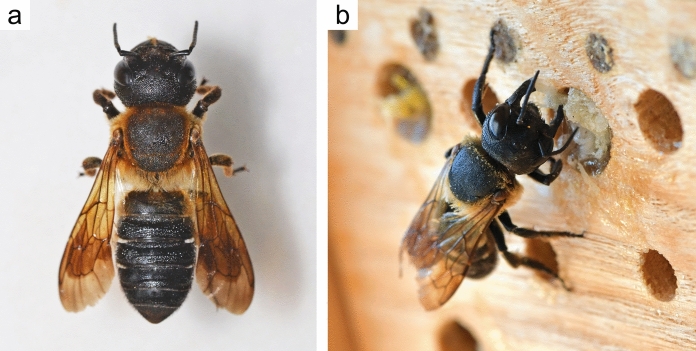 Figure 2
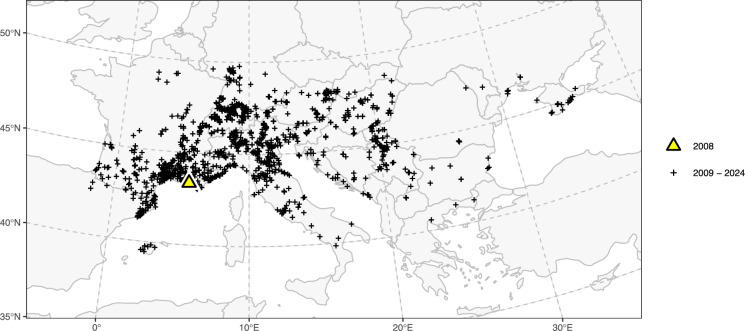 Figure 3
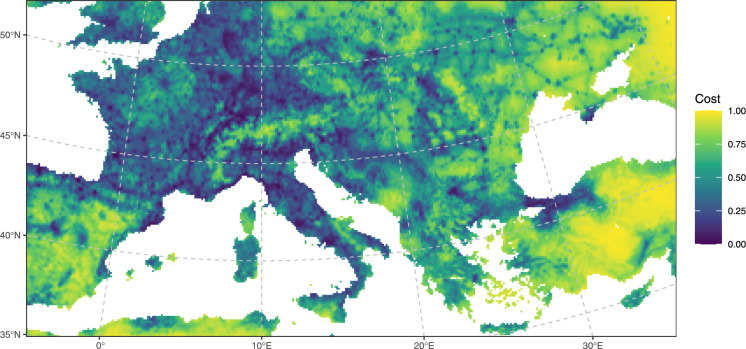 Figure 4
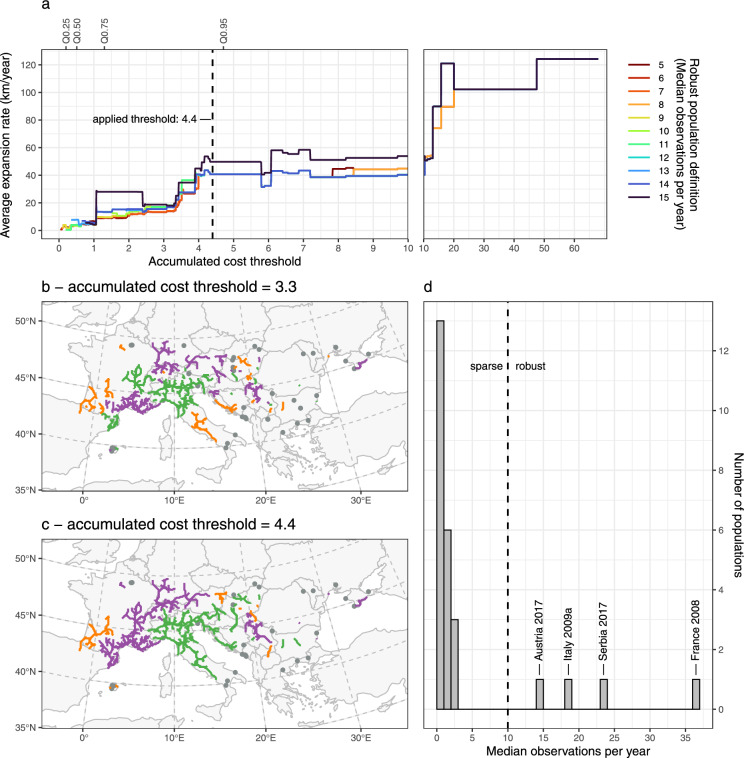 Figure 5
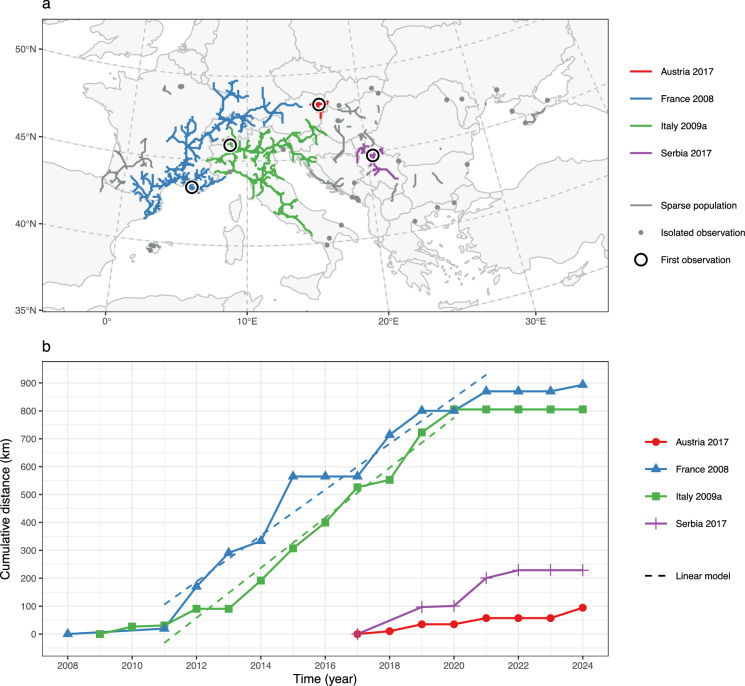 Figure 6
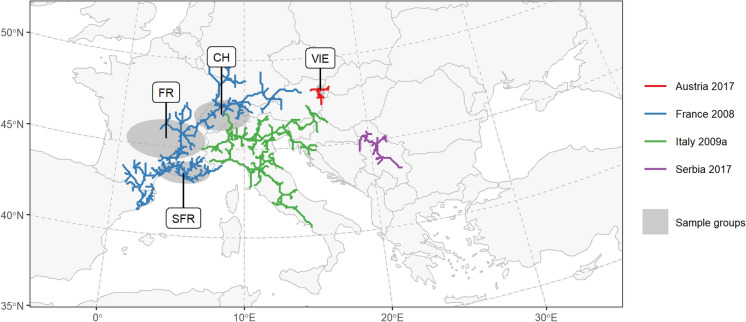 Figure 7
Peer Reviews
No public reviews on file for this paper yet. If you reviewed it on a platform where reviews are public (OpenReview, ICLR, NeurIPS, ICML), you can paste yours below so the community can read it here.
Videos
No videos yet. Explain this paper in a talk, walkthrough, or lecture? Add one.
Taxonomy
TopicsPlant and animal studies · Insect and Pesticide Research · Insect and Arachnid Ecology and Behavior