Memory reconsolidation impairment by amyloid beta (1–42) and its prevention by non-competitive antagonists of NMDA receptors
A. A. Tiunova, E. A. Diffine, K. V. Anokhin

TL;DR
This study shows that amyloid beta (Aβ1–42) can disrupt memory reconsolidation in chicks, and NMDA receptor antagonists like MK-801 and memantine can prevent this, offering a new perspective on Alzheimer's treatment.
Contribution
The study introduces a novel hypothesis linking impaired memory reconsolidation to Alzheimer's progression and suggests NMDA antagonists as potential therapeutic agents.
Findings
Aβ1–42 impaired memory reconsolidation in chicks when administered before memory reactivation.
MK-801 and memantine prevented Aβ1–42-induced memory impairment.
The findings support the role of reconsolidation disruption in Alzheimer's memory loss.
Abstract
In a healthy brain, the reactivation of memories under conditions of novelty leads to their labilization and subsequent reconsolidation. However, if plasticity of the nervous system is reduced reconsolidation mechanisms may be disrupted, leading to weakening and loss of existing memory. We hypothesize that such self-degradation of old memory due to its reactivation in the compromised brain may lead to progressive memory loss in Alzheimer’s disease. Preventing memory lability when accessing it, may slow down such engram degradation. To test these hypotheses, we first examined whether beta-amyloid peptide Aβ1–42 can impair reconsolidation of memory in one-trial passive avoidance task in young chicks. Next, we examined the possibility to prevent such reminder-associated amnesia by administering a non-competitive N-methyl-D-aspartate (NMDA) receptor antagonist MK-801 prior to memory…
Genes, proteins, chemicals, diseases, species, mutations and cell lines named across the full text — each resolved to its canonical identifier and authoritative record.
Click any figure to enlarge with its caption.
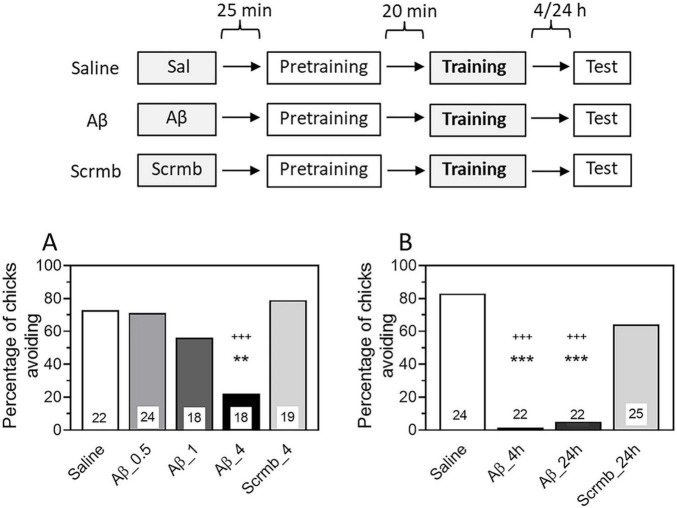 Figure 1
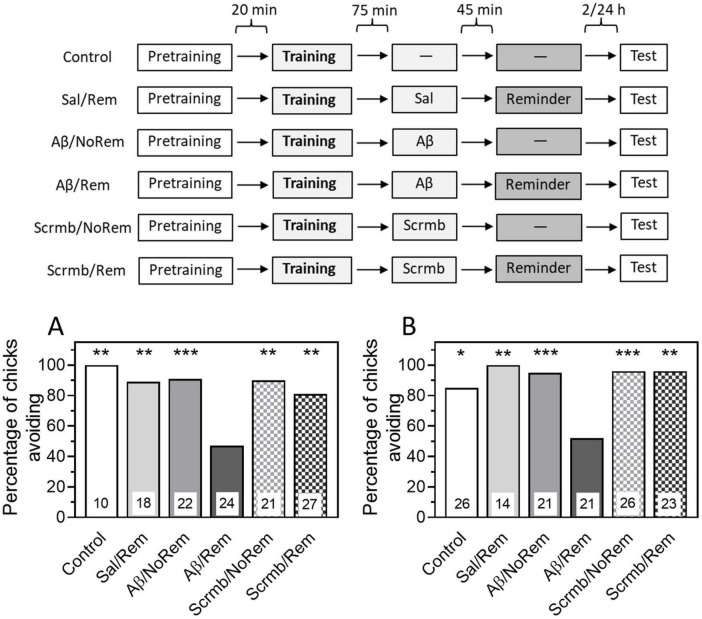 Figure 2
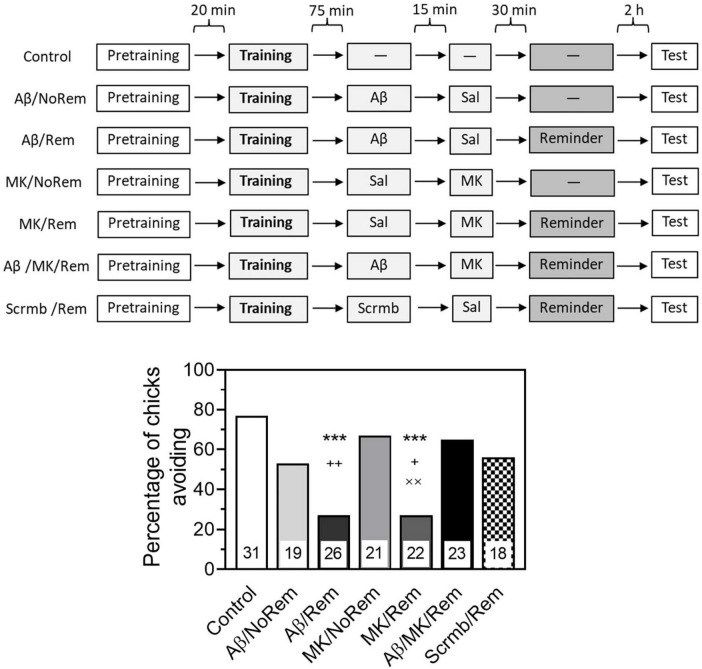 Figure 3
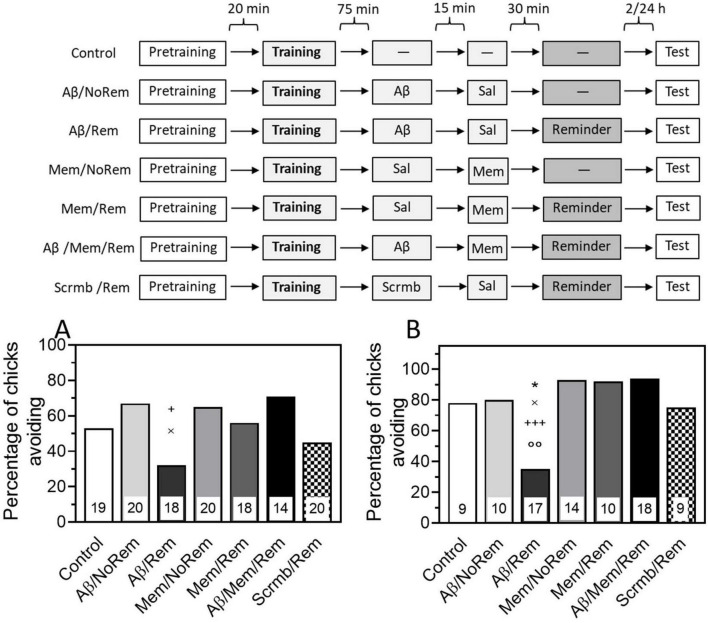 Figure 4
Peer Reviews
No public reviews on file for this paper yet. If you reviewed it on a platform where reviews are public (OpenReview, ICLR, NeurIPS, ICML), you can paste yours below so the community can read it here.
Videos
No videos yet. Explain this paper in a talk, walkthrough, or lecture? Add one.
Taxonomy
TopicsAlzheimer's disease research and treatments · Memory and Neural Mechanisms · Neuroscience and Neuropharmacology Research