Roles of mobile genetic elements and biosynthetic gene clusters in environmental adaptation of acidophilic archaeon Ferroplasma to extreme polluted environments
Yiran Li, Liyuan Ma, Shanshan Huang, Shiqi Chen, Shadab Begum, Nazidi Ibrahim, Yili Liang, Xueduan Liu

TL;DR
This study explores how the acid-loving archaeon Ferroplasma adapts to extreme polluted environments using mobile genetic elements and biosynthetic gene clusters.
Contribution
The study identifies the role of mobile genetic elements and biosynthetic gene clusters in the environmental adaptation of Ferroplasma in acid mine drainage.
Findings
Mobile genetic elements like IS4 family insertion sequences and genomic islands are located near genes involved in heavy metal translocation and cell stability.
Ferroplasma strains contain over 10 biosynthetic gene clusters with functions in antibiotics, exopolysaccharide production, and quorum sensing.
These genetic features are key to Ferroplasma's adaptation and potential for bioremediation of heavy metals in extreme environments.
Abstract
Acid mine drainage (AMD), characterized by high concentrations of heavy metals and strong acidity, presents a significant challenge in environmental remediation. The acidophilic archaeon Ferroplasma facilitates soluble electron shuttles secreting and iron precipitate formation to immobilize heavy metals and demonstrating significant remediation capabilities in microbial consortia. However, its environmental adaptation mechanisms in highly polluted environments during remediation remain unclear. Biosynthetic gene clusters (BGCs), which encode specialized metabolites with ecological roles, and mobile genetic elements (MGEs), known to mediate genomic function through gene disruption, rearrangement, and regulatory interference, represent crucial evolutionary means for environmental adaptation. In this study, Ferroplasma acidiphilum ZJ was screened from the traditional AMD of the Zijinshan…
Genes, proteins, chemicals, diseases, species, mutations and cell lines named across the full text — each resolved to its canonical identifier and authoritative record.
Click any figure to enlarge with its caption.
 Figure 1
 Figure 2
 Figure 3
 Figure 4
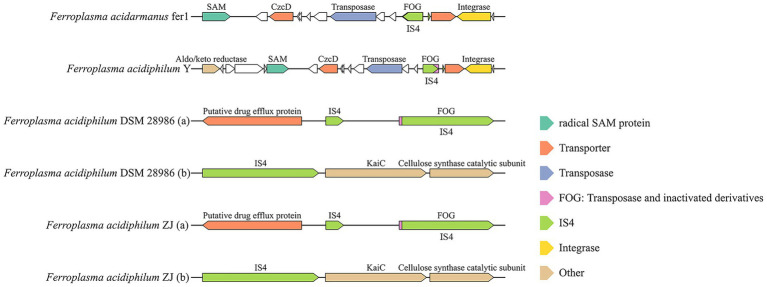 Figure 5
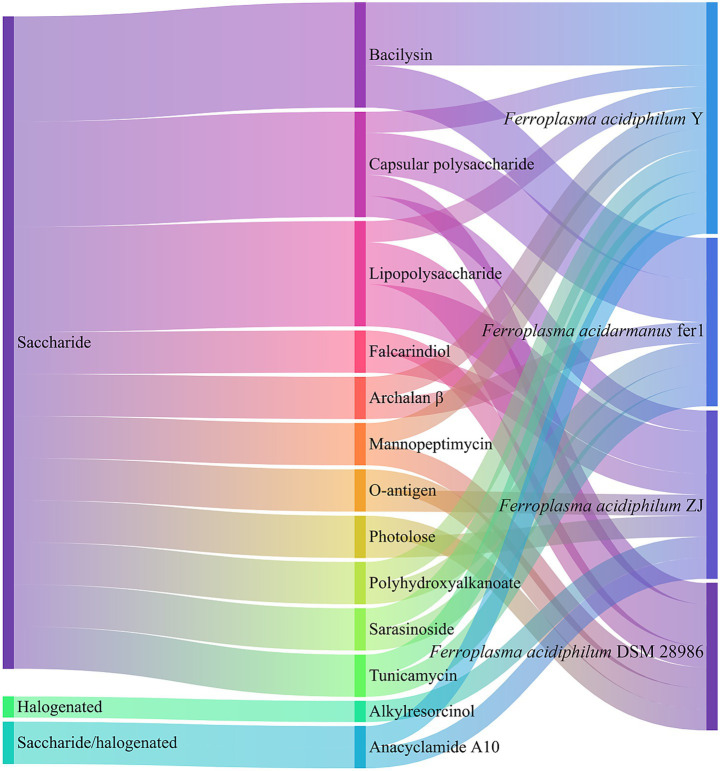 Figure 6
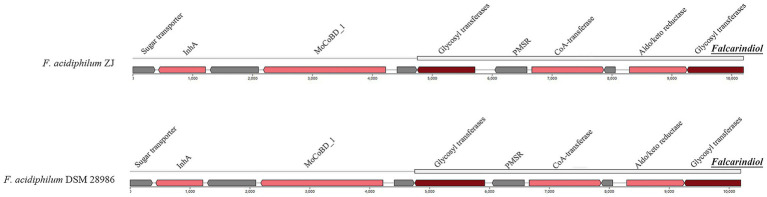 Figure 7
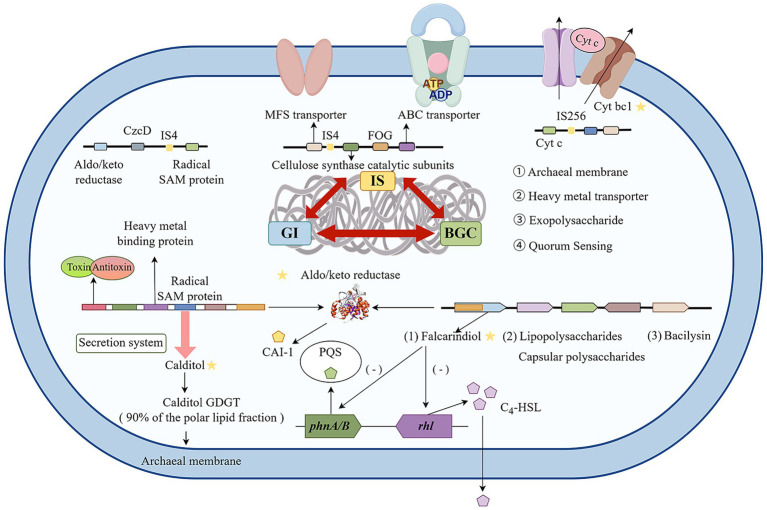 Figure 8
Peer Reviews
No public reviews on file for this paper yet. If you reviewed it on a platform where reviews are public (OpenReview, ICLR, NeurIPS, ICML), you can paste yours below so the community can read it here.
Videos
No videos yet. Explain this paper in a talk, walkthrough, or lecture? Add one.
Taxonomy
TopicsMetal Extraction and Bioleaching · Mine drainage and remediation techniques · Microbial Fuel Cells and Bioremediation