Comparative evaluation of biofilm-forming capacity in uropathogenic and commensal Escherichia coli
Rashmi P. Mahale, Anuradha K, Adeline Princy, Yogeesh D. Maheshwarappa, Mahadevaiah Neelambike Sumana

TL;DR
This study compares biofilm-forming abilities and antibiotic resistance in uropathogenic and commensal E. coli to better understand UTI causes and prevention.
Contribution
The study provides a comparative evaluation of biofilm-forming capacity and antibiotic resistance in UPEC and commensal E. coli.
Findings
72.22% of UPEC isolates produced biofilms, compared to 16.66% of commensal isolates.
Biofilm-forming UPEC showed significantly higher antibiotic resistance, with 128-fold reduced ciprofloxacin susceptibility.
The fimH gene was detected in 98.33% of UPEC isolates, indicating its role in adhesion and virulence.
Abstract
Escherichia coli (E. coli) causes most cases of the urinary tract infections (UTIs) via virulence factors like biofilms. This study identifies key phenotypic and genotypic virulence attributes of Uropathogenic Escherichia coli. A total of 180 uropathogenic E. coli (UPEC) isolated from patients with different categories (cystitis, pyelonephritis, recurrent UTI, catheter-associated UTI, and asymptomatic bacteriuria) of UTI and 30 commensal E. coli isolated from healthy individuals were evaluated for biofilm production by phenotypic methods using tissue culture plate, tube adherence, and Congo red method, and RT-PCR was used to genetically characterize them. This study analyzed 1,600 urine samples from UTI patients, with 498 showing significant bacterial growth and 180 identifying E. coli as the pathogen. The female-to-male ratio of UTI cases was 0.74. Antibiotic susceptibility testing…
Genes, proteins, chemicals, diseases, species, mutations and cell lines named across the full text — each resolved to its canonical identifier and authoritative record.
Click any figure to enlarge with its caption.
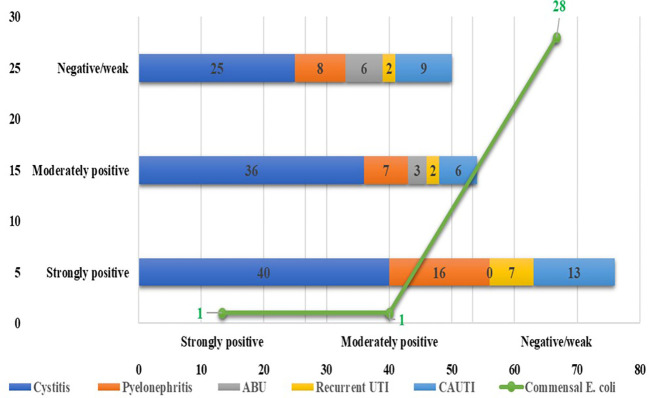 Figure 1
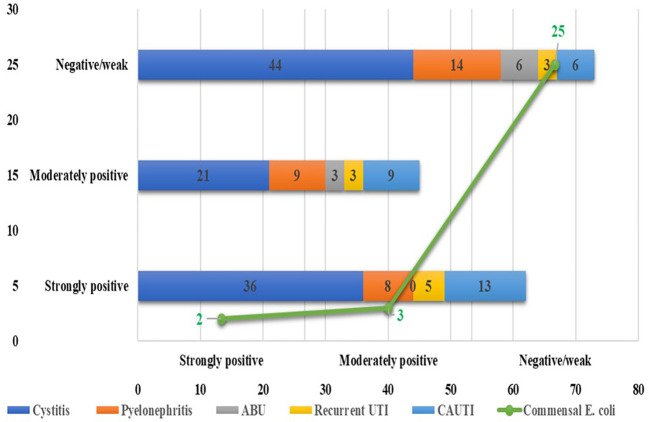 Figure 2
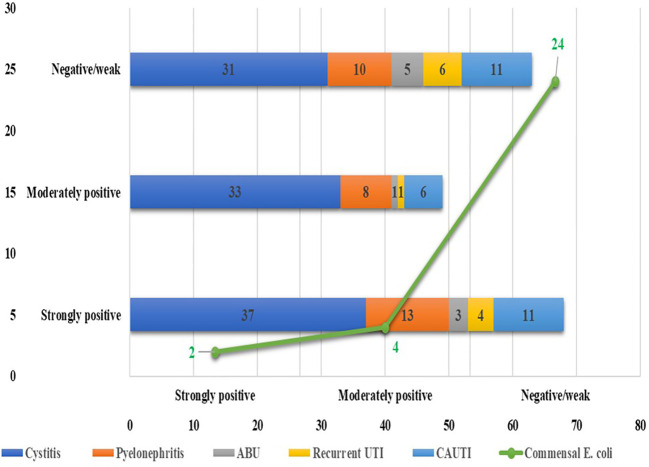 Figure 3
Peer Reviews
No public reviews on file for this paper yet. If you reviewed it on a platform where reviews are public (OpenReview, ICLR, NeurIPS, ICML), you can paste yours below so the community can read it here.
Videos
No videos yet. Explain this paper in a talk, walkthrough, or lecture? Add one.
Taxonomy
TopicsEscherichia coli research studies · Urinary Tract Infections Management · Enterobacteriaceae and Cronobacter Research