Case Report: Compound heterozygous variants in BHLHA9 cause complex syndactyly with oligodactyly, renal artery variation, and facial scar
Weidong Wei, Xiaosha Wang, Tao Zhang, Yongxing Zhong, Jintang Zhang, Hua Yuan, Xiaoliang Shi, Yao He, Haitao Pan, Zhen Yang, Yuejuan Wang

TL;DR
This case report identifies two new BHLHA9 gene variants in a fetus with severe limb and kidney abnormalities, expanding the known genetic causes of developmental disorders.
Contribution
The study reports novel compound heterozygous BHLHA9 variants and their potential functional impact on limb and renal development.
Findings
Compound heterozygous BHLHA9 variants c.251C>T and c.250_261dup were identified in a fetus with limb and renal anomalies.
The variants are located in the conserved HLH domain, likely disrupting BHLHA9's structural and functional integrity.
The findings expand the genetic spectrum of BHLHA9-related developmental disorders.
Abstract
The BHLHA9 gene, a member of the basic helix-loop-helix (bHLH) family of transcription factors, plays a critical role in limb development. Mutations in BHLHA9 have been associated with various limb malformations, including syndactyly and split-hand/foot malformation. This study aimed to identify and characterize novel BHLHA9 variants in a fetus with complex limb and renal abnormalities, providing further insights into the genetic basis of developmental disorders. We performed Exome sequencing (ES) on a fetus with severe limb malformations and renal anomalies, along with the parents. Sanger sequencing was used to validate the identified variants. Evolutionary conservation analysis and structural predictions using AlphaFold were conducted to assess the functional impact of the variants. Protein-protein interaction networks were generated using the STRING database to explore potential…
Genes, proteins, chemicals, diseases, species, mutations and cell lines named across the full text — each resolved to its canonical identifier and authoritative record.
Click any figure to enlarge with its caption.
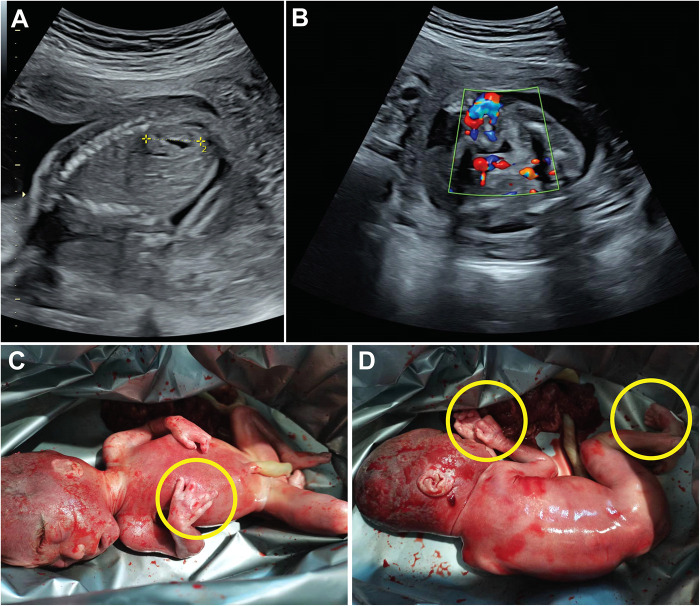 Figure 1
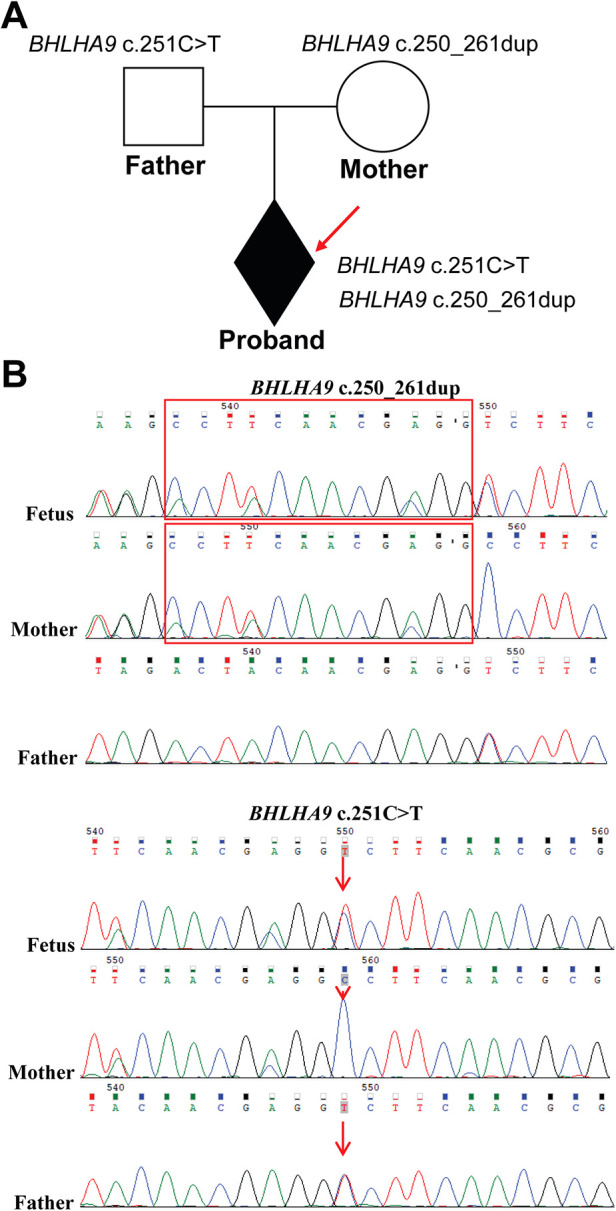 Figure 2
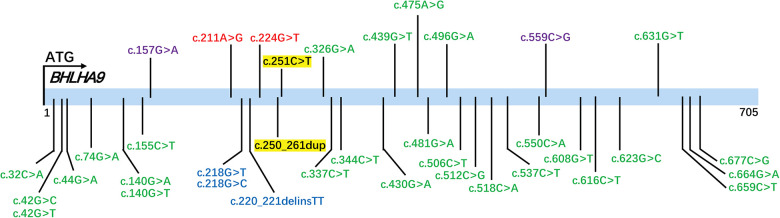 Figure 3
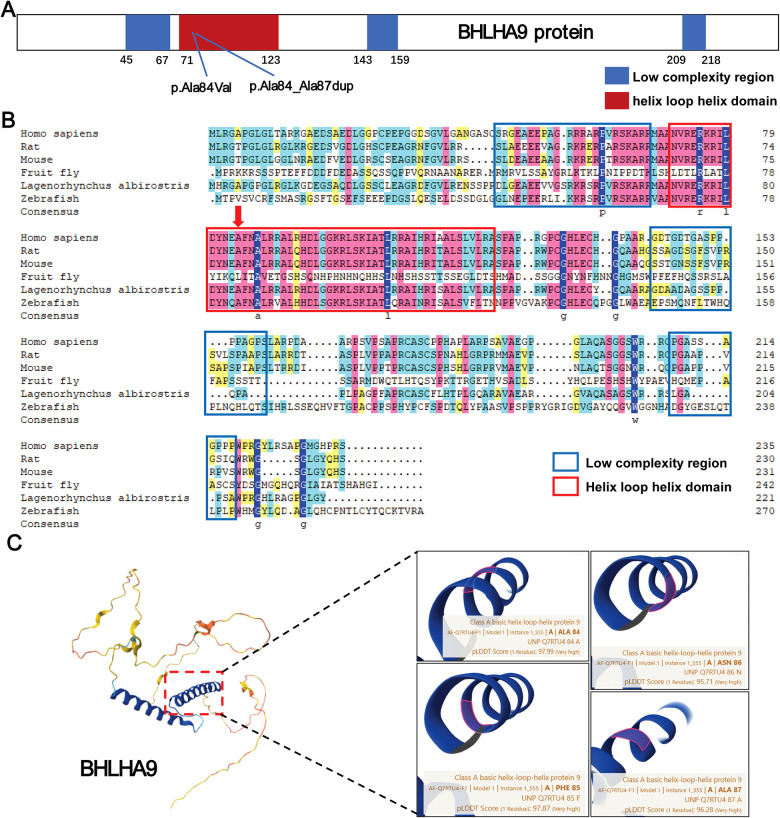 Figure 4
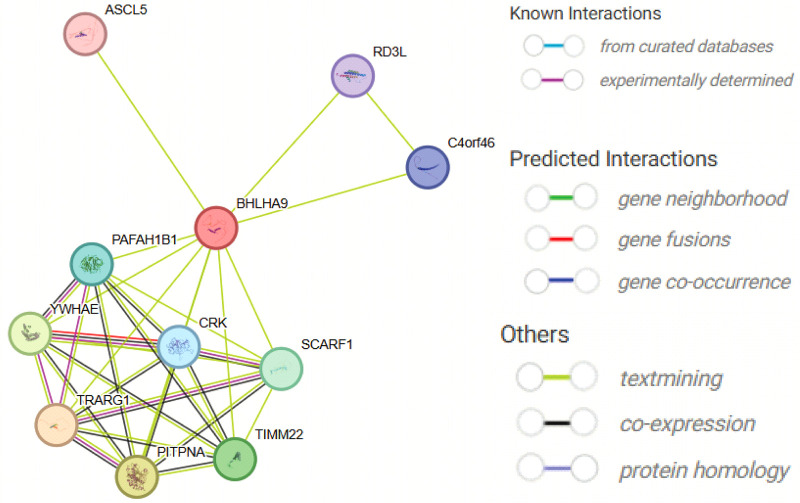 Figure 5
Peer Reviews
No public reviews on file for this paper yet. If you reviewed it on a platform where reviews are public (OpenReview, ICLR, NeurIPS, ICML), you can paste yours below so the community can read it here.
Videos
No videos yet. Explain this paper in a talk, walkthrough, or lecture? Add one.
Taxonomy
TopicsCongenital limb and hand anomalies · Prenatal Screening and Diagnostics · Genomic variations and chromosomal abnormalities