Centella asiatica extract improves senescence-associated metabolic dysfunction by targeting inflammation in adipose tissue and macrophage in obesity-induced insulin resistance mice
Agian Jeffilano Barinda, Wawaimuli Arozal, Nounik Cheri Dwita, Muhamad Sadam Safutra, Ippei Shimizu, Yung Ting Hsiao, Normalina Sandora, Rani Wardani Hakim, Nurul Gusti Khatimah, Harri Hardi

TL;DR
This study shows that Centella asiatica extract can reduce obesity-related insulin resistance by targeting inflammation and cell aging in fat tissue.
Contribution
The novel finding is that Centella asiatica extract, specifically at 300 mg/kg, prevents inflammation-induced senescence in adipose tissue and macrophage activation in obese mice.
Findings
CA300 reduced body mass and visceral fat in obese mice.
CA300 improved insulin sensitivity and inhibited proinflammatory M1 macrophage activity in adipose tissue.
CA300 decreased senescence markers like SA-β-Gal and Cdkn2a in white adipose tissue.
Abstract
Insulin Resistance (IR) is a complication that frequently occurs in obesity. The inflammation-mediated senescence in White Adipose Tissue (WAT) is important in obesity-induced IR. Centella asiatica (CA) is a potential medicinal plant with anti-aging and anti-obesity properties. Here, we explored the effect of CA on obesity-mediated IR in mice fed with a High Fat-High Fructose (HFHF) diet and treated simultaneously with CA at 150 mg/kgBW (CA150) or 300 mg/kgBW (CA300). The total body mass and visceral WAT weight in both CA groups decreased in comparison with HFHF group alone. We demonstrated that HFHF-diet mice treated with CA300 improved insulin sensitivity and enhanced Irs-1 activation in WAT. CA300, but not CA150, prevented the senescence phenotype in WAT, represented by decreased Senescence-associated beta-galactosidase (SA-β-Gal) activity and diminished Cdkn2a and Cdkn1a expression…
Genes, proteins, chemicals, diseases, species, mutations and cell lines named across the full text — each resolved to its canonical identifier and authoritative record.
Click any figure to enlarge with its caption.
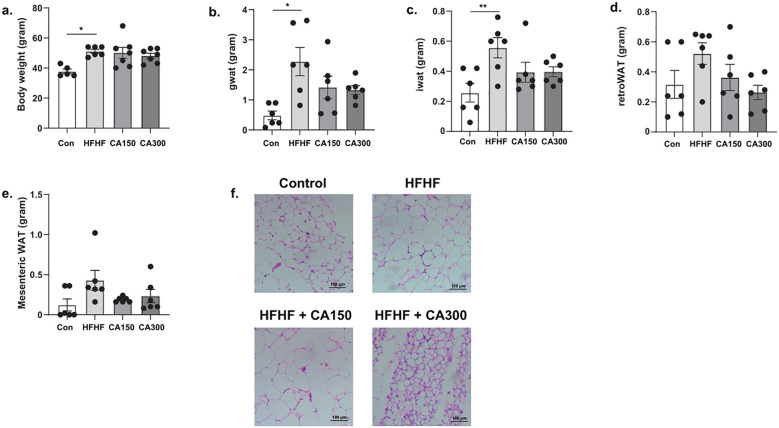 Figure 1
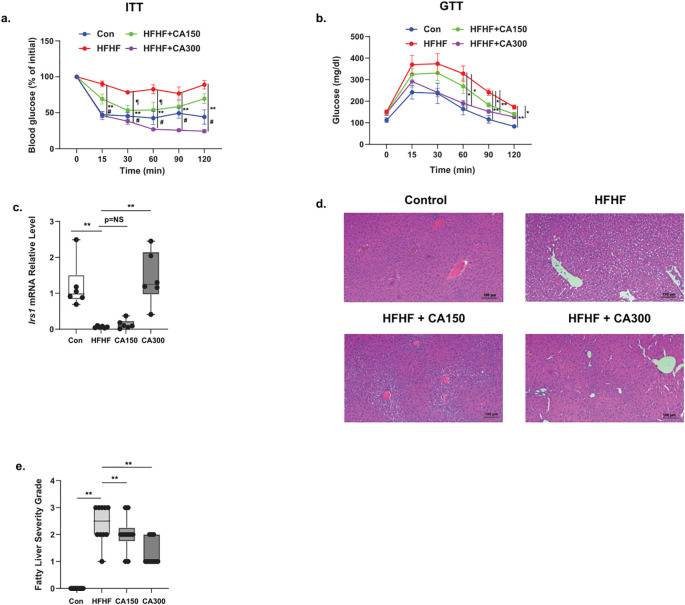 Figure 2
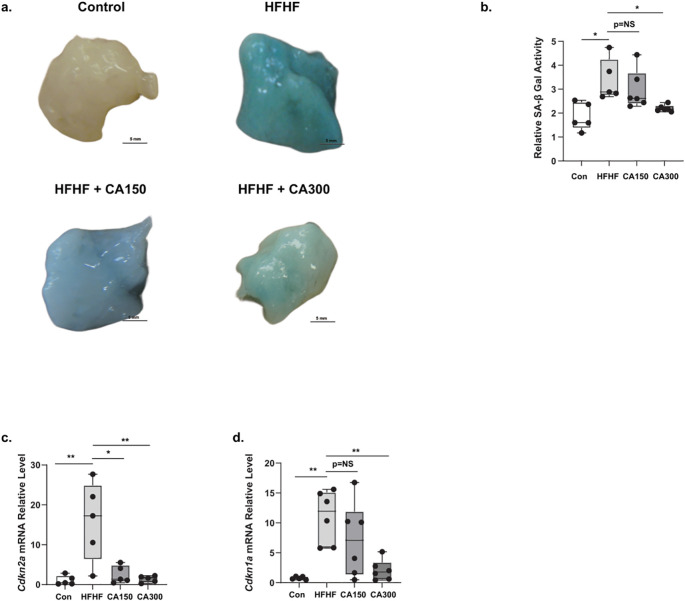 Figure 3
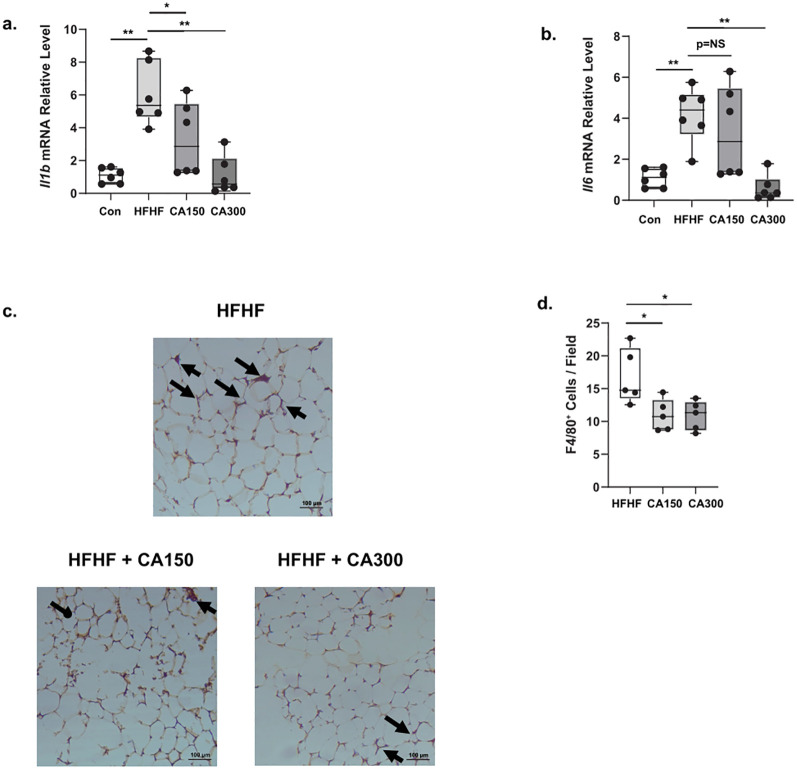 Figure 4
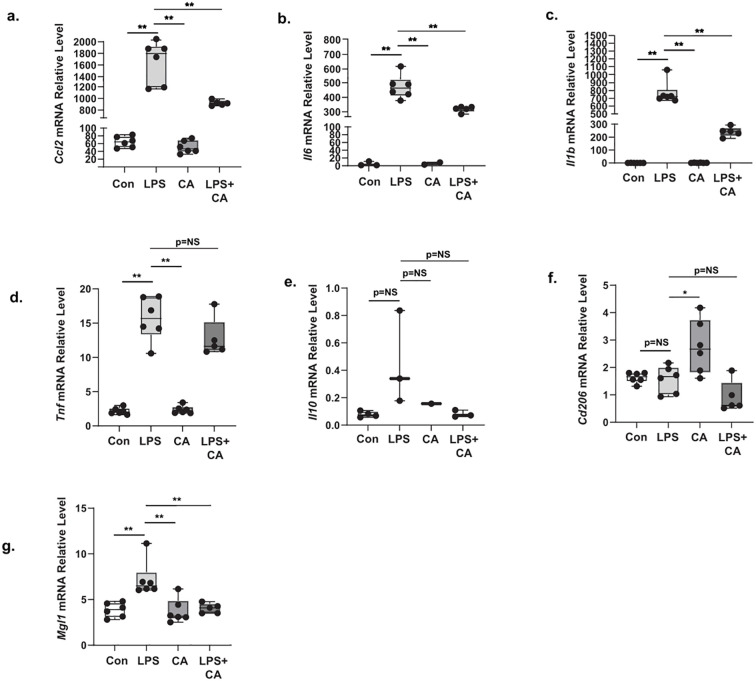 Figure 5
Peer Reviews
No public reviews on file for this paper yet. If you reviewed it on a platform where reviews are public (OpenReview, ICLR, NeurIPS, ICML), you can paste yours below so the community can read it here.
Videos
No videos yet. Explain this paper in a talk, walkthrough, or lecture? Add one.
Taxonomy
TopicsMedicinal Plants and Neuroprotection · Neuroinflammation and Neurodegeneration Mechanisms · Mangiferin and Mango Extracts