Bryophytes of the Serra dos Órgãos National Park: Endemism and Conservation in the Atlantic Forest
Jéssica Soares de Lima, Allan Laid Alkimim Faria, Mateus Tomás Anselmo Gonçalves, Denilson Fernandes Peralta

TL;DR
This study cataloged bryophytes in a Brazilian national park, revealing high diversity and several endemic and threatened species.
Contribution
The study provides the first comprehensive bryophyte inventory for Serra dos Órgãos National Park, identifying endemic and threatened species.
Findings
A total of 504 bryophyte species were recorded across 76 families.
PARNASO hosts 69 Brazilian endemic species and 11 threatened species according to IUCN criteria.
Montane Forest had the highest bryophyte species richness in the park.
Abstract
This study presents a comprehensive inventory of bryophytes in Serra dos Órgãos National Park (PARNASO), aiming to evaluate species richness, floristic composition and threatened taxa. Despite the state of Rio de Janeiro being one of the most extensively sampled regions for bryophytes in Brazil, detailed surveys of its conservation units remain scarce. Data were obtained through bibliographic review, herbarium specimen analysis, and new field collections. A total of 504 species were recorded, belonging to 202 genera and 76 families. The park harbors three locally endemic species, eight endemic to Rio de Janeiro, and sixty-nine species endemic to Brazil. Additionally, eleven species were identified as threatened, comprising seven Endangered (EN), two Critically Endangered (CR), and two Vulnerable (VU) according to the IUCN guidelines. PARNASO includes four distinct ecosystems along an…
Genes, proteins, chemicals, diseases, species, mutations and cell lines named across the full text — each resolved to its canonical identifier and authoritative record.
Click any figure to enlarge with its caption.
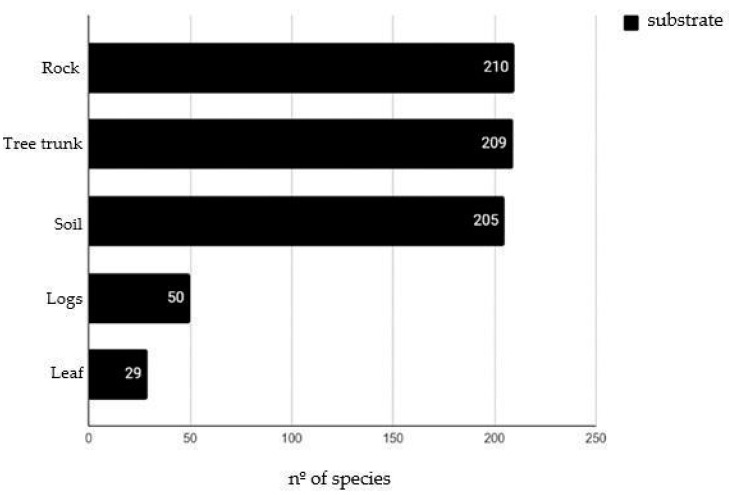 Figure 1
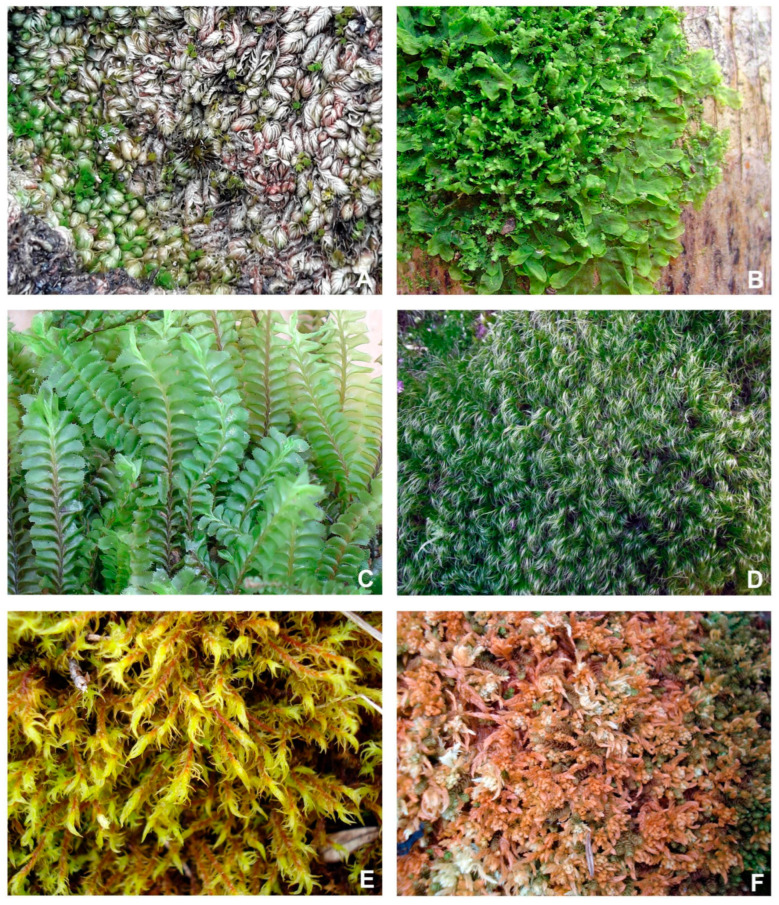 Figure 2
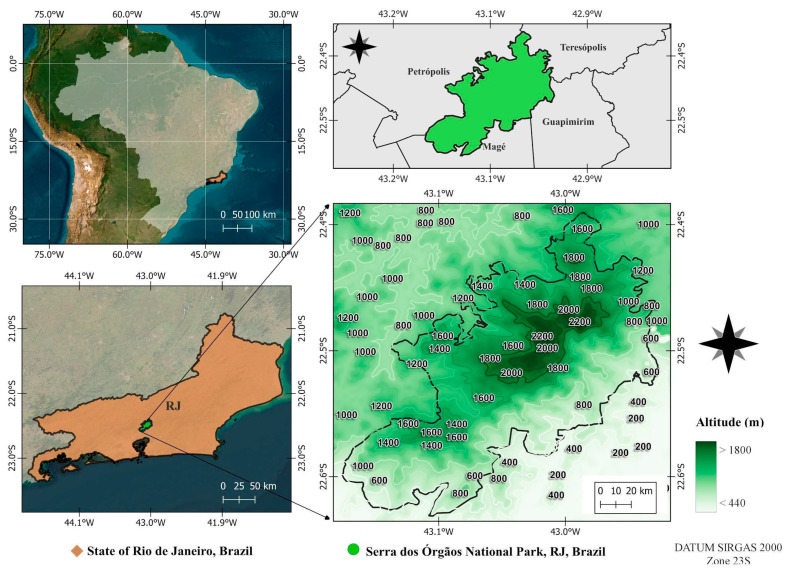 Figure 3
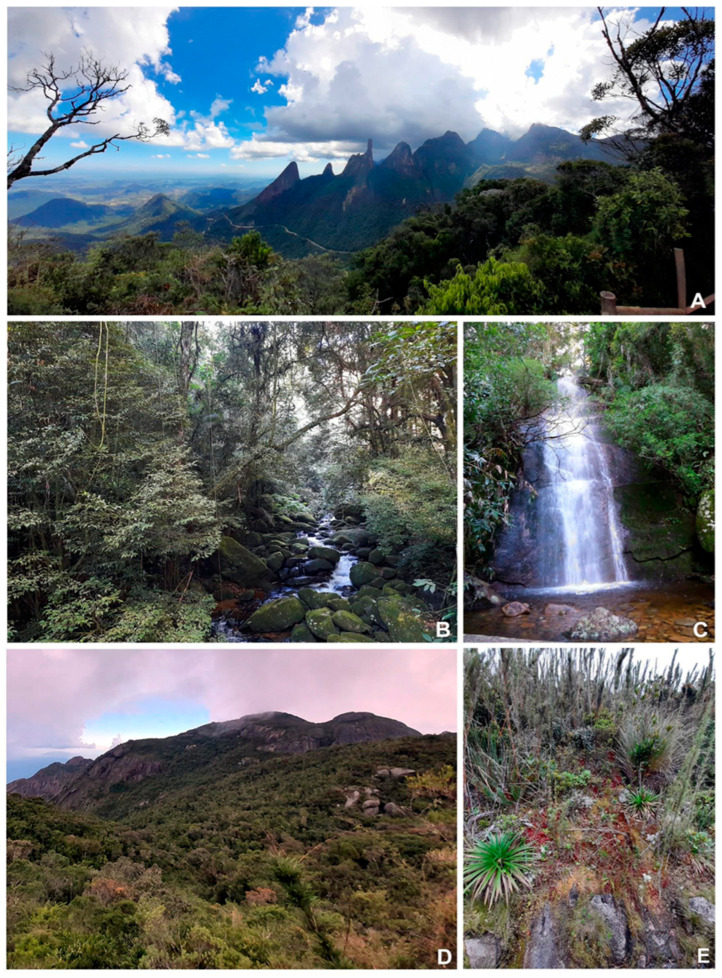 Figure 4
- —Fundação de Amparo à Pesquisa do Distrito Federal (FAP-DF)
Peer Reviews
No public reviews on file for this paper yet. If you reviewed it on a platform where reviews are public (OpenReview, ICLR, NeurIPS, ICML), you can paste yours below so the community can read it here.
Videos
No videos yet. Explain this paper in a talk, walkthrough, or lecture? Add one.
Taxonomy
TopicsBryophyte Studies and Records · Lichen and fungal ecology · Botany and Plant Ecology Studies
1. Introduction
Serra dos Órgãos National Park (PARNASO), established on November 30th, 1939, holds the distinction of being the third national park created in Brazil. This protected area is situated within the Atlantic Forest domain, specifically in the Serra do Mar massifs and called “Órgãos” in Portuguese because its peaks resemble and are named as “pipe organs”. The Serra do Mar is an extensive mountain range approximately 1500 km along the Brazilian coast, from the northern Santa Catarina State to Rio de Janeiro State [1,2].
PARNASO currently represents one of the most important remaining biodiversity hotspots in Rio de Janeiro State, since its ecosystems are one of the largest centers of flower plant endemism in the Atlantic Forest [3,4]. It also plays a vital role in preserving essential water sources that feed two main watersheds—Paraíba do Sul and several streams of the Baía de Guanabara [5,6,7,8].
The Atlantic Forest domain is one of the most species-rich forests in the tropics [4,9,10]. It is also recognized for having high levels of biodiversity and endemism, expressed via its complex structural environments [11,12]. Tropical forests harbor the highest diversity of bryophyte species in the world, not only due to their structural complexity and microhabitat heterogeneity, but also because of favorable climatic conditions such as high humidity, frequent precipitation, and relatively stable temperatures [13,14]. Some authors have reported that this diversity may vary along the altitudinal range, especially concerning structural and floristic composition [15,16,17,18].
The Atlantic Forest within PARNASO comprises well-preserved forests characterized by four distinct vegetation formations based on altitude, climate, and soil conditions, among other factors [6,19,20,21,22]. In the lower parts around Sede Guapimirim, sub-montane forest prevails, while near Sede at Teresópolis, the forest transitions from montane forest to upper-montane forest, culminating above 2000 m.a.s.l. and high-altitude fields along the trail from Teresópolis to Petrópolis [19].
The species list of the vascular plants in Flora Organensis [19] is strongly based on the work of 18th-century botanists and on collections made especially by A.C. Brade (1881–1971) and C.T. Rizzini (1921–1992) between the 1930s and 1950s of the 20th century. These collectors also recorded bryophytes, and the specimens were studied by Bartram (1954) [19], who identified 146 species. Most bryophyte specimens from Serra dos Órgãos are deposited in the Herbarium of Jardim Botânico do Rio de Janeiro (RB).
Bryophytes from PARNASO were not sufficiently explored, and even considering that, though several researchers collected and published new taxa, the study was dispersed as examined material in taxonomical revisionary work. For example, Faria et al. (2021) [23] attempted to re-collect species founded by Glaziou in Serra dos Órgaos and the taxonomic reclassification of an Atlantic Forest endemic, and Peralta et al. (2020) [24] reported species of the Andreaceae family from the region.
There is no other information on bryophytes in PARNASO; thus, there is no detailed data on the floristic structure and composition of bryophytes. A comprehensive species list will contribute to filling a significant knowledge gap for the state of Rio de Janeiro and support the assessment of threatened bryophyte species. In addition, the revision of herbarium specimens and the incorporation of new collections will help stimulate further research on the ecology and biogeography of bryophytes within this important national park. This work aims to provide an inventory of the bryophyte species in PARNASO and discuss the following topics: (i) species richness and floristic composition; (ii) substrate preferences; and (iii) endemism and conservation status.
2. Results
2.1. Species Richness and Floristic Composition
The present study documented 504 species in 202 genera and 76 families (Table 1). The Serra dos Órgaos National Park preserves 57% of the known bryophyte flora of Rio de Janeiro State and 31% of Brazil. A total of 3000 specimens were analyzed, resulting in the identification of 428 species and an additional 79 species (indicated by * in Table 1) that remain known only from the literature.
Three species are locally endemic, being known only from the type specimens collected over 100 years ago: Southbya organensis (Lützelburg 6003 p.p. [holotype JE]), Plagiochila pseudoradicans (Lützelburg 6029b [holotype JE]) and Dicranodontium pulchroalare ssp. brasiliense (Lützelburg 1519 [holotype JE]). Additional field research is urgently needed in order to obtain new records and data of these three endemic species.
The most species-rich families of liverworts are Lejeuneaceae (65 spp.) and Lepidoziaceae (16 spp.), while for moss they are Leucobryaceae (30 spp.) and Sphagnaceae (25 spp.). A total of 8 species of hornworts were found, distributed among the families Dendrocerotaceae (4 spp.), Anthocerotaceae (2 spp.) and Nothotyladaceae (2 spp.). The most species-rich genera were Campylopus (Leucobryaceae, 23 spp.); Plagiochila (Plagiochilaceae, 21 spp.); Fissidens (Fissidentaceae, 20 spp.); Lejeunea (Lejeuneaceae, 16 spp.); and Metzgeria (Metzgeriaceae, 14 spp.). Considering the samples analyzed, the most common species with the largest number of records were Campylopus arctocarpus (7 specimens); Lejeunea acanthogona (7); Lejeunea flava (7); Radula nudicaulis (7); Bryum capillare (6); Fissidens wallisii (6); Lejeunea serpillifolioides (6); Rigodium toxarion (6); Trichocolea brevifissa (6); and Zelometeorium ambiguum (6).
2.2. Substrate Preferences
The bryophyte species predominantly colonized rocks (210 spp.), followed by tree trunks (209 spp.), soil (205 spp.), logs (50 spp.), and leaves (29 spp.) (Figure 1).
The availability of trees within the forests of PARNASO clearly influences the bryophyte species occurrence. Mosses predominantly colonize tree trunks, with only four species being found on leaves: Paraleucobryum longifolium (Dicranaceae); Philophyllum tenuifolium (Hookeriaceae); Toloxis imponderosa (Meteoriaceae); and Schlotheimia tecta (Orthotrichaceae).
The lowest bryophyte colonization was for leaves (epiphyllous). The leaf-colonizing species most frequent were the leafy liverworts of the family Lejeuneaceae (21 spp.), followed by Radulaceae (2 spp.) and the thallose liverwort family Metzgeriaceae (2 spp.). According to Gradstein et al. (2001) [17] and Ilkiu-Borges & Lisboa (2004) [57], species of Lejeuneaceae can colonize different types of substrates, but their occurrence on leaves is indicative of preserved native areas.
2.3. Endemism and Conservation Status
The Serra dos Órgaos National Park protects three species locally endemic, eight from Rio de Janeiro state, and 69 Brazilian (Table 2). Endemism and species richness are high with an increase in altitude, as was also found in Itatiaia National Park, located in Serra da Mantiqueira [18].
Of the 28 species of Brazilian endemic bryophytes exclusive to high-altitude fields, 12 belong to the family Sphagnaceae (42%). The species Sphagnum luetzelburgii and S. sehnemii are endemic to Brazil, occurring in the states of Paraná, Santa Catarina, Rio Grande do Sul, and Rio de Janeiro. However, in Rio de Janeiro State, these species are restricted to mountains of the Atlantic Forest and have only been reported for PARNASO by Costa (2021) [58] and not by the present work.
The lower number of endemic species recorded in sub-montane forest probably reflects the effects of ecological and biogeographic processes, as well as human interference [18]. Among the 19 endemic species exclusively found in montane forest, 13 are liverworts and 6 are mosses. The predominant liverwort family is Lejeuneaceae, with nine species, followed by Metzgeriaceae with three and Jamesoniellaceae with two.
We have re-collected some species considered rare, including Bryum limbatum. Ochi (1980) [59] cites a collection from Metzgeria furcata, collected by Bartram (1954) [19]; Sphagnum cuspidatum, collected by Luetzelburg in 1923; and Andreaea acutifolia, collected by Mueller in 1845. Andreaea acutifolia is always mistakenly identified as A. rupestris, the two differing mainly by perichaetial leaves [24]. The species S. cuspidatum is widespread in Brazil [60], but has been collected only once in PARNASO.
The Serra dos Orgaos Park also protects eleven of the species indicated as threatened by CNCFlora and Flora e Funga do Brasil (Figure 2 and Table 2) in the Rio de Janeiro state: seven as Endangered (EN), two as Critically Endangered (CR) and two as Vulnerable (VU). Among these threatened species, three are known only from the type material, and were not found in the field trips. Southbya organensis was described by Herzog (1949) [61] and is classified as Critically Endangered (CR) by CNCFlora (2012) [58] due to its distribution being restricted to Serra dos Órgãos, specifically Morro do Açu peak, which has excessive tourism and recurrent arson instead. Plagiochila pseudoradicans and Dicranodontium pulchroalare ssp. brasiliense were described by Herzog (1949) [61], and neither was assessed by CNCFlora (2012) [62] because they were considered as Data Deficient (DD) at that time.
3. Discussion
The Serra dos Órgãos National Park (PARNASO) exhibits remarkable bryophyte diversity. This richness highlights the park as a key conservation area for bryophytes in the Atlantic Forest. These findings suggest that even in areas already considered well-studied, significant knowledge gaps remain, highlighting the dynamic nature of bryophyte diversity and distribution.
One important factor contributing to this diversity is the presence of forested areas with abundant tree trunks, which serve as critical substrates for epiphytic bryophytes. The architectural, morphological, phenological, and chemical traits of different tree species create varied microhabitats that support a wide range of bryophyte taxa [57,63]. Shade-loving epiphytes, in particular, are commonly found in these forest environments but are highly sensitive to environmental disturbances. As such, they are often among the first species to disappear following canopy opening or habitat degradation [64], making them reliable indicators of forest health.
In contrast, mosses exhibit a broader ecological amplitude due to their desiccation tolerance and structurally complex adaptations, such as costa development, hyaline leaf apices, papillae, and specialized conducting tissues like hydroids and leptoids [29,65,66]. These features enable many mosses to colonize exposed and drier substrates, including rocky outcrops. Similar patterns of moss dominance on rock surfaces have been observed in other highland regions of Brazil, such as Chapada Diamantina [67,68], Serra do Caraça [69], and Serra da Canastra [70].
The high-altitude ecosystems of PARNASO further enhance bryophyte diversity by creating isolated and unique habitats. Mountain summits, often compared to ecological islands due to their environmental isolation, support specialized flora adapted to harsh conditions such as strong winds, low temperatures, and nutrient-poor soils [71,72,73]. These rupestrian fields form natural refugia, acting as barriers to typical forest species and favoring the emergence of narrow endemics and rare taxa [74,75,76].
Overall, the findings of this study underscore the ecological importance and conservation value of Serra dos Órgãos National Park. Alongside Itatiaia National Park, PARNASO remains one of the most critical remnants of Atlantic Forest in Rio de Janeiro and Brazil, particularly in terms of bryophyte conservation. The park’s diverse topography, wide range of microhabitats, and climatic heterogeneity—marked by high altitudes, low temperatures, and high light availability—create optimal conditions for bryophyte diversity. Furthermore, the presence of endemic and threatened species reinforces the park’s role as a conservation priority. Such studies are valuable as they reveal the significance of endemism and species richness, crucial factors in determining conservation priorities [77], and emphasize the importance of preserving Serra dos Órgãos National Park.
4. Materials and Methods
4.1. Study Area
Serra dos Órgãos National Park (PARNASO) is located in the highlands region of Rio de Janeiro State, Brazil, ranging the municipalities of Teresópolis, Petrópolis, Guapimirim and Magé (22°23′36.96″–22°34′57.72″ S and 43°10′57.72″–42°58′43.68″ W). It is a protected area with 20,024 hectares of Atlantic Forest in a central position in the Serra do Mar Ecological Corridor. Ranging in altitude from 80 to 2275 m.a.s.l. (Figure 3), it is the highest portion of the entire Serra do Mar [2]. The climate is tropical and super humid (80–90% relative humidity), with the annual average temperature ranging from 13 to 23 °C, although minimums can reach −5 °C during winter above 800 m.a.s.l. [6,8,74]. The average annual rainfall ranges from 1500 mm to 3000 mm, with higher concentrations of rain during summer (December to March) and a dry season during winter (June to August), while heat is well distributed throughout the year [78,79].
The vegetation classification adopted follows Veloso et al. (1991) [20] and Safford (1999) [80]: Sub-montane Forest (below 600 m.a.s.l., typically evergreen, with a high canopy and rich floristic diversity; dominant tree species include Protium spp., Virola spp., and members of the Myrtaceae and Fabaceae families); montane forest (600–1500, characterized by shorter trees and more frequent presence of cloud cover; common tree species include Clethra spp. and various species of Melastomataceae); upper-montane forest (above 1500, vegetation here is more stunted, often with gnarled trees adapted to frequent mist and lower temperatures). Dominant elements include Weinmannia paulliniifoli and Drimys brasiliensis, and high-altitude fields (above 1800–2000) are open grassland formations interspersed with shrubs, herbs, and occasional low woody elements. Common species include Vellozia spp., Paepalanthus spp., and Eryngium spp. (Figure 4).
4.2. Studied Taxa
The species list developed here is based on (i) a bibliographic survey conducted by consulting published volumes of major Brazilian botanical journals, as well as international bibliographic databases (Web of Science, SciELO, and Google Scholar), in search of peer-reviewed articles; the search focused on article titles containing combinations of the keywords “Serra dos Órgãos,” “bryophytes,” “mosses,” and “liverworts,” followed by a careful and detailed reading of each selected publication; (ii) herbarium specimens collected in the study area; and (iii) new collections (Figure 4).
Herbarium specimens were obtained from online sources like (GBIF [81], jabot, JStorTypes and SpeciesLink accessed several times). The specimens are requested on loan and re-determined and carefully examined for small species associations, with one of each species cited as voucher in the Table 1. The authors conducted four field excursions to the PARNASO, each lasting one week, two during the rainy season and two during the dry season, with the aim of locating species not previously recorded in the herbarium. The collection, preservation and herborization methodologies follow Frahm (2003) and employ free walks [82] for covering all available substrates like tree trunks, logs, soil, rocks and leaves.
Field trips in the Park intended to check if species collected in the past are yet present, to collect new specimens and to record new taxa. Collected samples were deposited in the herbarium of the University of Brasília (UB), with duplicates sent to the herbarium of Instituto de Pesquisas Ambientais (SP). The classification system used here follows Crandall-Stotler et al. [83] for Marchantiophyta, Goffinet et al. [65] for Bryophyta and Renzaglia et al. [84] for Anthocerotophyta. Data referring to endemic species of Brazil and of Rio de Janeiro State came from Flora e Funga do Brasil (floradobrasil.jbrj.gov.br), while conservation status followed CNCFlora (cncflora.jbrj.gov.br).
5. Conclusions
The Serra dos Órgãos National Park stands out as a key refuge for bryophyte diversity in the Atlantic Forest, hosting numerous endemic and threatened species. The park’s altitudinal variation, diverse microhabitats, and unique environmental conditions favor high species richness and endemism. These findings reinforce the ecological value of PARNASO and underscore the urgency of conserving this unique mountainous ecosystem.
The reference list from the paper itself. Each links out to its DOI / PubMed record.
- 1Mello D. Mello G. Mallet-Rodrigues F. Aves da Serra dos Órgãos e Adjacências: Guia de Campo (Birds of the Serra dos Órgãos and Surrounding Areas: Field Guide)Neotrop. Bird.20151987
- 2Cronemberger C. Delciellos A.C. de Barros C.S. Gentile R. Weksler M. Braz A.G. Teixeira B.R. Loretto D. Vilar E.M. Pereira F.A. Mamíferos do Parque Nacional da Serra dos Órgãos: Atualização da lista de espécies e implicações para a conservação Oecologia Aust.20192319121410.4257/oeco.2019.2302.02 · doi ↗
- 3Mori S.A. Boom B.M. Prance G.T. Distribution patterns and conservation of Eastern Brazilian coastal forest tree species Brittonia 19813323324510.2307/2806330 · doi ↗
- 4Lima H.C. Guedes-Bruni R.R. Plantas arbóreas da Reserva Ecológica de Macaé de Cima Serra de Macaé de Cima: Diversidade Florística e Conservação em Mata Atlântica Lima H.C. Guedes-Bruni R.R. Jardim Botânico do Rio de Janeiro Rio de Janeiro, Brazil 19975363
- 5Guedes M.L. Batista M.A. Ramalho M. Freitas H.M.B. Silva E.M. Breve incursão sobre a biodiversidade da Mata Atlântica Mata Atlântica e Biodiversidade Franke C.R. Rocha P.L.B. Klein W. Gomes S.L. Edufba Salvador, Brazil 20053992
- 6Faria C.C. de Castro E.B.V. Envolvendo a Comunidade Científica na Gestão do Parque Nacional da Serra dos Órgãos Biodiversidade Bras.20155420
- 7Coelho M.A.N. Baumgratz J.F.A. Lobão A.Q. Sylvestre L.S. TrovóM. Silva L.A.E. Flora of Rio de Janeiro state: An overview of Atlantic Forest diversity Rodriguésia 20176811110.1590/2175-7860201768101 · doi ↗
- 8de Carvalho-E-Silva S.P. de Carvalho-E-Silva A.M.P.T. Folly M. de Luna-Dias C. Bezerra A.d.M. Gomes M.d.R. Caram J. Peixoto O.L. Izecksohn E. Parque Nacional da Serra dos Órgãos: The highest Amphibian diversity within an Atlantic Forest protected area Biota Neotrop.202020 e 2020103310.1590/1676-0611-bn-2020-1033 · doi ↗