Cytotoxic Effects of Bifora testiculata (L.) Spreng. Essential Oil and Its Main Component on Cancer Cell Lines
Alessandro Vaglica, Antonella Porrello, Natale Badalamenti, Vincenzo Ilardi, Maurizio Bruno, Filippo Maggi, Massimo Bramucci, Luana Quassinti

TL;DR
This study explores the cytotoxic effects of an essential oil from Bifora testiculata and its main component, trans-2-dodecenal, on cancer and non-tumor cell lines.
Contribution
The first investigation into the essential oil composition and cytotoxic properties of Bifora testiculata from Sicily.
Findings
The essential oil and trans-2-dodecenal showed strong cytotoxic activity against cancer cell lines with low IC50 values.
Apoptotic effects were observed in treated cells, indicating programmed cell death.
N-acetyl-L-cysteine reversed the cytotoxic effects, suggesting a role for reactive oxygen species.
Abstract
Bifora testiculata (L.) Spreng. (Apiaceae), an understudied species endemic to the Mediterranean and the only representative species of the genus Bifora in Sicily, was investigated for the first time for its essential oil (EO) chemical composition and cytotoxic properties. The EO was obtained via hydrodistillation and analyzed using GC-MS, revealing an aldehyde-rich profile (86.10%), dominated by trans-2-dodecenal (67.49%). Comparative analysis with previous studies on B. testiculata from Greece confirmed a similar aldehyde-rich profile, although minor compositional differences suggest potential chemotype variation. Given the biological relevance of trans-2-dodecenal and related aldehydes, further investigations into the cytotoxic properties of the EO of B. testiculata (Bt) and its main constituent against cancer cell lines were undertaken. Three human tumor cell lines (MDA-MB 231,…
Genes, proteins, chemicals, diseases, species, mutations and cell lines named across the full text — each resolved to its canonical identifier and authoritative record.
Click any figure to enlarge with its caption.
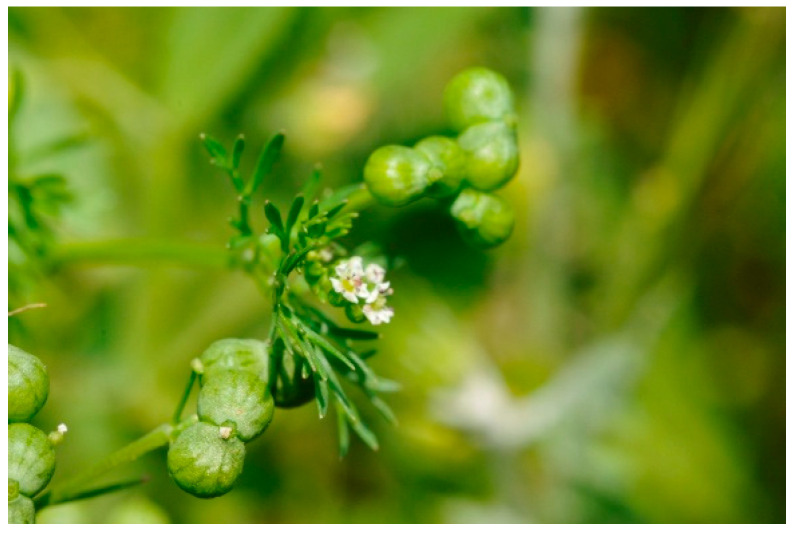 Figure 1
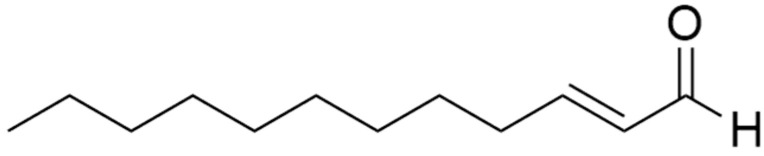 Figure 2
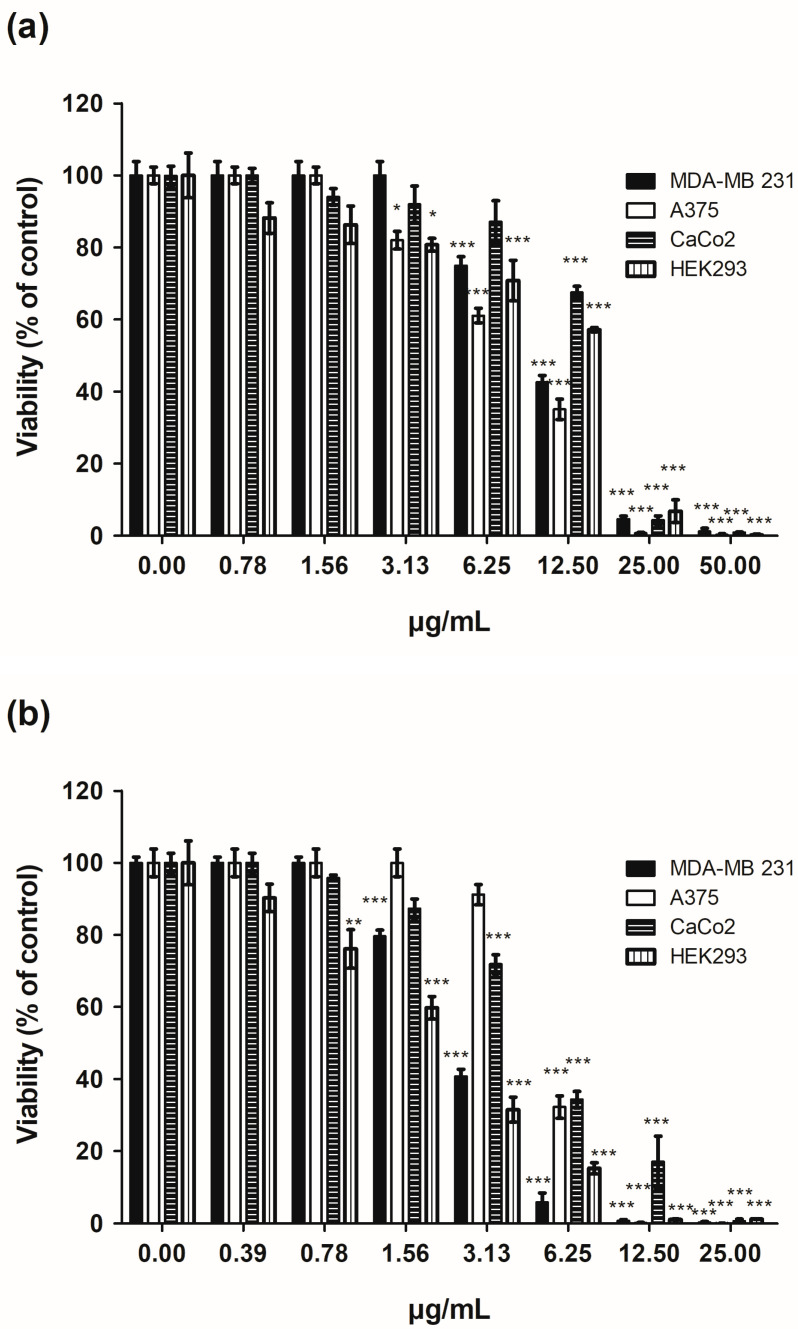 Figure 3
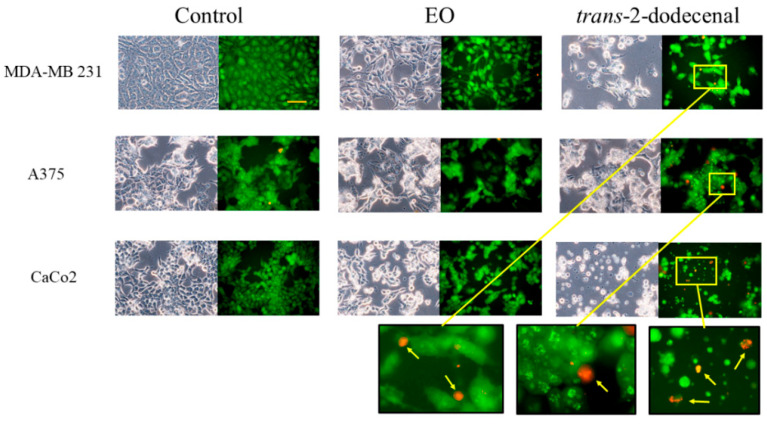 Figure 4
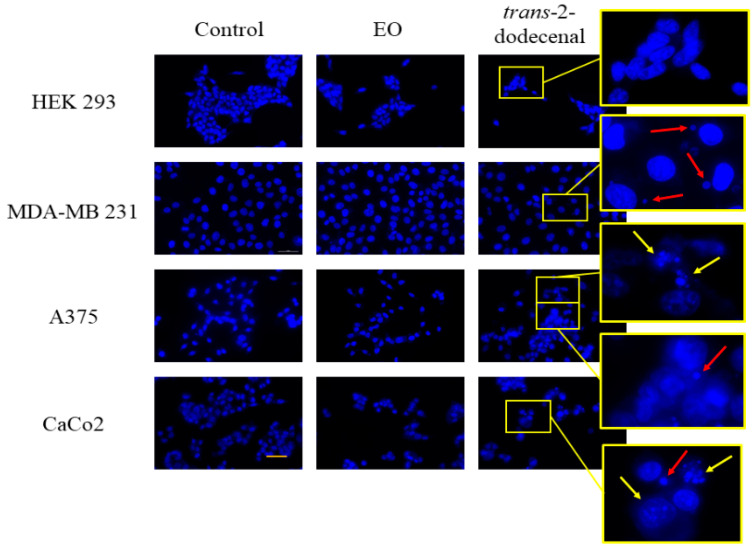 Figure 5
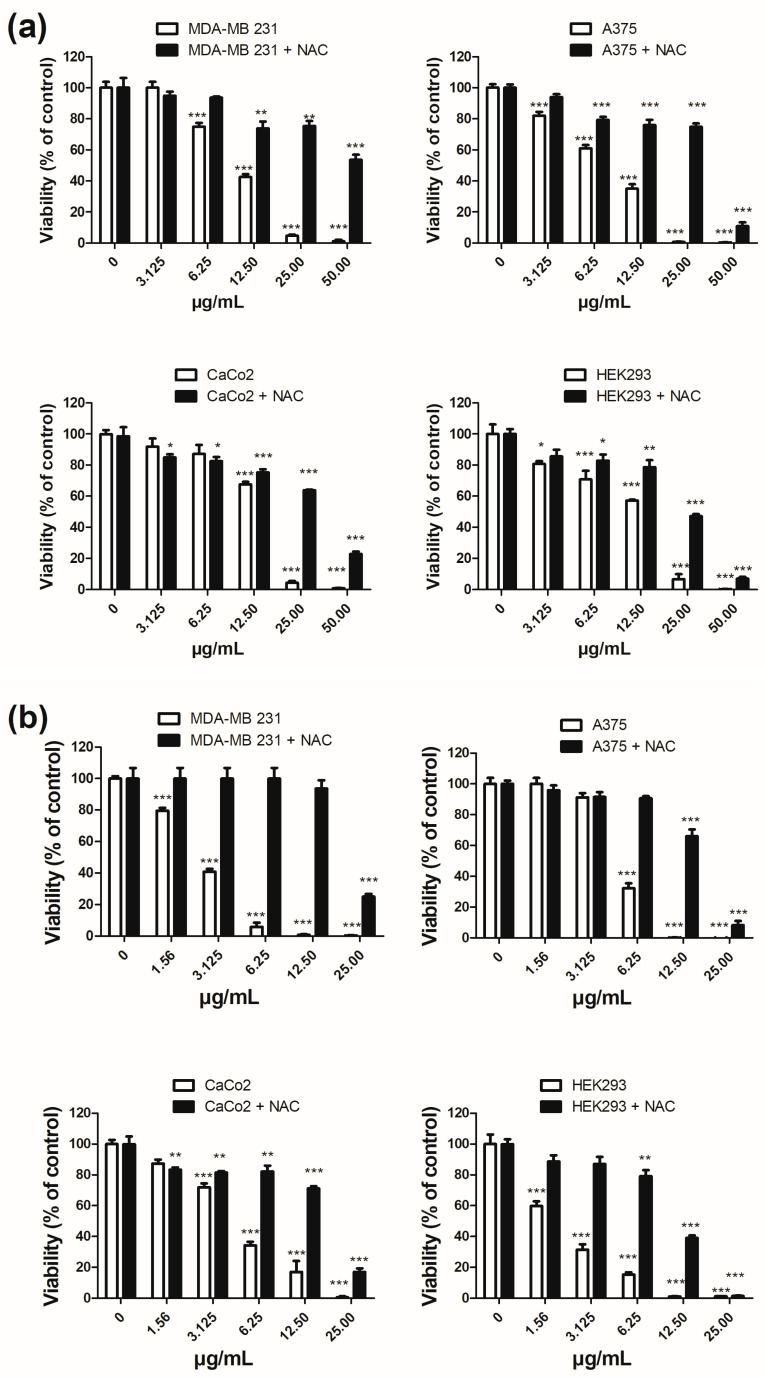 Figure 6
| Taxa | Origin, Parts | Compounds | Ref. |
|---|---|---|---|
| Turkey, ap | [ | ||
| Cultivated, ap | [ | ||
| Turkey, ap | [ | ||
| Greece, ap | [ |
- —National Recovery and Resilience Plan (NRRP)
- —European Union—NextGenerationEU; Project
- —Progetto Finanziato da Next Generation EU PNRR
- —Fondo per il Programma Nazionale di Ricerca e Progetti di Rilevante Interesse Nazionale (PRIN)
Peer Reviews
No public reviews on file for this paper yet. If you reviewed it on a platform where reviews are public (OpenReview, ICLR, NeurIPS, ICML), you can paste yours below so the community can read it here.
Videos
No videos yet. Explain this paper in a talk, walkthrough, or lecture? Add one.
Taxonomy
TopicsEssential Oils and Antimicrobial Activity · Plant chemical constituents analysis · Genomics, phytochemicals, and oxidative stress
1. Introduction
The genus Bifora Hoffm. is a member of the Apiaceae family and is classified under the tribe Coriandreae [1]. This widely distributed yet disjunct genus comprises three species: two species found across Eurasia, and one native to North America. B. radians M. Bieb. extends from Spain through southern and central Europe, reaching as far east as Iran. B. testiculata (L.) Spreng. has a broader and more southern range, spanning from Spain to Uzbekistan and extending to North Africa, the Levant, and Saudi Arabia. Meanwhile, B. americana (DC.) A. Gray is native to the southern United States, predominantly Texas and Arkansas, with reports of introduction in Alabama [2].
B. radians has been traditionally used as a culinary spice and folk remedy in parts of Turkey, where its aerial parts are known as yabani kişniş otu or kokarot and are used for their stomachic and carminative effects [3,4,5]. In contrast, in Jordan, B. testiculata, known used under the name كزبرة (kazbira), is used under infusion together with coriander for its sedative and stomach-soothing properties [6]. While these ethnobotanical uses highlight the relevance of Bifora species in traditional medicine, scientific interest has predominantly focused on B. radians, especially for its insecticidal activity against agricultural pests [7,8,9,10,11] and for its antimicrobial effects against Escherichia coli, Pseudomonas aeruginosa, Bacillus subtilis, Staphylococcus aureus, and Candida albicans [12,13]. Moreover, its EO, rich in aliphatic aldehydes, has demonstrated antibacterial activity against Paenibacillus larvae and insecticidal properties against the aphid Lipaphis pseudobrassicae [14].
B. testiculata [syn.: Anidrum testiculatum (L.) Kuntze; Atrema testiculatum (L.) Miq.; Coriandrum testiculare Salisb.; Coriandrum testiculatum L.; Corion testiculatum (L.) Hoffmanns. & Link; Sium testiculatum (L.) Vest] (Figure 1) is an herbaceous annual plant that grows to a height of 20–40 cm. It is glabrous and typically exhibits freely branched stems. The leaves are one- to two-pinnate, oblong in outline, with upper leaves having linear lobes that may be flat, entire, or lobed. The rays can extend up to 10 mm, while the bracts are absent or reduced to a single bract with 2–3 subulate bracteoles. The flowers have nearly equal-sized petals, and the fruit is rugose, measuring approximately 2.5–3.5 mm long and 4.5–7 mm wide, with a short beak. The style, typically less than 0.2 mm long, is as long as the stylopodium [15].
Despite extensive research on B. radians, B. testiculata remains largely unexplored, particularly regarding its biological and pharmacological properties. Given the increasing interest in plant-derived compounds for cancer treatment, the potential cytotoxic effects of B. testiculata EO (Bt) and its major components warrant investigation. Essential oils (EOs) from various Apiaceae species have demonstrated significant bioactivities, including cytotoxic effects on cancer cells [16]. The EO of plants rich in aldehydes has exhibited anti-cancer activity [17]. Cinnamon EO is endowed with a wide range of pharmacological functions, including antioxidant, antimicrobial, and anti-cancer activities. The main compound, cinnamaldehyde, has been characterized as an anti-cancer drug [18]. Citronellal, the main compound in the EO of Cymbopogon species, has been found to inhibit the growth of hypopharyngeal carcinoma cells, which indicates its potential as a drug for this type of cancer [19].
This study aimed to bridge this knowledge gap by evaluating the cytotoxic properties of Bt and providing new insights into its therapeutic applications. Therefore, Bt and its main components were tested against human breast adenocarcinoma, human malignant melanoma, and human colon adenocarcinoma cell lines, three of the common solid tumor cancers today.
2. Results and Discussion
2.1. Chemical Composition of Bt
Hydro-distilled Bt, obtained from aerial parts collected in Sicily, Italy, was pale yellow. Overall, twenty-six different compounds were identified (Table 1).
Bt was particularly rich in aliphatic aldehydes, which accounted for 86.10% of its total composition. The predominant compound, trans-2-dodecenal (Figure 2), was the most abundant, representing 67.49% of the total EO. Other aldehydes present in noteworthy percentages included dodecanal (4.50%), trans-4-undecenal (3.38%), cis-2-decenal (3.25%), and cis-2-dodecenal (2.91%). Additionally, a moderate percentage of aliphatic acids (5.38%) was detected, with trans-2-dodecenoic acid (4.55%) being the most abundant. In contrast, monoterpenes, hydrocarbons, and other metabolites were found only in traces.
Table 2 presents the major compounds (>3%) identified in the EOs of all Bifora taxa reported in the literature.
To date, only one study has reported the chemical composition of Bt based on plants collected in Greece [20]. Similar to our findings, that study showed a high percentage of aldehydes, with trans-2-dodecenal (56.3%) and dodecanal (4.0%) found in comparable proportions to those observed in Bt. However, Evergetis et al. [20] reported significant percentages of trans-2-tridecenal (16.1%) and heptadecanal (14.0%), which were virtually absent in the Bt. This suggests possible chemotype variations between different geographical populations of the species.
Studies on the EOs of other Bifora species, such as B. radians, have shown the presence of aldehydes as the principal constituents [18,19,20]. However, in these cases, the major constituents were trans-2-tridecenal (47.2–66.4%) and trans-2-tetradecenal (14.6–24.6%).
Despite the differences in specific aldehyde compositions, the consistently high aldehyde content observed in both B. testiculata and B. radians suggests that aldehydes may serve as taxonomic markers for the genus Bifora.
2.2. Effects of Bt on Tumor Cell Viability
To the best of our knowledge, no data are available on the cytotoxic activity of Bt. In this study, the cytotoxic activity of Bt and its main component, trans-2-dodecenal, was tested against a panel of three human tumor cell lines and one non-tumor cell line. Human breast cancer MDA-MB 231, human malignant melanoma A375, human colon adenocarcinoma CaCo2 cell lines, and non-tumor human embryonic kidney cell line HEK293 were used to determine the effects of Bt and its principal constituents on the viability of cells. All cell lines were exposed to treatments in the presence of different concentrations of Bt and trans-2-dodecenal for 72 h. The MTT assay was used as a relative measure of cell viability. The obtained data are presented in Figure 3 and Table 3.
Bt showed remarkable cytotoxic activity, with IC_50_ values ranging from 7.93 µg/mL for A375 cells to 14.41 µg/mL for the CaCo2 cell line. An intermediate IC_50_ value for MDA-MB 231 (10.46 µg/mL) was also reported. Although the cytotoxic activity of Bt is significantly relevant to tumor cell lines, its selectivity index (SI: < 3) is not very high (Table 3). In fact, the IC_50_ value of non-tumor embryonic kidney cells HEK293 (10.43 µg/mL) is close to that of tumor cell lines. Bt was found to be particularly rich in monoterpene aldehydes, of which trans-2-dodecenal was the predominant component, representing 67.49% of the total Bt composition. Although the anti-microbial activity of trans-2-dodecenal is known [25,26], no data on the cytotoxic activity of this compound have been reported. trans-2-Dodecenal, purified from Bt, was analyzed for its cytotoxic activity against tumor cell lines and its involvement in the biological activity of Bt. The results reported in Table 3 show high cytotoxicity against both tumor and non-tumor cell lines. The IC_50_ values of the compound were lower than those of Bt, ranging from 1.88 µg/mL for HEK293 cells to 5.29 µg/mL for A375 cells. Even in this case, the SI was not significant (<3). Cisplatin, a conventional chemotherapy drug, was used as a positive control. The IC_50_ values of cisplatin against tumor and non-tumor cell lines are listed in Table 3. They ranged from 0.32 µg/mL for HEK293 cells to 3.45 µg/mL for MDA-MB-231. In a molar comparison of the IC_50_ values of cisplatin with those of trans-2-dodecenal, the latter was less cytotoxic. Notably, cisplatin as Bt and trans-2-dodecenal had an SI that was not significant (<3) for the three tumor cell lines.
To characterize the mechanism of action of Bt and trans-2-dodecenal on tumor cell lines, the cells were incubated in the presence of Bt and trans-2-dodecenal at the 2 × IC_50_ concentration for 2 and 24 h and then subjected to acridine orange-ethidium bromide (AO/EB) fluorescent staining. Viable cells exclude ethidium bromide and are permeable to acridine orange, which reacts with DNA to yield green nuclear fluorescence. Non-viable cells showed red/orange fluorescence because of the entry of ethidium bromide, which reacts with DNA [27]. After 2 h of incubation of the cells in the presence of Bt and trans-2-dodecenal, no morphological modifications occurred, and the green fluorescence of the cells excluded the necrotic action of the samples. Figure 4 shows the morphological changes in cells after 24 h of incubation, as observed by light microscopy. The images revealed that Bt and trans-2-dodecenal caused clear morphological changes, including cell detachment and shrinkage, as well as a reduction in cellular density compared to untreated cells. Characteristic nuclear features with chromatin condensation, which reached a late stage with dense orange areas and apoptotic bodies, were observed in AO/EB fluorescence staining, mainly in cells treated with trans-2-dodecenal. The effect on Bt was less evident, with morphological changes in cell shape and reduced presence of dense orange areas, probably due to the different concentrations of trans-2-dodecenal in Bt. These data suggest that trans-2-dodecenal acts on tumor cell lines through an apoptotic mechanism.
The treated cells were stained with fluorescent Hoechst 33258, which binds to DNA, showing the morphology and chromatin structure of the cell nuclei to further investigate the occurrence of chromatin condensation (Figure 5).
As shown in Figure 5, treatments with Bt had less effect on nuclear modification than treatments with trans-2-dodecenal. Chromatin and nuclear shapes appeared substantially ineffective in comparison with the untreated cells. In contrast, nuclei of tumor cells treated with trans-2-dodecenal showed chromatin condensation with the presence of apoptotic bodies in A375 and CaCo2 cell lines. In MDA-MB 231 and A375 cells, Hoechst staining revealed the presence of micronuclei in the cytoplasm of the cells, indicating exposure to a toxic substance. Micronuclei formation is associated with chromosomal instability after genotoxic stress [28]. trans-2-Dodecenal possesses an α,β-unsaturated aldehyde structure, and thus, can potentially act as an alkylating agent on proteins and nucleic acids [29]. Aldehydes have been reported to have cytotoxic, mutagenic, genotoxic, and carcinogenic effects [30]. Aldehydes also react with proteins, disrupting their biological activity and causing inactivation. α,β-Unsaturated aldehydes target the thiol (cysteine), imidazole (histidine), and ε-amino (lysine) groups of proteins to form Michael addition-type or Schiff base adducts [31]. The depletion of intracellular glutathione and oxidation of thioredoxin 1 partially account for the DNA damage-independent cytotoxicity of aldehydes [32]. These effects lead to the formation of reactive oxygen species (ROS), advanced lipoxidation end-products, and advanced glycation end-products [33]. Oxidative stress induced by Bt and trans-2-dodecenal was assessed in MDA-MB 231, A375, CaCo2, and HEK293 cells by incubating the cells in the presence and absence of N-acetyl-L-cysteine (NAC). The antioxidant compound was used to investigate the possible involvement of ROS in the cytotoxic effects triggered by Bt and its main component. As shown in Figure 6, NAC was able to reverse the cytotoxic effects of Bt and trans-2-dodecenal, even at concentrations that caused a reduction in cellular viability close to 0%. These data suggest that the cytotoxic activity of Bt on cell lines can be attributed mainly to the α,β-unsaturated structure of trans-2-dodecenal, which triggers oxidative stress. However, it cannot be excluded that other aldehydes/aliphatic acid compounds present in Bt might contribute to the final cytotoxic activity observed.
Although the cytotoxic activity of Bt is significantly relevant to tumor cell lines, its specificity is not very high. In fact, its cytotoxic activity on the normal human embryonic kidney cell line HEK293 was higher than that on tumor cell lines. However, this finding requires further investigation. HEK293 cells are immortalized cells [34] that may not correspond to the characteristics of a non-tumor cell line. Thus, it would be useful to extend the study to other tissue-specific non-tumor cell lines, such as MCF-10A (Human Mammary epithelial cells), NHEM (Normal Human Epidermal Melanocytes), and FHC (Fetal Human Colon). The mechanisms underlying the cytotoxic activity need to be examined in more detail to consider Bt and trans-2-dodecenal as potential chemotherapeutic agents. Although α,β-unsaturated aldehydes, such as citral and acrolein, are toxic [29], some long-chain α,β-unsaturated aldehydes, such as 4-hydroxynonenal, may play a regulatory role in oxidative stress [35]. Thus, it would be interesting to evaluate the role of Bt and its main components in cellular redox regulation.
3. Materials and Methods
3.1. Plant Materials
The aerial parts (flowers, leaves, fruits, and stems) of B. testiculata were collected in the area called Serre di Villalba, in the province of Caltanissetta, Sicily, Italy (37°38′19″ N 13°50′42″ E), about 830 m a.s.l., in May 2023. One of the samples, identified by Prof. Vincenzo Ilardi, was stored in the Herbarium Mediterraneum Panormitanum (PAL, voucher no. 109790) of the Botanical Garden of the University of Palermo, Italy.
3.2. Isolation of EO
Aerial parts (300 g) were subjected to hydrodistillation using distilled water for 3 h, according to the standard procedure described in the European Pharmacopoeia [36]. Sample yielded 0.12% of Bt.
3.3. GC-MS Analysis
The analysis of Bt was performed according to the procedure reported by Vaglica et al. [37]. GC-MS analysis was performed using an Agilent 7000C GC system fitted with a fused silica Agilent DB-5 MS capillary column (30 m × 0.25 mm i.d.; 0.25 μm film thickness), coupled to an Agilent quadrupole Mass Selective Detector MSD 5973 (ionization voltage 70 eV; electron multiplier energy 2000 V; transfer line temperature, 295 °C; Solvent Delay: 4 min). The oven program was as follows: temperature was increased to 40 °C for 5 min, at a rate of 2 °C/min up to 260 °C, and then isothermal for 20 min. Helium was used as the carrier gas (1 mL/min). The injector and detector temperatures were set at 250 °C and 290 °C, respectively. The EO solution (1 μL) (3% EO/hexane v/v) was injected in splitless mode; MS range 40–600.
The identification of peaks was carried out by comparison with their mass spectra and relative retention indices using the WILEY275, NIST 17, ADAMS, and FFNSC2 libraries. Kovats indices (KI) were determined using the retention times of n-alkanes (C_8_–C_40_) (49452-U, Supelco, Sigma-Aldrich, Milan, Italy).
3.4. Cell Culture
MDA-MB 231 (human breast adenocarcinoma cell line; American Type Culture Collection, ATCC, Manassas, VA, USA) and A375 (human malignant melanoma cell line; Istituto Zooprofilattico Sperimentale della Lombardia e dell’Emilia Romina, IZSLER, Brescia, Italy) were cultured in Dulbecco’s Modified Eagle’s Medium (DMEM) with 2 mM L-glutamine, 100 IU/mL penicillin, 100 µg/mL streptomycin (Corning, Manassas, VA, USA), and supplemented with 10% heat-inactivated fetal bovine serum (HI-FBS; Corning, Manassas, VA, USA). CaCo2 (human colon adenocarcinoma cell line; American Type Culture Collection, Manassas, VA, USA) was cultured in DMEM with 2 mM L-glutamine, 100 IU/mL penicillin, 100 μg/mL streptomycin, 1% Non-Essential Amino Acid (NEAA), and supplemented with 10% HI-FBS. HEK293 (human embryonic kidney cell line; kindly donated by Dr. Michela Buccioni, School of Pharmacy, University of Camerino, Camerino, Italy) was cultured in Eagle’s Minimum Essential Medium (MEM) with 2 mM L-glutamine, 100 IU/mL penicillin, 100 µg/mL streptomycin, and supplemented with 10% HI-FBS. The cells were maintained in an incubator at 37 °C in a humid atmosphere enriched with 5% CO_2_ and 95% relative humidity.
3.5. MTT Assay
The cytotoxic activity of Bt and its main component (trans-2-dodecenal, Merck Life Science S.r.l., Milano, Italy) was determined using the 3-(4,5-dimethylthiazol-2-yl)-2,5-diphenyltetrazolium bromide (MTT; Sigma-Aldrich, St. Louis, MO, USA) method [38,39]. The reduction of tetrazolium salt to formazan by mitochondrial succinate dehydrogenase was used to evaluate the viability of cancer cells, as previously described [40]. MDA-MB 231, A375, CaCo2, and HEK293 cells (2 × 10^4^ cells/mL) were added to 96-well plates, incubated for 24 h, and exposed to different concentrations of Bt (0.78–200 µg/mL; vehicle: ethanol) and trans-2-dodecenal (0.39–200 µg/mL; vehicle: ethanol) for 72 h in a humidified atmosphere of 5% CO_2_ at 37 °C. At the end of the incubation period, each well received 10 µL of MTT (5 mg/mL in phosphate-buffered saline, PBS), and the plates were incubated for 4 h at 37 °C. The supernatant was then removed, and 100 µL of dimethyl sulfoxide (DMSO; Sigma-Aldrich) was added to dissolve the formazan crystals. Absorbance was measured using a microplate reader (FLUOstar Omega, BMG Labtech, Milan, Italy) at 540 nm. The percentage of viability was calculated using the following equation:
A = Absorbance at 540 nm.
In a parallel experiment, Bt and its main component were incubated in the presence of 5 mM NAC (N-acetyl-L-cysteine; Sigma-Aldrich). The anti-cancer drug cisplatin (0.01–50 μg/mL) was used as a positive control. The experiments were conducted in triplicate. The 50% cytotoxic concentration (IC_50_) was defined as the compound concentration required to reduce cell viability by half. The IC_50_ values were determined using GraphPad Prism 5 (GraphPad Software, San Diego, CA, USA). IC_50_ values were obtained from graphs plotted using a non-linear regression equation log (inhibitor) versus response—variable slope.
The selectivity index (SI) was calculated as the ratio of the IC_50_ value for HEK293 cells divided by the IC_50_ values for A375, MDA-MB 231, or CaCo2 cells. The SI value indicates the degree of selective toxicity of a given Bt or its main components to the cancerous cell lines tested, relative to that of the non-tumor cell line. Any sample of an SI value > 3 was considered to indicate high selectivity [24].
3.6. Acridine Orange and Ethidium Bromide Staining
Characteristic apoptotic or necrotic morphological changes were investigated by fluorescent microscopy using acridine orange and ethidium bromide staining. MDA-MB 231, A375, and CaCo2 cells were seeded at a density of 2.5 × 10^5^ cells/mL. After 24 h, the cells were treated with 2 × IC_50_ values of Bt and trans-2-dodecenal for 2 and 24 h. After incubation, the cells were washed with PBS and mixed with 20 μL of a fluorochrome mixture (50 μg/mL acridine orange and 50 μg/mL ethidium bromide in PBS) in 500 µL of PBS for 3 min. The samples were examined under an Olympus IX71 fluorescent inverted microscope with an appropriate combination of filters and recorded using an Olympus DP90 digital camera. Viable cells had intact, bright green nuclei. Early apoptotic cells contained a bright green nucleus with condensed chromatin, whereas late apoptotic cells contained a red/orange nucleus showing chromatin condensation [41].
3.7. Hoechst Nuclear Staining
MDA-MB 231, A375, CaCo2, and HEK293 cells (1 × 10^6^ cells/mL) were exposed to Bt and its main component for 24 h at a concentration corresponding to 2x IC_50_ values and then fixed with methanol/acetic acid (3:1). Samples of fixed cells were incubated with Hoechst 33258 nuclear stain (0.05 µg/mL in PBS) (Sigma-Aldrich, St. Louis, MO, USA) for 10 min. The stain was removed, and the coverslip was mounted in a drop of buffered glycerol mountant (0.4 M Na_2_HPO_4_, 0.2 M citric acid, and 50% glycerol). Nuclei were observed using an Olympus IX71 (Olympus Italy s.r.l., via San Bovio 1, Segrate, MI, Italy) inverted fluorescence microscope and recorded using an Olympus DP90 digital camera.
3.8. Statistical Analysis
Statistical analyses were performed using one-way ANOVA, followed by Tukey’s post-hoc test to test for statistical differences between groups. Significance was represented by * p < 0.05, ** p < 0.01, *** p < 0.001. The statistical analysis software used was GraphPad InStat v3.0 (GraphPad Software, San Diego, CA, USA).
4. Conclusions
This study provides new insights into the chemical composition of Bifora testiculata essential oil, confirming its aldehyde-rich nature and highlighting its potential as a source of bioactive compounds. The predominant presence of trans-2-dodecenal (67.49%) distinguished the Sicilian accession and aligned with previous findings from a Greek population, reinforcing the idea that aldehydes are key chemotaxonomic markers within the Bifora genus. However, notable differences in minor constituents suggest potential chemotype variability among different accessions. Given the known bioactive properties of trans-2-dodecenal and structurally related aldehydes, the essential oil and its main component exhibit remarkable cytotoxic activity against tumor and non-tumor cell lines. Preliminary data suggest that Bt and its main compound, trans-2-dodecenal, act on cancer cell lines, triggering apoptosis through ROS stimulation. However, more research is needed to demonstrate the safety of essential oils and trans-2-dodecenal in non-tumor cells, as well as to elucidate their role in cellular redox regulation. In light of these results, the elucidation of the molecular mode of action of Bt and trans-2-dodecenal and the pathways involved in the apoptotic mechanism will be investigated in future works. In addition, the study will be extended to other tumor and non-tumor cell lines to better clarify their anti-tumor potential.
The reference list from the paper itself. Each links out to its DOI / PubMed record.
- 1Terentieva E.I. Valiejo-Roman C.M. Samigullin T.H. Pimenov M.G. Tilney P.M. Molecular phylogenetic and morphological analyses of the traditional tribe Coriandreae (Umbelliferae-Apioideae)Phytotaxa 201519525127110.11646/phytotaxa.195.4.1 · doi ↗
- 2POWO Plants of the World Online Available online: https://powo.science.kew.org/taxon/urn:lsid:ipni.org:names:331401-2(accessed on 25 March 2015)
- 3Ozdemir E. Alpinar K. The wild edible plants of western Nigde Aladaglar mountains (Central Turkey)J. Pharm. Istanbul Univ.2010416674
- 4Baytop T. Türkiye’de Bitkiler ile Tedavi. Geçmişte ve Bugün 2nd ed.Nobel Tıp Kitabevleriİstanbul, Turkey 1999151152
- 5Hedge I.C. Lamond J.M. Bifora Hoffm Flora of Turkey and the East Aegean Islands Davis P.H. Edinburgh University Press Scotland, UK 1972 Volume 4332333
- 6Oran S.A. Al-Eisawi D.M. Medicinal plants in the high mountains of northern Jordan Int. J. Biodiv. Conserv.2014643644310.5897/IJBC 2014.0713 · doi ↗
- 7Gökçe A. Isaacs R. Whalon M.E. Behavioural response of Colorado potato beetle (Leptinotarsa decemlineata) larvae to selected plant extracts Pest Manag. Sci.2006621052105710.1002/ps.127116886174 · doi ↗ · pubmed ↗
- 8Alkan M. Gökçe A. Kara K. Contact toxicity of six plant extracts to different larval stages of Colorado potato beetle (Leptinotarsa decemlineata Say (col: Chrysomelidae)J. Agric. Sci.20172330931610.15832/ankutbd.447616 · doi ↗