In Vitro Prebiotic Potential of Opuntia humifusa Leaf Extract and Its Active Constituent
Min Sung Ko, Da Bin Eom, Chung Hyeon Lee, Tae-Eun Park, Sang Jae Lee, Cheol Hyun Kim, Hui Won Moon, Seo An Lee, Kwang Woo Hwang, So-Young Park

TL;DR
This study explores the prebiotic potential of Opuntia humifusa leaf extract, finding that it promotes the growth of beneficial bacteria like Lactobacillus paracasei.
Contribution
The study identifies the 60% ethanol extract of Opuntia humifusa leaves as a potent prebiotic and quantifies a key active compound, isorhamnetin 3-O-β-D-(6-O-α-L-rhamnosyl)glucoside.
Findings
Ethanol extracts of Opuntia humifusa leaves significantly enhance the growth of Lactobacillus paracasei KCTC 12576.
60% ethanol was determined as the optimal solvent for extracting bioactive compounds from the leaves.
Isorhamnetin 3-O-β-D-(6-O-α-L-rhamnosyl)glucoside was identified as a major flavonol glycoside in the extract.
Abstract
Opuntia humifusa (commonly known as Cheon-nyun-cho) has traditionally been used for its antioxidant, laxative, and immune-boosting properties, but its potential prebiotic activity remains largely unexplored. In this study, we evaluated the prebiotic potential of O. humifusa leaf and fruit extracts by assessing their effects on the growth of four Lactobacillus spp. strains. Among them, Lactobacillus paracasei KCTC 12576 exhibited the most pronounced response to the extracts and was therefore selected for further investigation. Comparative analysis demonstrated that ethanol extracts were more effective than water extracts, and leaf extracts outperformed fruit extracts in enhancing bacterial viability. Notably, the ethanol extract of O. humifusa leaves showed the strongest stimulatory effect on L. paracasei KCTC 12576 growth. Based on extraction optimization studies, 60% ethanol was…
Genes, proteins, chemicals, diseases, species, mutations and cell lines named across the full text — each resolved to its canonical identifier and authoritative record.
Click any figure to enlarge with its caption.
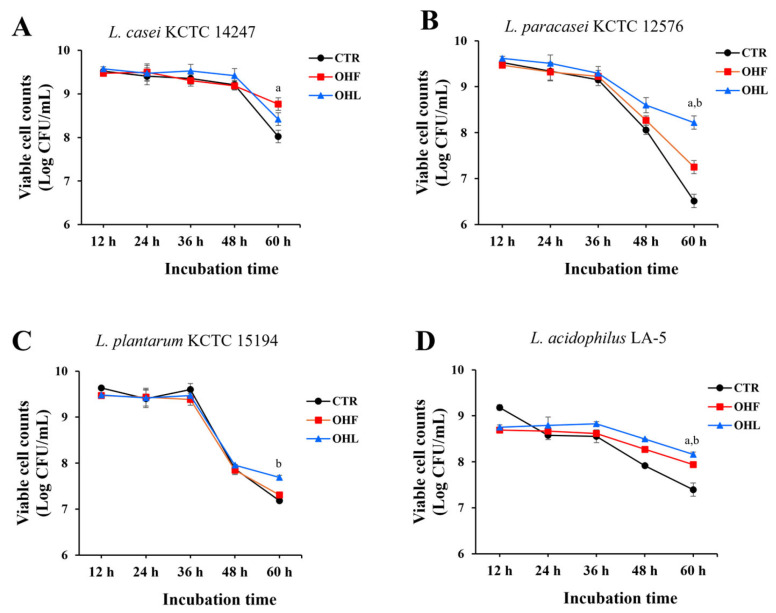 Figure 1
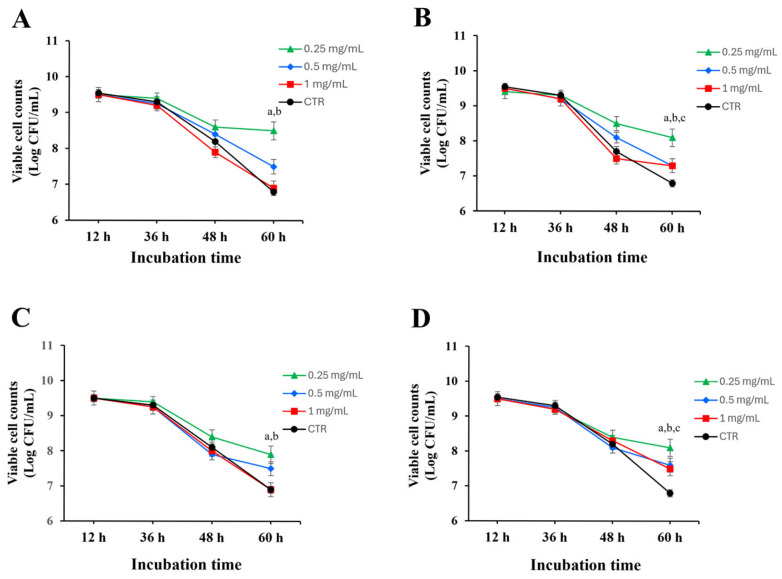 Figure 2
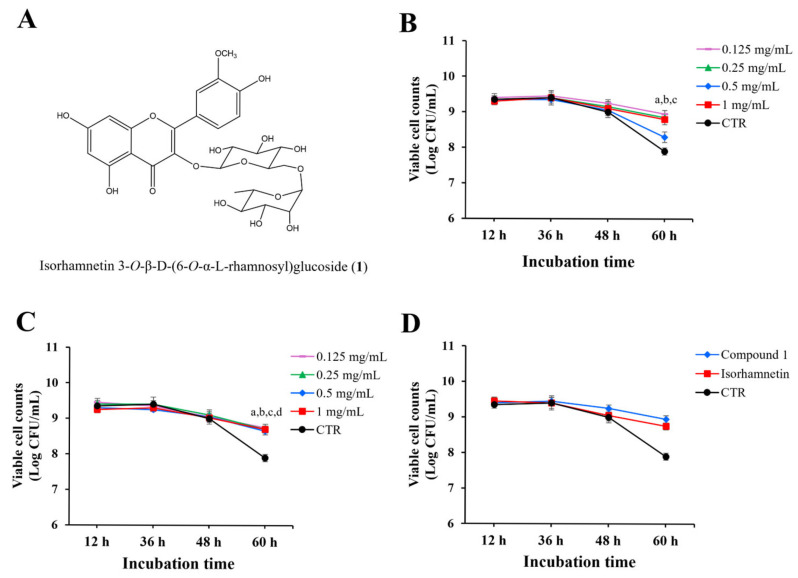 Figure 3
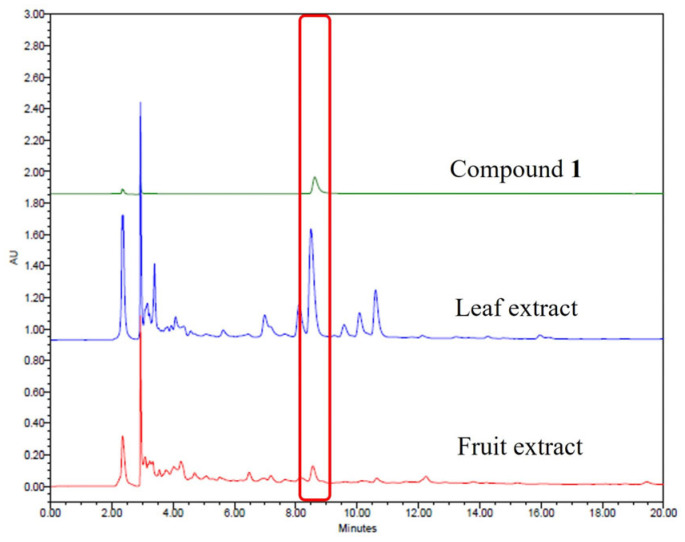 Figure 4
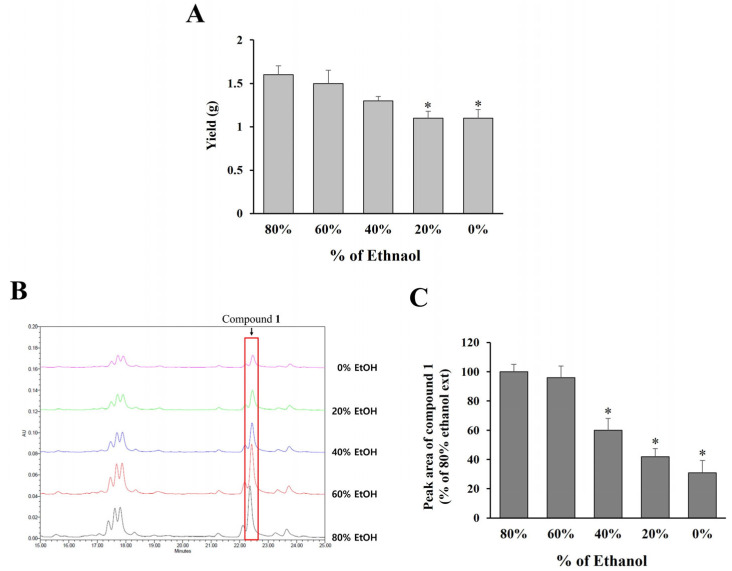 Figure 5
Peer Reviews
No public reviews on file for this paper yet. If you reviewed it on a platform where reviews are public (OpenReview, ICLR, NeurIPS, ICML), you can paste yours below so the community can read it here.
Videos
No videos yet. Explain this paper in a talk, walkthrough, or lecture? Add one.
Taxonomy
TopicsBotanical Research and Applications · Microbial Metabolites in Food Biotechnology · Polysaccharides Composition and Applications