Comprehensive Evaluation and Analysis of Aging Performance of Polymer-Rich Anchoring Adhesives
Bing Zeng, Shuo Wu, Shufang Yao

TL;DR
This study evaluates how polymer-rich anchoring adhesives degrade under different aging conditions, showing significant strength loss and chemical changes.
Contribution
The study provides a comprehensive comparison of aging effects on polymer adhesives using multiple analytical methods.
Findings
Alkali treatment caused up to 70% reduction in bending strength within 500 hours.
Hygrothermal and water-curing treatments reduced strength by 16–77%, depending on adhesive composition.
Infrared spectroscopy confirmed chemical degradation, including ester group breakage and molecular chain scission.
Abstract
In civil engineering, with the increasing demand for structural reinforcement and renovation projects, polymer-rich anchoring adhesives have attracted much attention due to their performance advantage of having high strength and have become a key factor in ensuring the safety and durability of buildings. In this study, polymer-rich anchoring adhesives underwent three artificial aging treatments (alkali medium, hygrothermal, and water bath) to evaluate their aging performance. Alkali treatment reduced bending strength by up to 70% (sample 5#) within 500 h before stabilizing, while hygrothermal and water-curing treatments caused reductions of 16–51% and 15–77%, respectively, depending on adhesive composition. Dynamic thermomechanical analysis revealed significant loss factor decreases (e.g., epoxy adhesives dropped from >1.0 to stable lower values after 500 h aging), indicating increased…
Genes, proteins, chemicals, diseases, species, mutations and cell lines named across the full text — each resolved to its canonical identifier and authoritative record.
Click any figure to enlarge with its caption.
 Figure 1
 Figure 2
 Figure 3
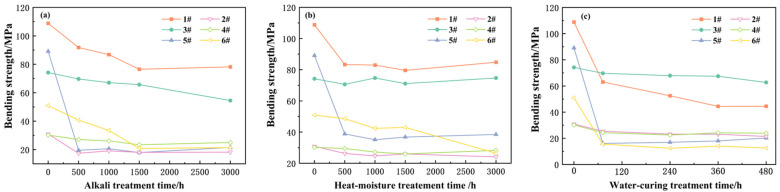 Figure 4
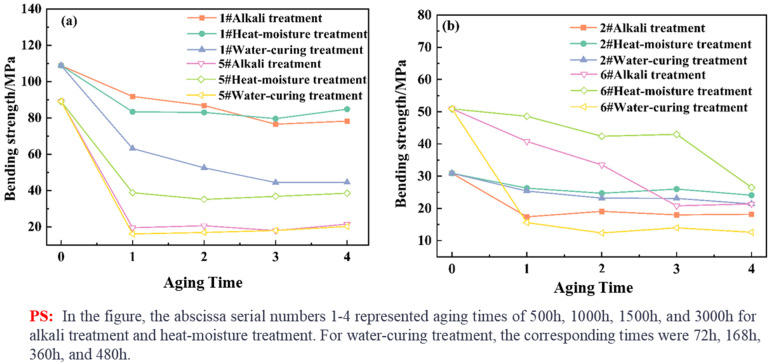 Figure 5
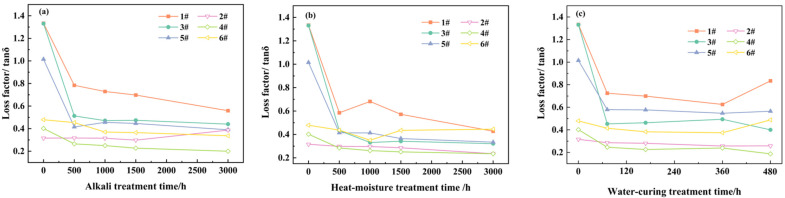 Figure 6
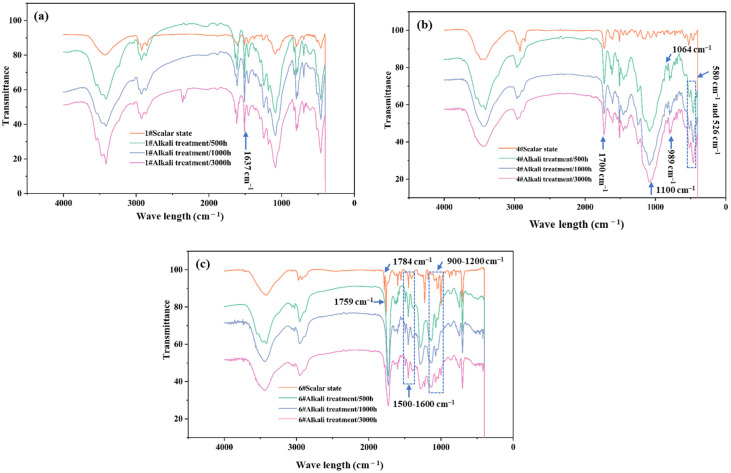 Figure 7
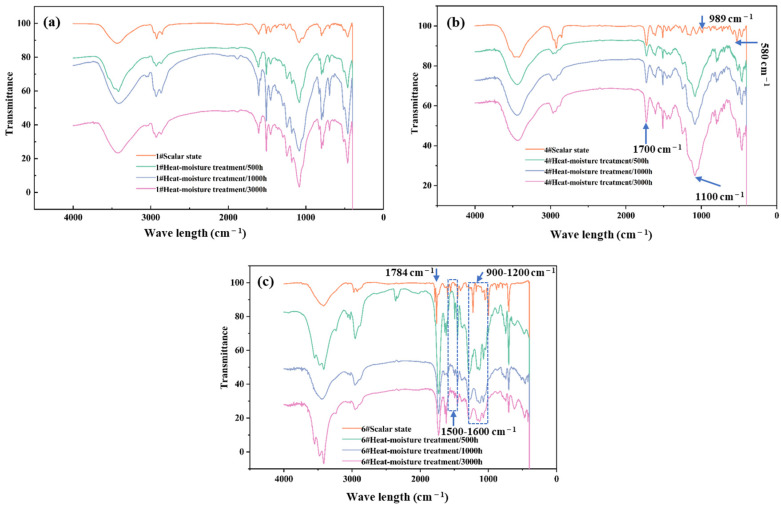 Figure 8
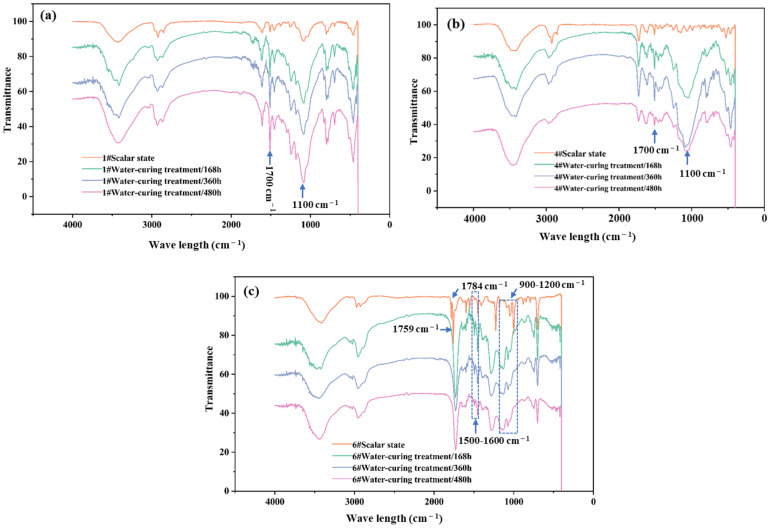 Figure 9
Peer Reviews
No public reviews on file for this paper yet. If you reviewed it on a platform where reviews are public (OpenReview, ICLR, NeurIPS, ICML), you can paste yours below so the community can read it here.
Videos
No videos yet. Explain this paper in a talk, walkthrough, or lecture? Add one.
Taxonomy
TopicsStructural Behavior of Reinforced Concrete · Natural Fiber Reinforced Composites · Innovative concrete reinforcement materials