Evaluation of a Rhenium(I) Complex and Its Pyridostatin-Containing Chelator as Radiosensitizers for Chemoradiotherapy
António Paulo, Sofia Cardoso, Edgar Mendes, Elisa Palma, Paula Raposinho, Ana Belchior

TL;DR
This study evaluates a rhenium complex and its chelator as potential radiosensitizers for prostate cancer treatment, showing they can enhance radiation effects.
Contribution
The study introduces a new rhenium(I) complex and its chelator as G4 DNA ligands with radiosensitizing potential in prostate cancer cells.
Findings
PDF-Pz-Re and PDF-Pz radiosensitized PC3 cells, though less effectively than RHPS4.
The compounds increased DNA damage and ROS production in cells exposed to radiation.
G4 DNA ligands show promise as radiosensitizers and require further optimization.
Abstract
The use of radiosensitizers is a beneficial approach in cancer radiotherapy treatment. However, the enhancement of radiation effects on cancer cells by radiosensitizers involves several different mechanisms, reflecting the chemical nature of the radiosensitizer. G-quadruplex (G4) DNA ligands have emerged in recent years as a potential new class of radiosensitizers binding to specific DNA sequences. Recently, we have shown that the Re(I) tricarbonyl complex PDF-Pz-Re and its pyrazolyl-diamine chelator PDF-Pz, carrying a N-methylated pyridostatin (PDF) derivative, act as G4 binders of various G4-forming DNA and RNA sequences. As described in this contribution, these features prompted us to evaluate PDF-Pz-Re and PDF-Pz as radiosensitizers of prostate cancer PC3 cells submitted to concomitant treatment with Co-60 radiation. The compound RHPS4 was also tested, as this G4 ligand was…
Genes, proteins, chemicals, diseases, species, mutations and cell lines named across the full text — each resolved to its canonical identifier and authoritative record.
Click any figure to enlarge with its caption.
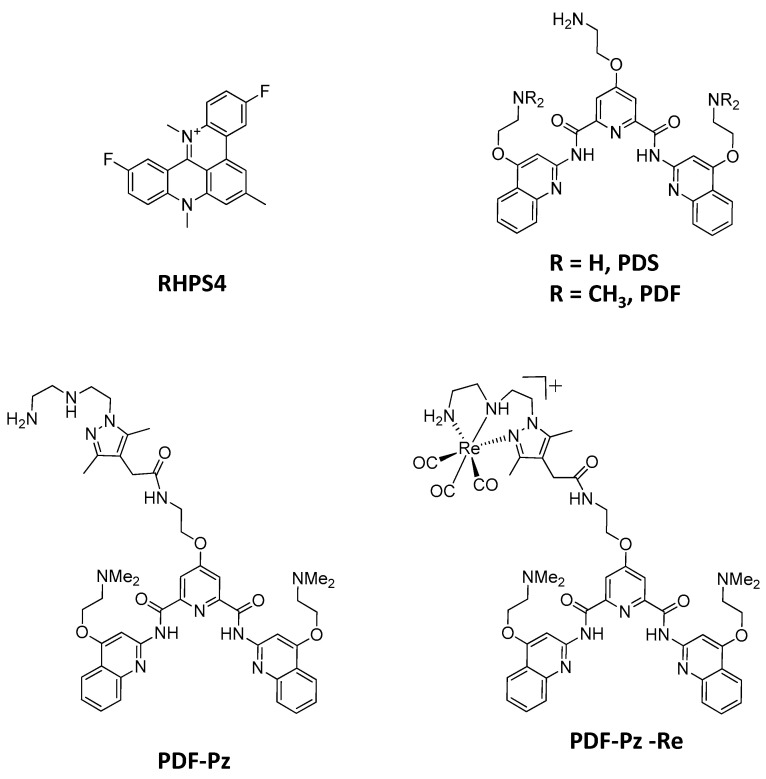 Figure 1
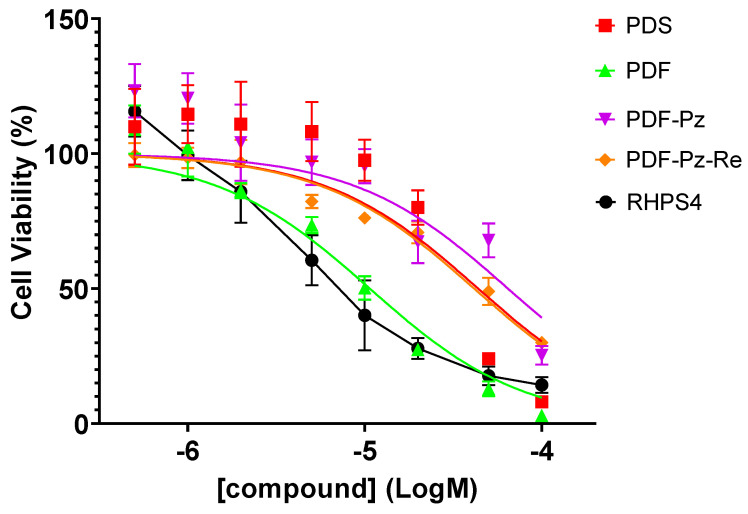 Figure 2
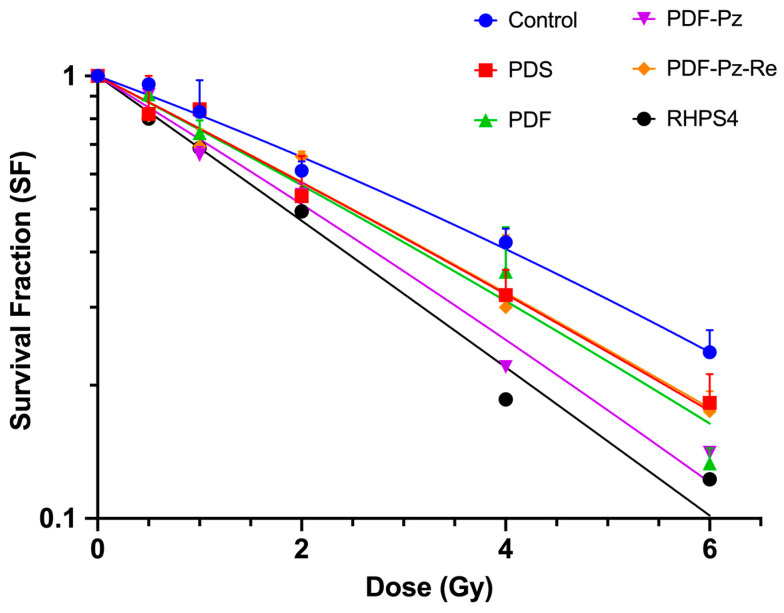 Figure 3
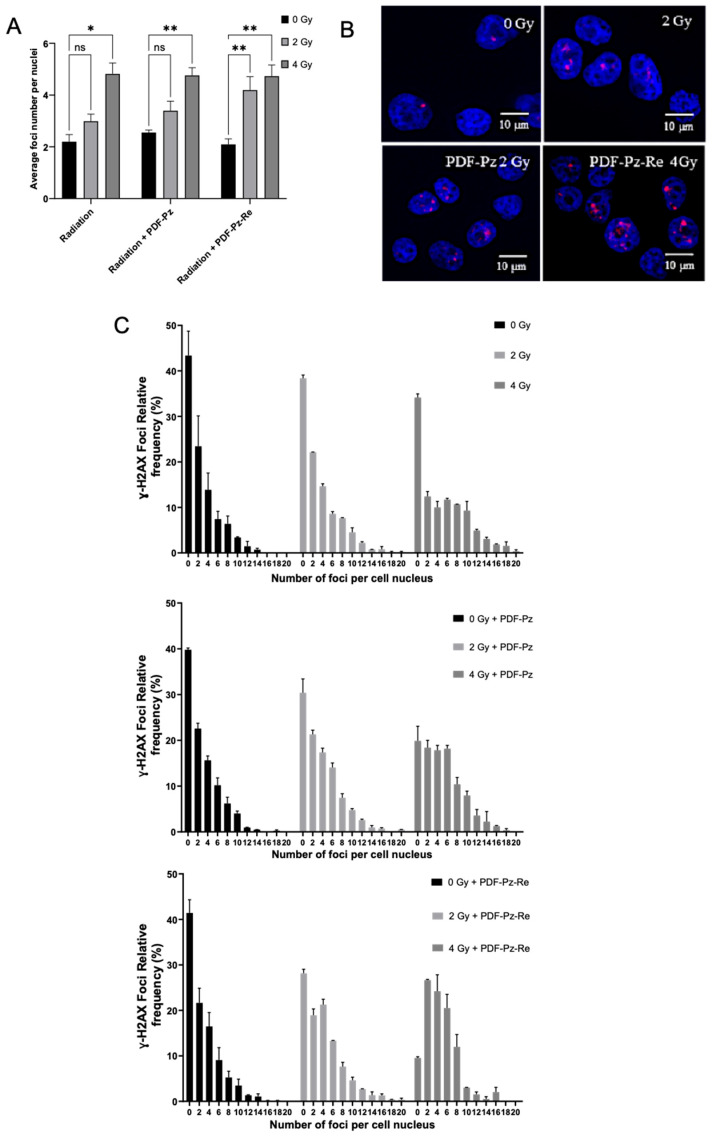 Figure 4
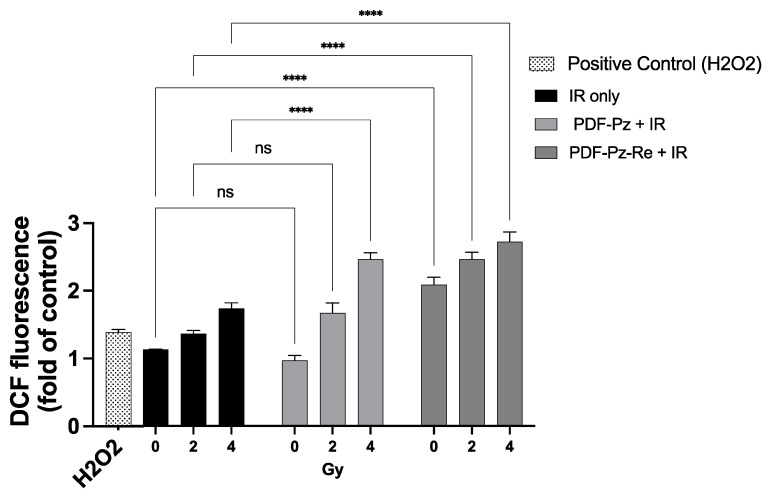 Figure 5
Peer Reviews
No public reviews on file for this paper yet. If you reviewed it on a platform where reviews are public (OpenReview, ICLR, NeurIPS, ICML), you can paste yours below so the community can read it here.
Videos
No videos yet. Explain this paper in a talk, walkthrough, or lecture? Add one.
Taxonomy
TopicsDNA and Nucleic Acid Chemistry · RNA Interference and Gene Delivery · Advanced biosensing and bioanalysis techniques