Relationship Between Body Composition and Biomarkers in Adult Females with Breast Cancer: 1-Year Follow-Up Prospective Study
Angélica Larrad-Sáinz, María Gemma Hernández Núñez, Ana Barabash Bustelo, Inés Gil Prados, Johanna Valerio, José Luis Espadas Gil, María Eugenia Olivares Crespo, María Herrera de la Muela, Blanca Bernaldo Madrid, Irene Serrano García, Ignacio Cristóbal García

TL;DR
This study found that breast cancer patients experience increased fat and reduced muscle after one year, changes not captured by traditional measures.
Contribution
The study uses BIA and US to detect body composition changes in breast cancer patients, revealing sarcopenic obesity and metabolic correlations.
Findings
Fat mass increased while skeletal muscle mass and strength decreased after one year of treatment.
Sarcopenic obesity prevalence rose from 1.16% to 4.9% in the study group.
Fat parameters correlated positively with insulin, HOMA-IR, and triglycerides, and negatively with HDL-cholesterol.
Abstract
Background/Objectives: After diagnosis, it is common for women with breast cancer to gain weight, which is associated with worse clinical outcomes. However, traditional measures such as body weight, BMI, and waist circumference do not detect key changes in body composition, such as fat redistribution or muscle loss. The objective of this exploratory study was to assess the evolution of body composition and muscle strength after one year of treatment, and their relationship with metabolic biomarkers. Methods: Prospective observational study in newly diagnosed breast cancer patients. Body composition was assessed using bioelectrical impedance analysis (BIA) and ultrasound (US); muscle strength was measured by handgrip dynamometry. Biomarkers analyzed included glucose, insulin, Homeostatic Model Assessment of Insulin Resistance (HOMA-IR), glycosylated hemoglobin (HbA1c), total cholesterol…
Genes, proteins, chemicals, diseases, species, mutations and cell lines named across the full text — each resolved to its canonical identifier and authoritative record.
Click any figure to enlarge with its caption.
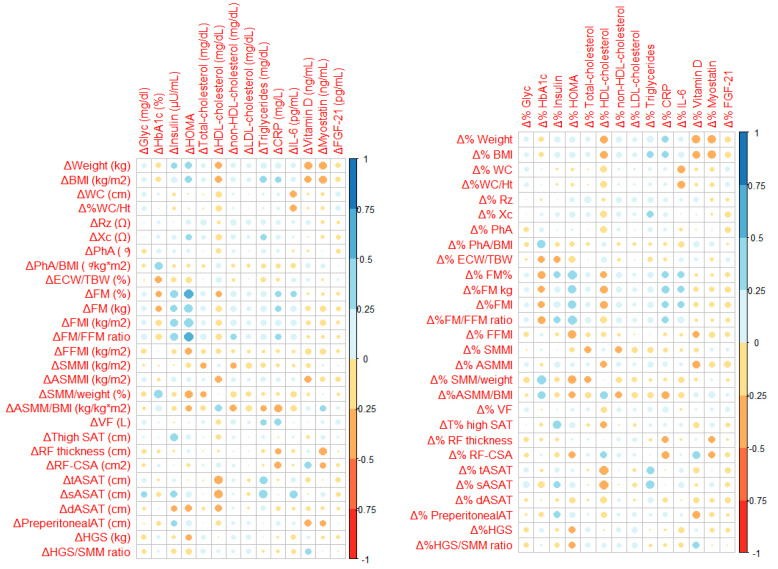 Figure 1
Peer Reviews
No public reviews on file for this paper yet. If you reviewed it on a platform where reviews are public (OpenReview, ICLR, NeurIPS, ICML), you can paste yours below so the community can read it here.
Videos
No videos yet. Explain this paper in a talk, walkthrough, or lecture? Add one.
Taxonomy
TopicsNutrition and Health in Aging · Body Composition Measurement Techniques · Nutritional Studies and Diet