In Vivo Biocompatibility Assessment of a Novel Cyanoacrylate–Polylactic Acid Hemostatic Patch
Alexandru Ilie-Ene, Victor P. Tosa, Luciana M. Gherman, Lorena M. Hantig, Madalin M. Onofrei, Lavinia P. Mocan, Carmen M. Mihu, Catalin O. Popa, George C. Dindelegan

TL;DR
A new CA + PLA hemostatic patch caused more long-term inflammation and scarring in rats compared to a commercial product and electrocautery.
Contribution
First 5-month in vivo biocompatibility assessment of a novel CA + PLA hemostatic patch in a rat model.
Findings
The CA + PLA patch caused a higher rate of abscesses and fibrosis compared to TachoSil® and electrocautery.
TachoSil® showed reduced inflammation and better vascularization over time, unlike the CA + PLA patch.
Foreign-body giant cells were significantly more common in the CA + PLA group than in the other groups.
Abstract
Background and Objectives: Although cyanoacrylate–polylactic acid (CA + PLA) patches shorten the time to hemostasis after partial hepatectomy, their long-term biocompatibility remains uncertain. We compared the 5-month histopathological footprint of a novel CA + PLA patch (Study group) with a licensed fibrinogen/thrombin matrix (TachoSil® group) and electrocautery (Control group). Methods: Thirty-three male Wistar rats underwent a 3 × 1.5 cm hepatic segment resection and were randomized to the Control (n = 5), Study (n = 14), or TachoSil® (n = 14) group. The animals were sacrificed on postoperative day (POD) 50, 100, or 150. Blinded semiquantitative scoring (0–3) was used to capture inflammation intensity, and the number of neutrophils (PMNs), lymphocytes (Ly’s), isolated histiocytes, and foreign-body giant cells (FBGCs). Results: The proportions of animals in each group across the…
Genes, proteins, chemicals, diseases, species, mutations and cell lines named across the full text — each resolved to its canonical identifier and authoritative record.
Click any figure to enlarge with its caption.
 Figure 1
 Figure 2
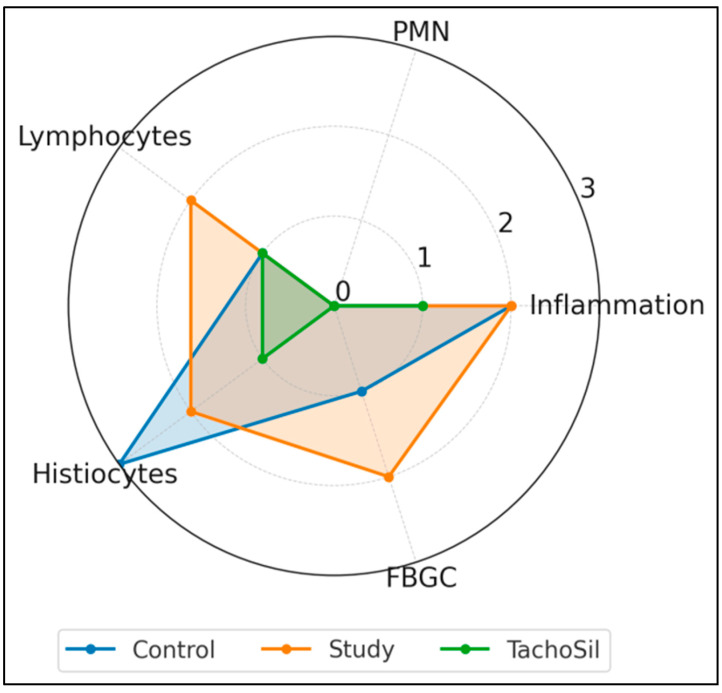 Figure 3
 Figure 4
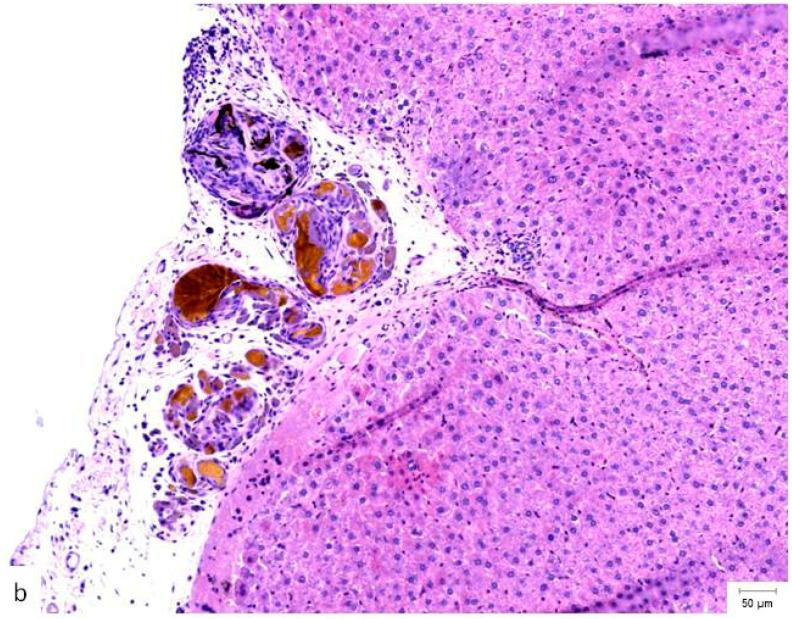 Figure 5
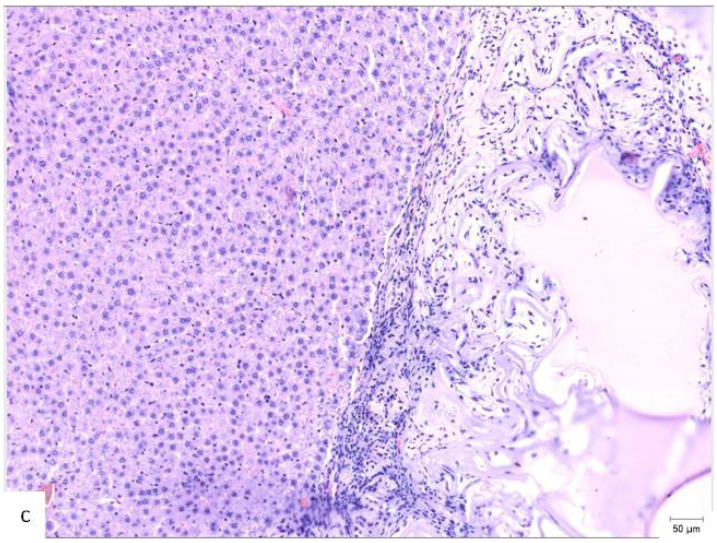 Figure 6
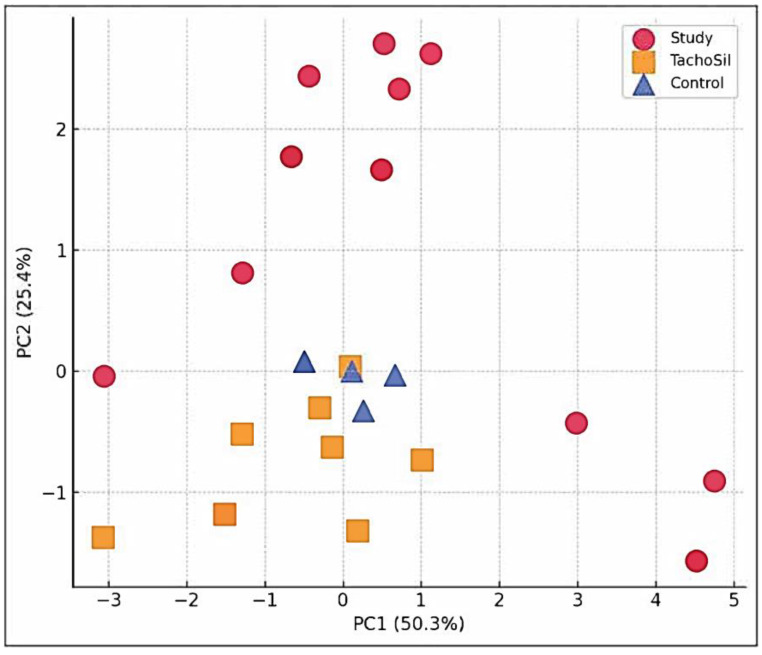 Figure 7
 Figure 8
 Figure 9
 Figure 10
 Figure 11
 Figure 12
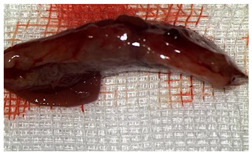 Figure 13
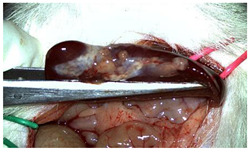 Figure 14
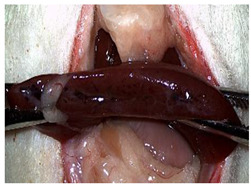 Figure 15
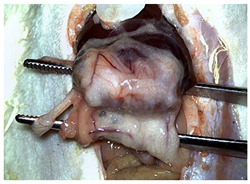 Figure 16
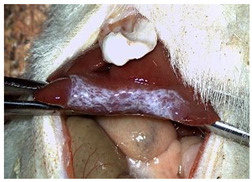 Figure 17
Peer Reviews
No public reviews on file for this paper yet. If you reviewed it on a platform where reviews are public (OpenReview, ICLR, NeurIPS, ICML), you can paste yours below so the community can read it here.
Videos
No videos yet. Explain this paper in a talk, walkthrough, or lecture? Add one.
Taxonomy
TopicsHemostasis and retained surgical items · Surgical Sutures and Adhesives · Esophageal and GI Pathology