Ionic Liquid-Based Centrifuge-Less Cloud Point Extraction of a Copper(II)–4-Nitrocatechol Complex and Its Analytical Application
Denitsa Kiradzhiyska, Nikolina Milcheva, Miglena Ruzmanova, Fatma Genç, Petya Racheva, Kiril Gavazov

TL;DR
A new method for detecting copper(II) uses a cloud point extraction technique with an ionic liquid and 4-nitrocatechol, offering high sensitivity and practicality for real-world samples.
Contribution
A novel centrifuge-less cloud point extraction method using an ionic liquid and 4-nitrocatechol for copper(II) determination is introduced.
Findings
The method shows a linear response for copper(II) in the range of 32–763 ng mL−1 with a detection limit of 9.7 ng mL−1.
The ternary complex (A336+)2[Cu(4NC)2] has a high molar absorption coefficient of 8.9 × 10⁴ M−1 cm−1.
The method was successfully applied to dietary supplements, infusion solutions, and synthetic copper alloy mixtures.
Abstract
A novel centrifuge-less cloud point extraction (CL-CPE) method was developed for the spectrophotometric determination of copper(II) using 4-nitrocatechol (4NC) as the chelating agent. The extraction system utilizes a mixed micellar phase composed of the nonionic surfactant Triton X-114 and the ionic liquid (IL) Aliquat® 336 (A336). The extracted ternary ion-association complex, identified as (A336+)2[Cu(4NC)2], exhibits a maximum absorbance at 451 nm, with a molar absorption coefficient of 8.9 × 10⁴ M−1 cm−1 and a Sandell’s sensitivity of 0.71 ng cm−2. The method demonstrates a linear response in the copper(II) concentration range of 32–763 ng mL−1 and a limit of detection of 9.7 ng mL−1. The logarithmic extraction constant (log Kex) was determined to be 7.9, indicating efficient extraction. Method performance, evaluated by the Blue Applicability Grade Index (BAGI) and the Click…
Genes, proteins, chemicals, diseases, species, mutations and cell lines named across the full text — each resolved to its canonical identifier and authoritative record.
Click any figure to enlarge with its caption.
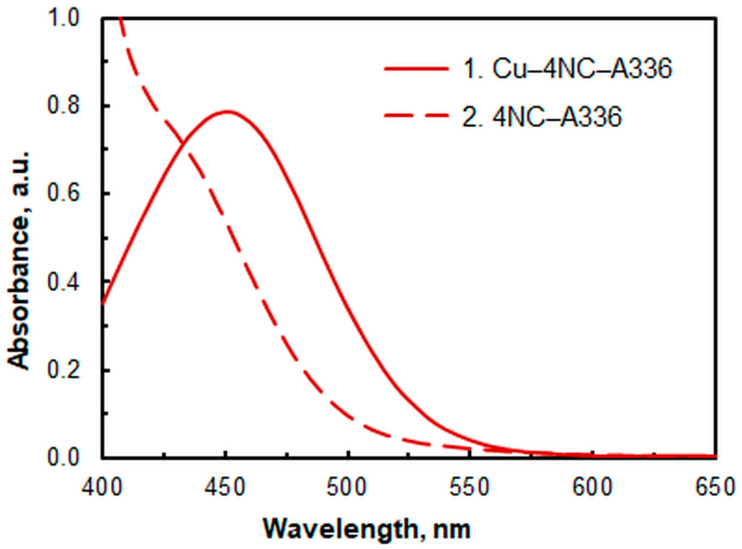 Figure 1
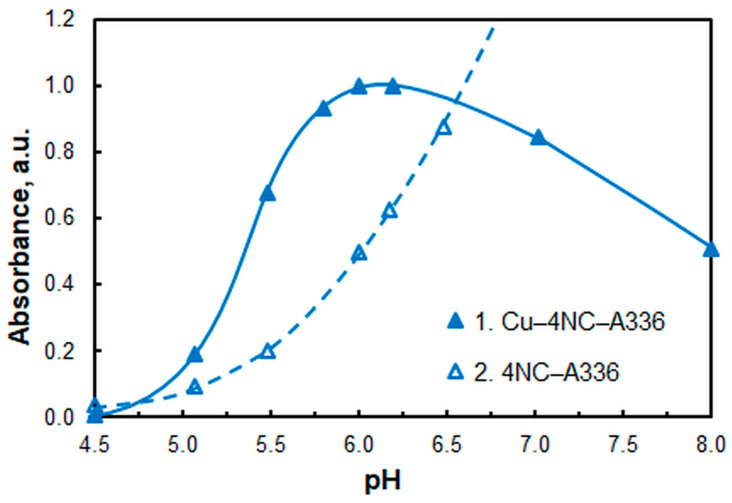 Figure 2
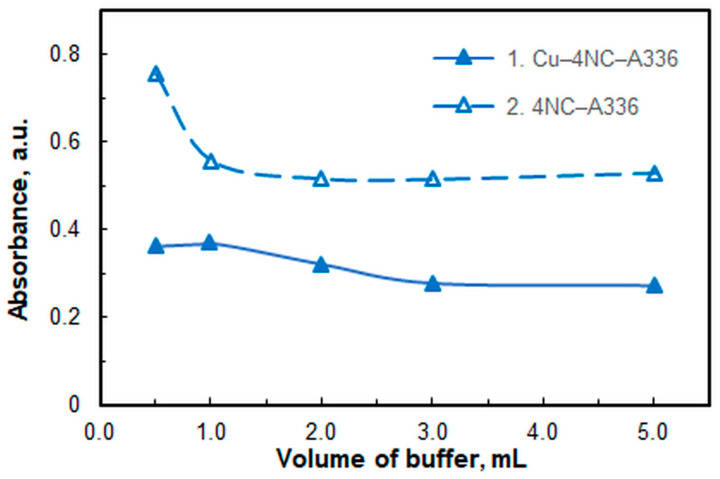 Figure 3
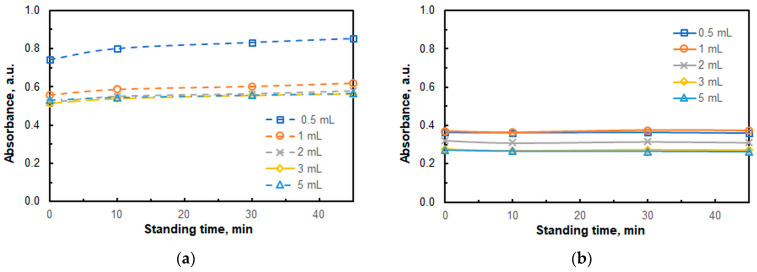 Figure 4
 Figure 5
 Figure 6
 Figure 7
 Figure 8
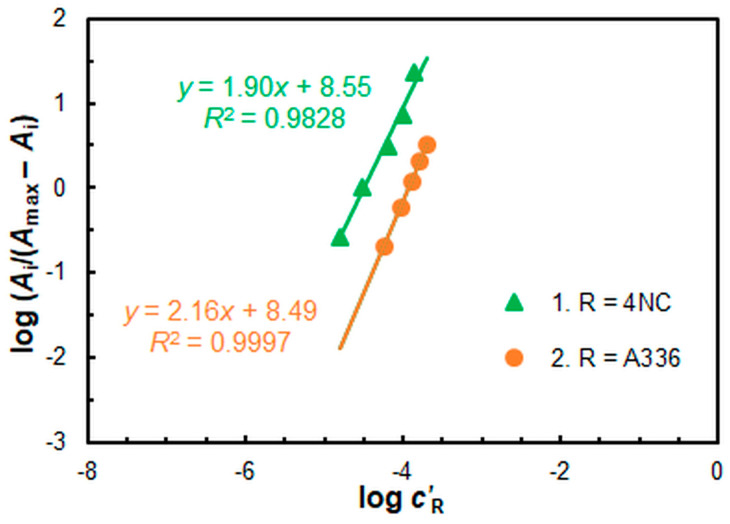 Figure 9
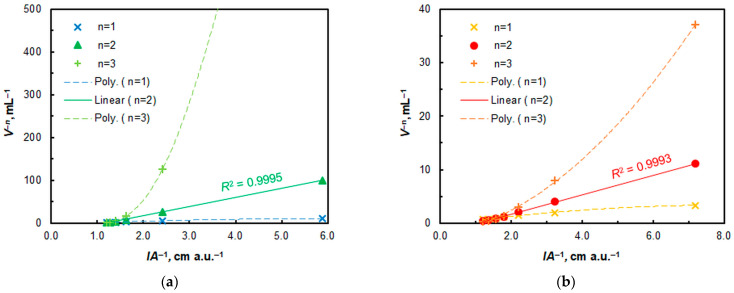 Figure 10
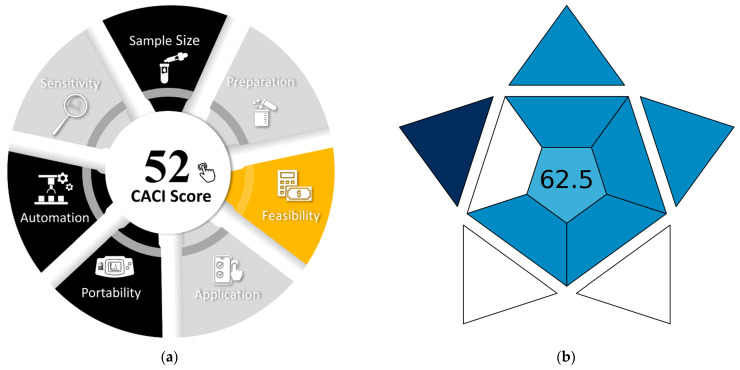 Figure 11
Peer Reviews
No public reviews on file for this paper yet. If you reviewed it on a platform where reviews are public (OpenReview, ICLR, NeurIPS, ICML), you can paste yours below so the community can read it here.
Videos
No videos yet. Explain this paper in a talk, walkthrough, or lecture? Add one.
Taxonomy
TopicsAnalytical chemistry methods development · Mass Spectrometry Techniques and Applications · Analytical Chemistry and Chromatography