Straightforward Access to the Dispirocyclic Framework via Regioselective Intramolecular Michael Addition
Weilun Cao, Junmin Dong, Xuan Pan, Zhanzhu Liu

TL;DR
A new method for creating complex dispirocyclic compounds using a metal-free chemical reaction is described, with some compounds showing strong cell-killing effects.
Contribution
A regioselective intramolecular Michael addition method for synthesizing dispirocyclic frameworks under mild, transition-metal-free conditions is introduced.
Findings
Dispirocyclic compounds were synthesized with good to excellent yields under mild conditions.
Some compounds showed potent cytotoxicity with an IC50 value of 10−6 mol/L in an in vitro assay.
Stereoisomers were separated and their configurations confirmed using X-ray diffraction.
Abstract
In this article, an efficient and straightforward protocol for the construction of complex dispirocyclic skeletons via regioselective intramolecular Michael addition is presented. Diverse dispirocyclic compounds were synthesized under mild and transition-metal-free conditions with good to excellent yields. Most stereoisomers were conveniently separated by column chromatography, and their relative configurations were identified by single-crystal X-Ray diffraction of representative compounds. A scale-up experiment validated the practicality of this method. In an in vitro assay, some dispirocyclic compounds exhibited potent cytotoxicity with an IC50 value of 10−6 mol/L.
Genes, proteins, chemicals, diseases, species, mutations and cell lines named across the full text — each resolved to its canonical identifier and authoritative record.
Click any figure to enlarge with its caption.
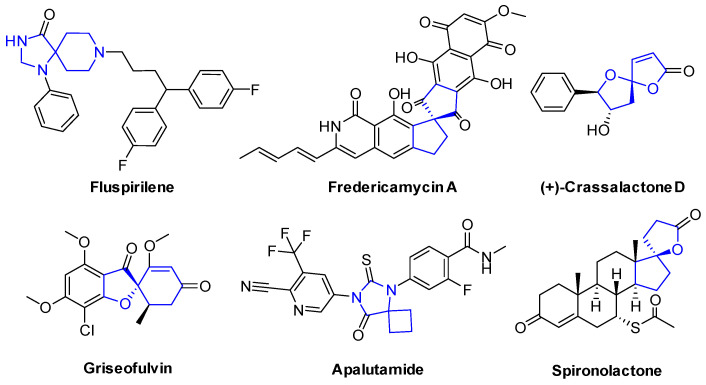 Figure 1
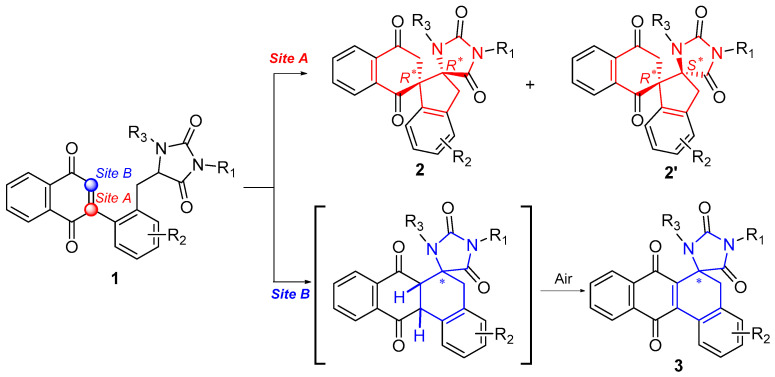 Figure 2
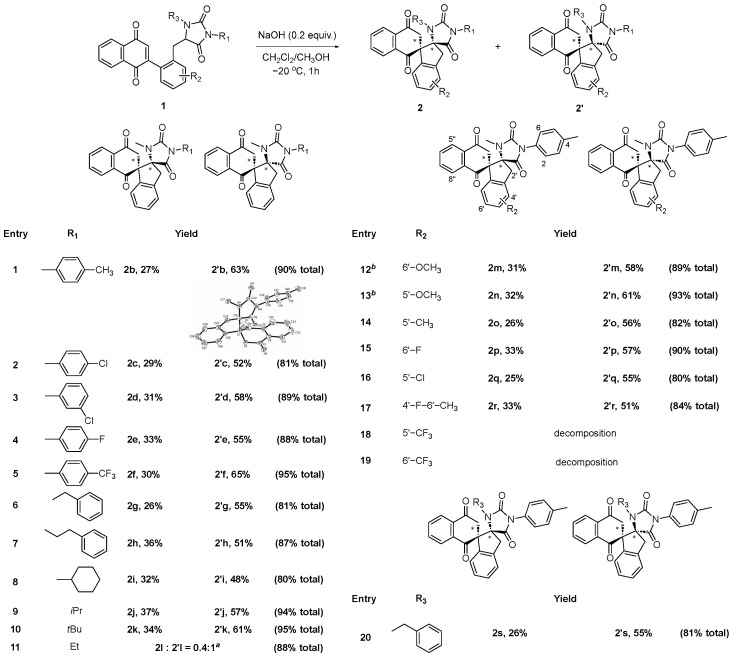 Figure 3
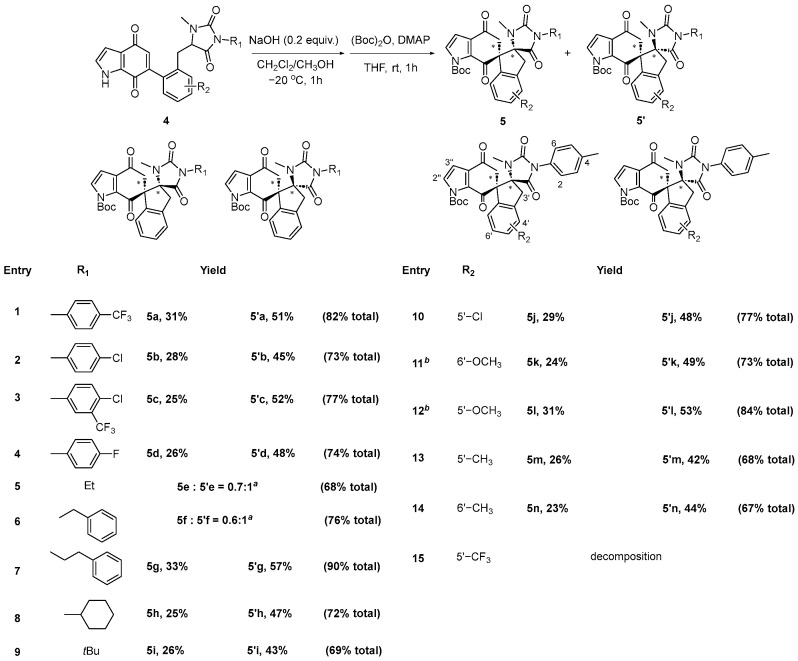 Figure 4
 Figure 5
Peer Reviews
No public reviews on file for this paper yet. If you reviewed it on a platform where reviews are public (OpenReview, ICLR, NeurIPS, ICML), you can paste yours below so the community can read it here.
Videos
No videos yet. Explain this paper in a talk, walkthrough, or lecture? Add one.
Taxonomy
TopicsSynthetic Organic Chemistry Methods · Asymmetric Synthesis and Catalysis · Advanced Synthetic Organic Chemistry