Targeting RARγ Decreases Immunosuppressive Macrophage Polarization and Reduces Tumor Growth
Jihyeon Park, Jisun Oh, Sang-Hyun Min, Ji Hoon Yu, Jong-Sup Bae, Hui-Jeon Jeon

TL;DR
Blocking RARγ reduces immunosuppressive macrophages in tumors, potentially improving cancer treatment outcomes.
Contribution
RARγ is identified as a novel target to reprogram immunosuppressive macrophages and inhibit tumor growth.
Findings
Inhibiting RARγ decreases immunosuppressive macrophage markers in THP-1 cells.
RARγ inhibition reduces tumor cell proliferation in a 3D spheroid model.
Targeting RARγ mitigates tumor-promoting effects of TAMs.
Abstract
Tumor-associated macrophages (TAMs) play a critical role in the tumor microenvironment (TME), interacting with cancer cells and other components to promote tumor growth. Given the influence of TAMs on tumor progression and resistance to therapy, regulating the activity of these macrophages is crucial for improving cancer treatment outcomes. TAMs often exhibit immunosuppressive phenotypes (commonly referred to as M2-like macrophages), which suppress immune responses and contribute to drug resistance. Therefore, inhibiting immunosuppressive polarization offers a promising strategy to impede tumor growth. This study revealed retinoic acid receptor gamma (RARγ), a nuclear receptor, as a key regulator of immunosuppressive polarization in THP-1 macrophages. Indeed, the inhibition of RARγ, either by a small molecule or gene silencing, significantly reduced the expression of immunosuppressive…
Genes, proteins, chemicals, diseases, species, mutations and cell lines named across the full text — each resolved to its canonical identifier and authoritative record.
Click any figure to enlarge with its caption.
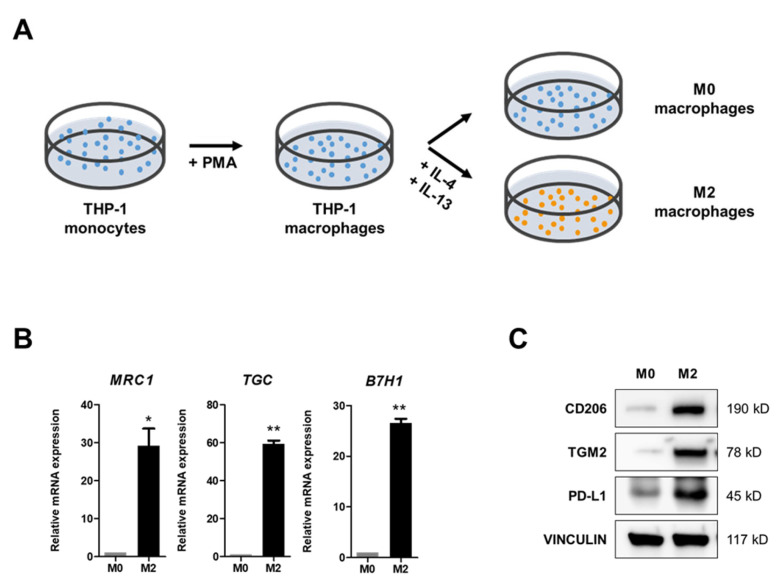 Figure 1
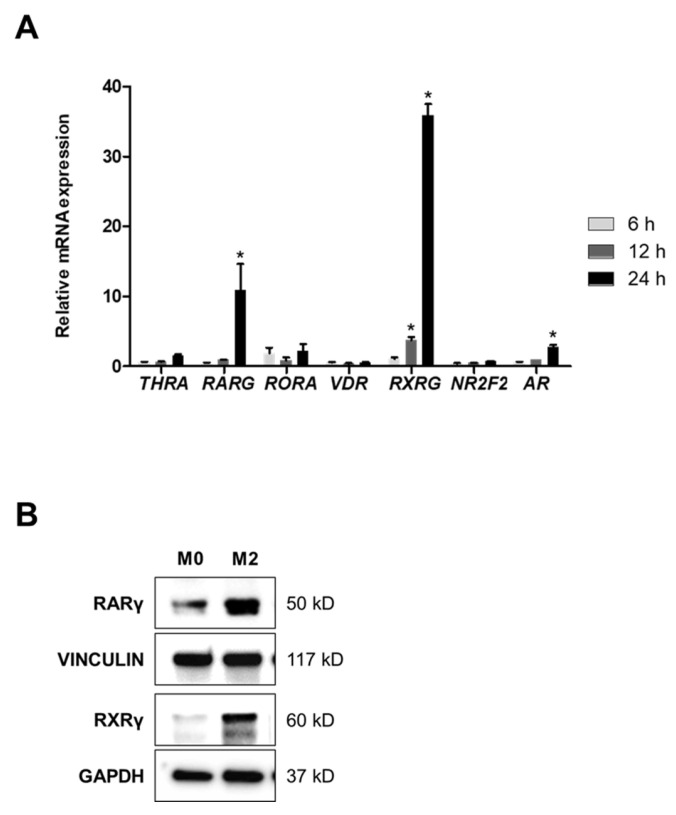 Figure 2
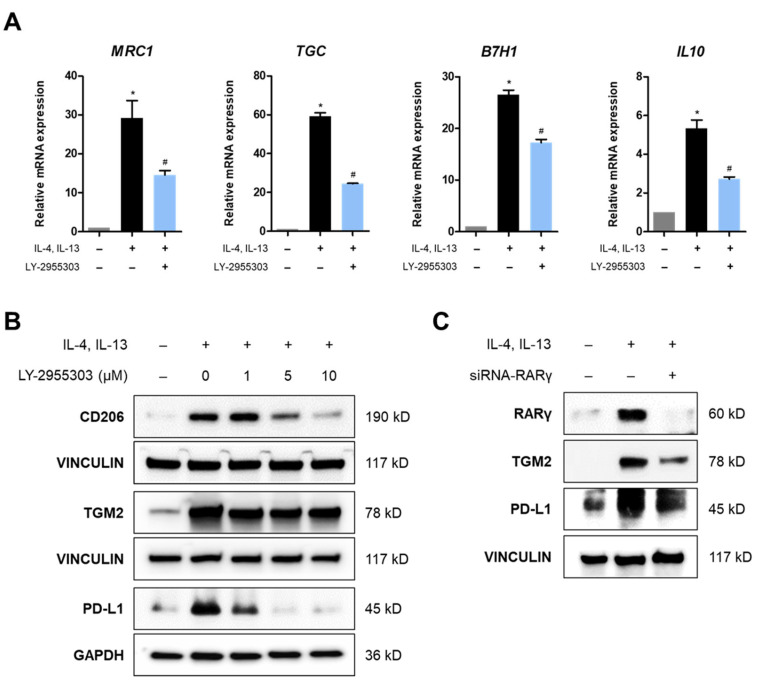 Figure 3
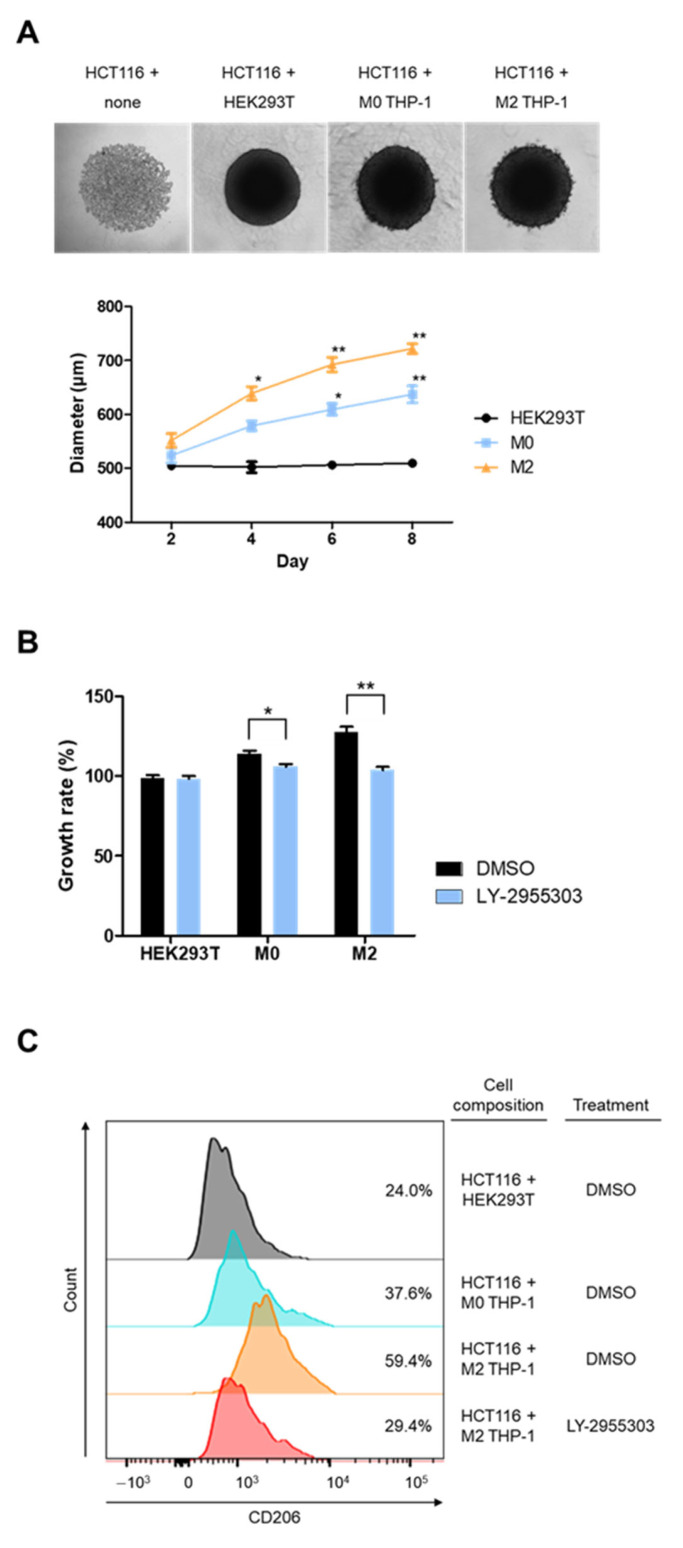 Figure 4
Peer Reviews
No public reviews on file for this paper yet. If you reviewed it on a platform where reviews are public (OpenReview, ICLR, NeurIPS, ICML), you can paste yours below so the community can read it here.
Videos
No videos yet. Explain this paper in a talk, walkthrough, or lecture? Add one.
Taxonomy
TopicsImmune cells in cancer · Immune Cell Function and Interaction · Immunotherapy and Immune Responses