A Turn-On Fluorescence Sensor Based on Guest-Induced Luminescence Ru(bpy)32+@UiO-66 for the Detection of Organophosphorus Pesticides
Jun Li, Jianlan Deng, Qian Tao, Chenyu Yan, Yuxuan Liu, Jianxiao Yang, Zhong Cao

TL;DR
A new 'turn-on' fluorescence sensor using a stable MOF detects organophosphorus pesticides with high sensitivity and practical applicability.
Contribution
The first 'turn-on' fluorescence sensing system using Ru(bpy)32+@UiO-66 for detecting organophosphorus pesticides via a dual-enzyme mechanism.
Findings
The sensor achieves sensitive detection of organophosphorus pesticides through a dual-enzyme system.
The Ru(bpy)32+@UiO-66 system shows high chemical and photostability in water.
The method provides a satisfactory detection recovery rate for parathion-methyl in real samples.
Abstract
Luminescent metal–organic frameworks (MOFs) are used for the detection of organophosphorus pesticides (OPs) due to their large surface area and pore volume as well as their special optical properties. However, most self-luminescent MOFs are not only complex to synthesize and unstable in water but also feature a “turn-off” sensing system, which has highly restricted their practical applications in OP detection. Herein, a “turn-on” fluorescence sensor based on the guest-induced luminescence MOF Ru(bpy)32+@UiO-66 was constructed, which realized the sensitive detection of OPs through a dual-enzyme system for the first time. Compared with self-luminescent MOFs, Ru(bpy)32+@UiO-66 was not only more easily synthesized but also had higher chemical and photostability in water. In this strategy, by means of the hydrolysis of AChE and ChOx, H2O2 will be produced, which can oxidize Fe2+ to Fe3+,…
Genes, proteins, chemicals, diseases, species, mutations and cell lines named across the full text — each resolved to its canonical identifier and authoritative record.
Click any figure to enlarge with its caption.
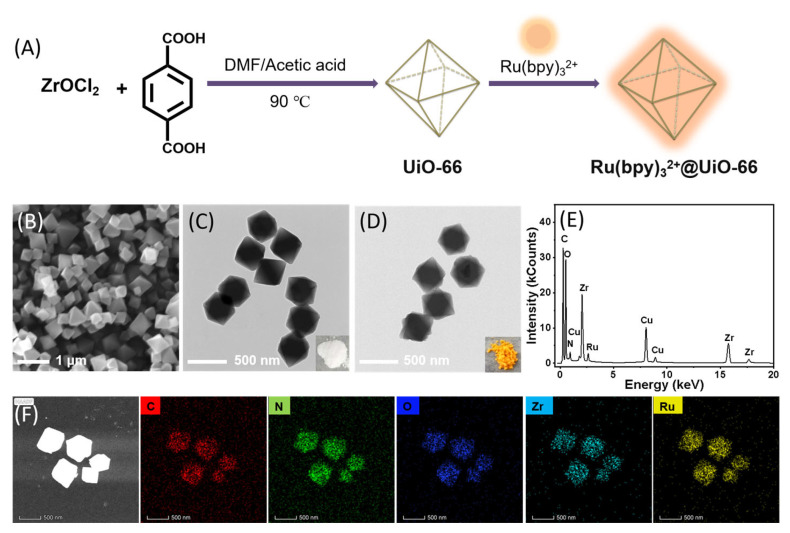 Figure 1
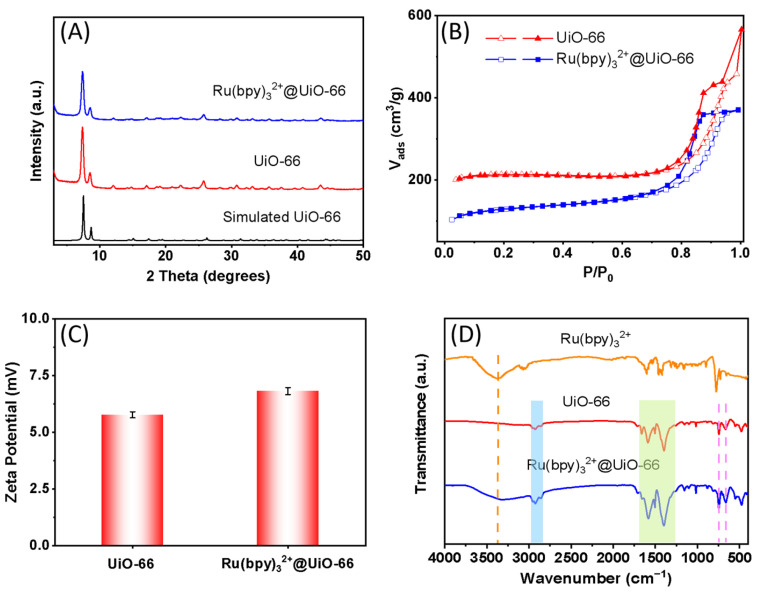 Figure 2
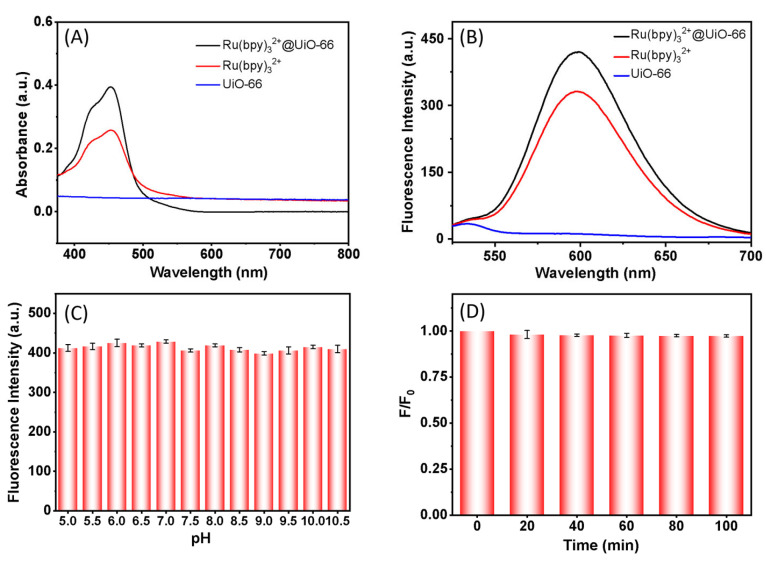 Figure 3
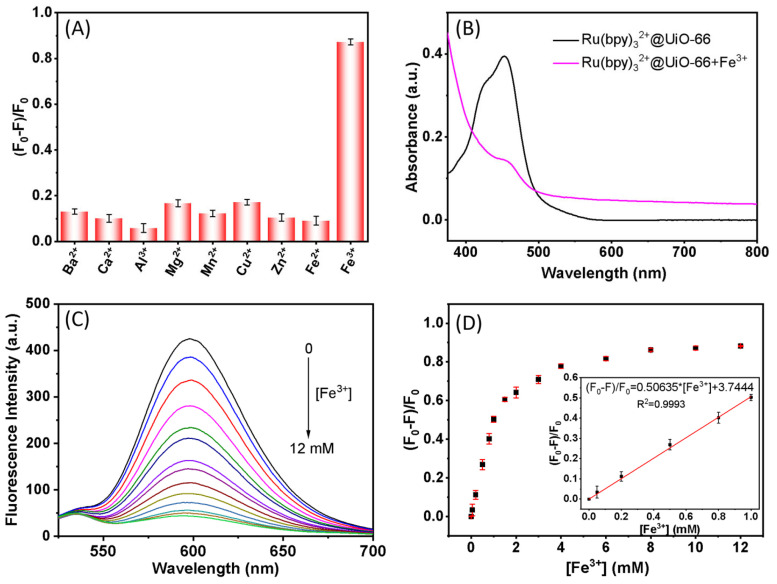 Figure 4
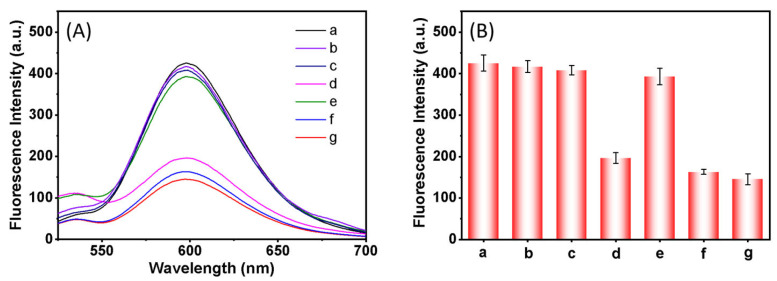 Figure 5
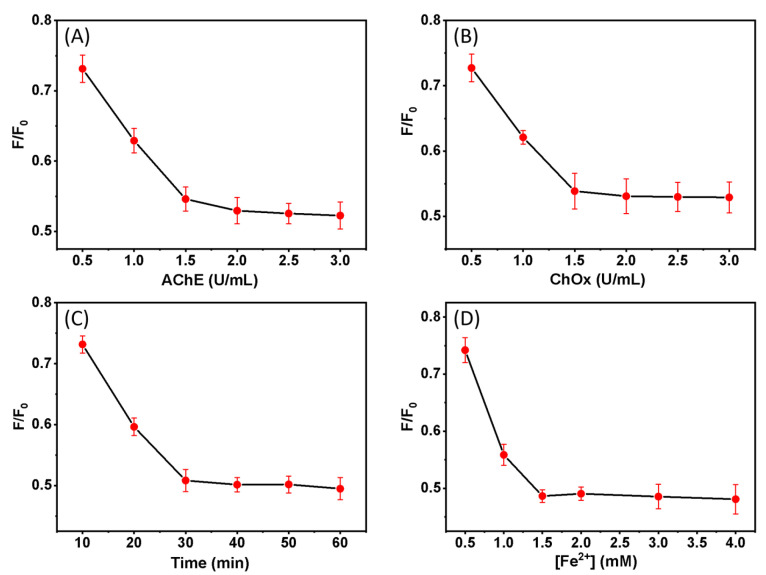 Figure 6
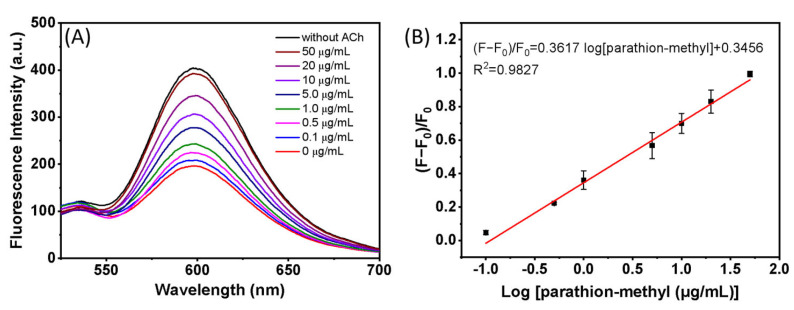 Figure 7
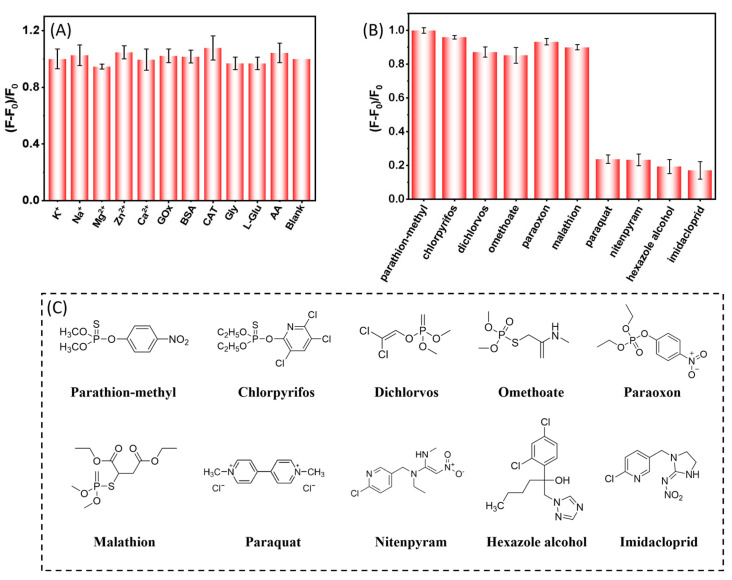 Figure 8
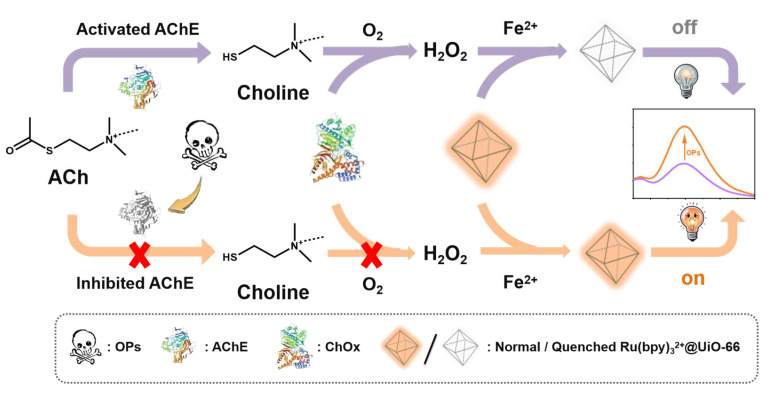 Figure 9
Peer Reviews
No public reviews on file for this paper yet. If you reviewed it on a platform where reviews are public (OpenReview, ICLR, NeurIPS, ICML), you can paste yours below so the community can read it here.
Videos
No videos yet. Explain this paper in a talk, walkthrough, or lecture? Add one.
Taxonomy
TopicsMetal-Organic Frameworks: Synthesis and Applications · Advanced Nanomaterials in Catalysis · Nanocluster Synthesis and Applications