Phytochemical Profile and Functional Properties of the Husk of Argania spinosa (L.) Skeel
Antonietta Cerulli, Natale Badalamenti, Francesco Sottile, Maurizio Bruno, Sonia Piacente, Vincenzo Ilardi, Rosa Tundis, Roberta Pino, Monica Rosa Loizzo

TL;DR
This study explores the chemical composition and health benefits of the husk of Argania spinosa, finding it rich in bioactive compounds that may help prevent diabetes and obesity.
Contribution
The first detailed analysis of the phytochemical profile and functional properties of Argania spinosa husk extracts.
Findings
The husk contains 43 compounds, including hydroxycinnamic acid, flavonoids, saponins, and triterpenic acids.
Acetone extract showed the highest antioxidant and enzyme inhibitory activity, suggesting potential for diabetes and obesity prevention.
Abstract
Due to the limited scientific exploration of Argania spinosa (L.) skeel husk, this study presents the first investigation of the metabolite profile of methanol and acetone extracts analyzed by liquid chromatography coupled with electrospray ionization and high-resolution multistage mass spectrometry (LC-ESI/HRMSMS). A total of 43 compounds, including hydroxycinnamic acid and flavonoid derivatives, saponins, and triterpenic acids, were identified, some of which have not been previously reported in this species. The total phenols (TPC) and flavonoids (TFC) content were spectrophotometrically determined. A multi-target approach was applied to investigate the antioxidant potential using 1,1-Diphenyl-2-picrylhydrazyl (DPPH), 2,2-azino-bis-3-ethylbenzothiazoline-6-sulphonic acid (ABTS), β-carotene bleaching, and Ferric Reducing Ability Power (FRAP) tests. Carbohydrate hydrolyzing enzymes and…
Genes, proteins, chemicals, diseases, species, mutations and cell lines named across the full text — each resolved to its canonical identifier and authoritative record.
Click any figure to enlarge with its caption.
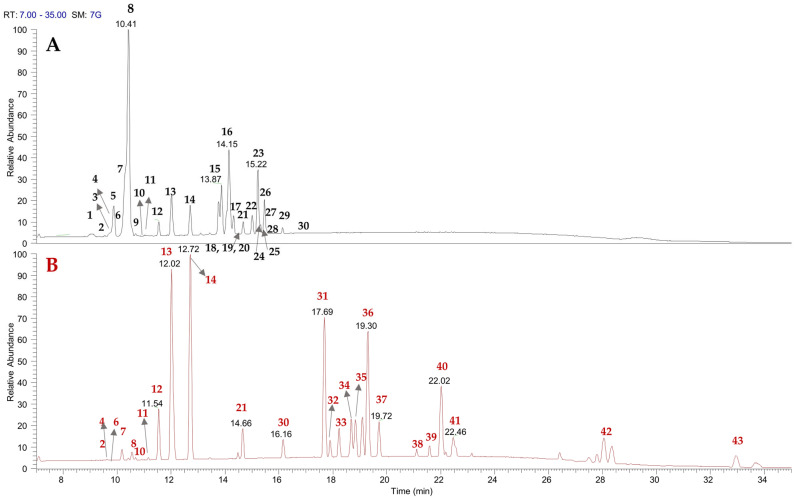 Figure 1
 Figure 2
 Figure 3
 Figure 4
Peer Reviews
No public reviews on file for this paper yet. If you reviewed it on a platform where reviews are public (OpenReview, ICLR, NeurIPS, ICML), you can paste yours below so the community can read it here.
Videos
No videos yet. Explain this paper in a talk, walkthrough, or lecture? Add one.
Taxonomy
TopicsPhytochemicals and Antioxidant Activities · Essential Oils and Antimicrobial Activity · Bee Products Chemical Analysis