Simple Cobalt Nanoparticle-Catalyzed Reductive Amination for Selective Synthesis of a Broad Range of Primary Amines
Bingxiao Zheng, Liqin Yang, Yashuang Hei, Ling Yu, Sisi Wen, Lisi Ba, Long Ao, Zhiju Zhao

TL;DR
A new, efficient cobalt-based catalyst enables the selective synthesis of various primary amines using a sustainable and cost-effective method.
Contribution
A novel cobalt nanoparticle catalyst is developed for reductive amination with high activity and selectivity.
Findings
The Co-Ph@SiO2(900) catalyst achieved >99% conversion and >98% selectivity in reductive amination.
The catalyst efficiently converts diverse ketones and aldehydes into primary amines with high yields.
The catalyst's performance is attributed to uniform nanoparticle distribution and bifunctional properties.
Abstract
In the field of green chemistry, the development of more sustainable and cost-efficient methods for synthesizing primary amines is of paramount importance, with catalyst research being central to this effort. This work presents a facile, aqueous-phase synthesis of highly active cobalt catalysts (Co-Ph@SiO2(x)) via pyrolysis of silica-supported cobalt–phenanthroline complexes. The optimized Co-Ph@SiO2(900) catalyst achieved exceptional performance (>99% conversion, >98% selectivity) in the reductive amination of acetophenone to 1-phenylethanamine using NH3/H2. Systematic studies revealed that its exceptional performance originates from the in situ pyrolysis of the cobalt–phyllosilicate complex. This process promotes the uniform distribution of metal cobalt nanoparticles, simultaneously enhancing porosity and imparting bifunctional (acidic and basic) properties to the catalyst, resulting…
Genes, proteins, chemicals, diseases, species, mutations and cell lines named across the full text — each resolved to its canonical identifier and authoritative record.
Click any figure to enlarge with its caption.
 Figure 1
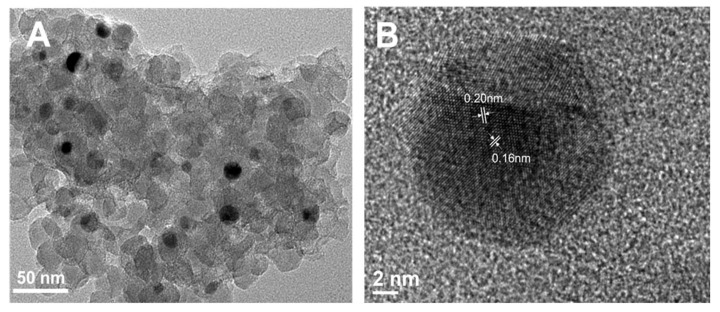 Figure 2
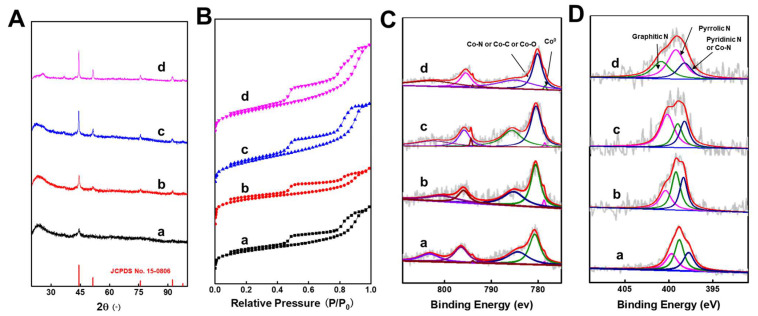 Figure 3
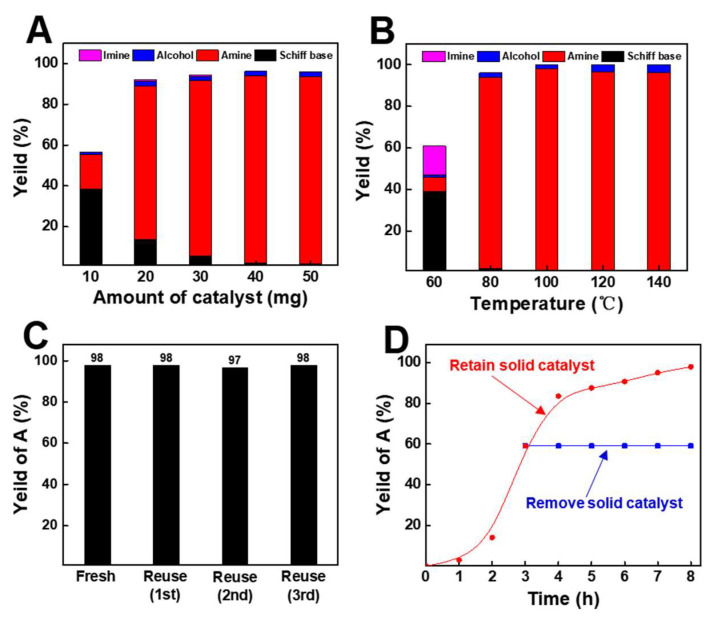 Figure 4
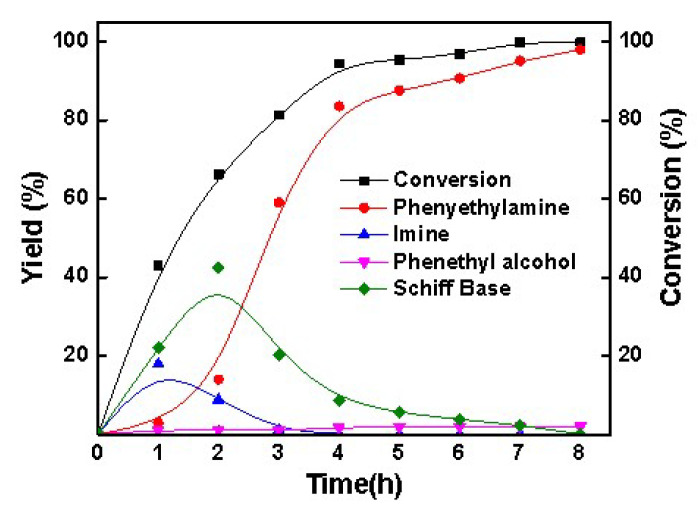 Figure 5
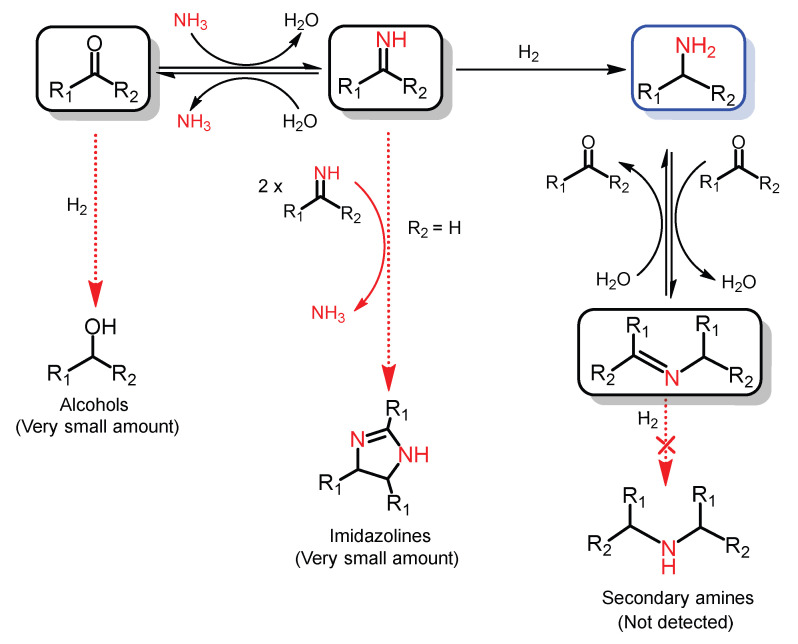 Figure 6
 Figure 7
 Figure 8
 Figure 9
 Figure 10
 Figure 11
 Figure 12
 Figure 13
 Figure 14
 Figure 15
 Figure 16
 Figure 17
 Figure 18
 Figure 19
 Figure 20
 Figure 21
 Figure 22
 Figure 23
 Figure 24
 Figure 25
 Figure 26
 Figure 27
 Figure 28
 Figure 29
 Figure 30
 Figure 31
 Figure 32
 Figure 33
 Figure 34
 Figure 35
 Figure 36
 Figure 37
 Figure 38
 Figure 39
 Figure 40
 Figure 41
 Figure 42
 Figure 43
 Figure 44
 Figure 45
 Figure 46
 Figure 47
 Figure 48
 Figure 49
 Figure 50
Peer Reviews
No public reviews on file for this paper yet. If you reviewed it on a platform where reviews are public (OpenReview, ICLR, NeurIPS, ICML), you can paste yours below so the community can read it here.
Videos
No videos yet. Explain this paper in a talk, walkthrough, or lecture? Add one.
Taxonomy
TopicsAsymmetric Hydrogenation and Catalysis · Nanomaterials for catalytic reactions · Chemical Synthesis and Reactions