Beyond Metabolism: Psychiatric and Social Dimensions in Bariatric Surgery Candidates with a BMI ≥ 50—A Prospective Cohort Study
Marta Herstowska, Karolina Myśliwiec, Marta Bandura, Jędrzej Chrzanowski, Jacek Burzyński, Arkadiusz Michalak, Agnieszka Lejk, Izabela Karamon, Wojciech Fendler, Łukasz Kaska

TL;DR
This study compares patients with BMI ≥ 50 and lower BMI undergoing bariatric surgery, finding unique clinical and psychosocial differences that suggest the need for tailored care.
Contribution
The study identifies distinct clinical and psychosocial profiles in super morbidly obese bariatric surgery candidates.
Findings
Patients with BMI ≥ 50 had higher rates of obesity-related health issues and worse metabolic profiles.
Despite similar psychiatric screening scores, they reported fewer prior depression or eating disorder diagnoses.
The study highlights the need for multidisciplinary preoperative assessment for this subgroup.
Abstract
Background: Super morbid obesity (SMO), defined as a body mass index (BMI) ≥ 50 kg/m2, represents a distinct and increasingly prevalent subgroup of patients undergoing bariatric surgery. Compared to individuals with lower BMI, patients with BMI ≥ 50 kg/m2 often exhibit unique clinical, psychological, and social characteristics that may influence treatment outcomes. Objective: This study aimed to compare demographic, metabolic, and psychiatric profiles of patients with BMI ≥ 50 kg/m2 and non-super morbid obesity (NSMO; BMI < 50 kg/m2) who were evaluated prior to bariatric surgery. Methods: A total of 319 patients were recruited between December 2022 and December 2023 at a bariatric center in Gdansk, Poland. All participants underwent a comprehensive preoperative assessment, including laboratory testing, psychometric screening (BDI, PHQ-9), and psychiatric interviews. Patients were…
Genes, proteins, chemicals, diseases, species, mutations and cell lines named across the full text — each resolved to its canonical identifier and authoritative record.
Click any figure to enlarge with its caption.
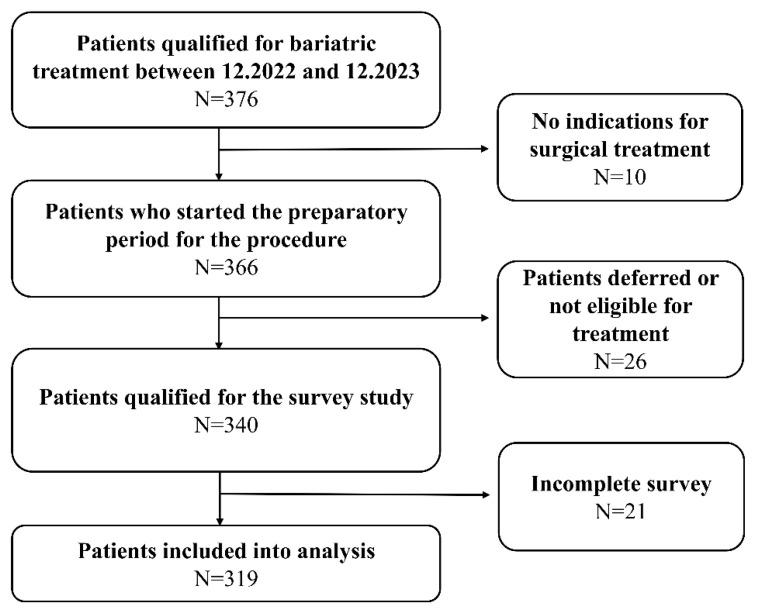 Figure 1
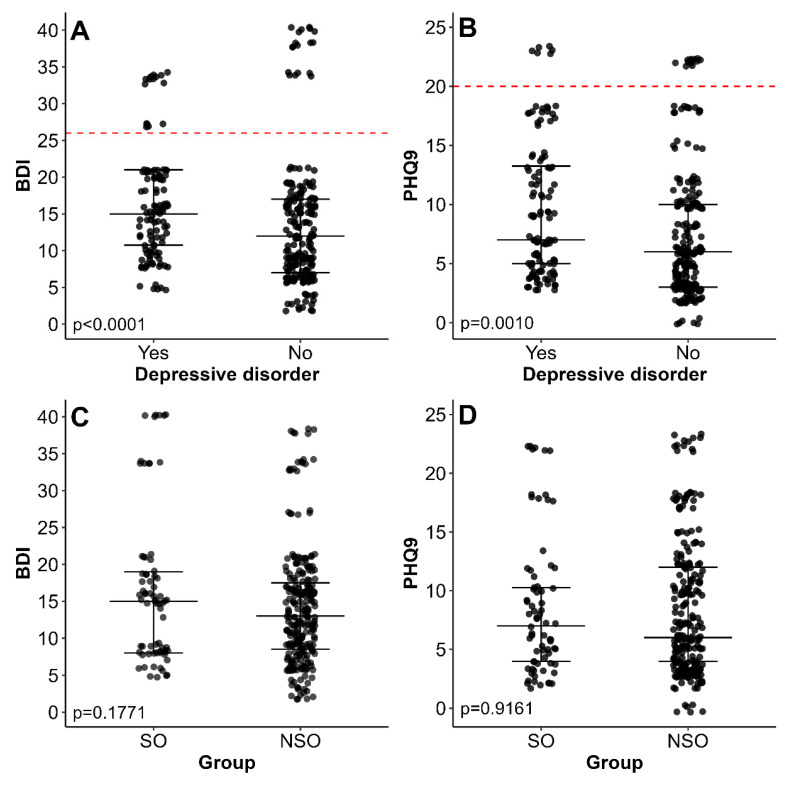 Figure 2
Peer Reviews
No public reviews on file for this paper yet. If you reviewed it on a platform where reviews are public (OpenReview, ICLR, NeurIPS, ICML), you can paste yours below so the community can read it here.
Videos
No videos yet. Explain this paper in a talk, walkthrough, or lecture? Add one.
Taxonomy
TopicsBariatric Surgery and Outcomes · Diet and metabolism studies · Obesity and Health Practices