Association of Phenylacetylglutamine and Cognitive Impairment in CKD
Hélène Levassort, Julie Boucquemont, Sophie Liabeuf, Solène M. Laville, Céline Lange, Luc Frimat, Christian Combe, Denis Fouque, Maurice Laville, Christian Jacquelinet, Yves-Edouard Herpe, Islam Amine Larabi, Jean-Claude Alvarez, Natalia Alencar de Pinho, Marion Pépin

TL;DR
This study finds that higher levels of phenylacetylglutamine in CKD patients are linked to cognitive impairment, suggesting a new potential target for treatment.
Contribution
The study identifies phenylacetylglutamine as a new uremic toxin associated with cognitive impairment in nondialysis-dependent CKD patients.
Findings
A 2-fold increase in PAG levels was associated with cognitive impairment after adjusting for multiple factors.
908 out of 2590 patients (35%) had an MMSE score indicating cognitive impairment.
The association remained significant even after accounting for other known uremic toxins and risk factors.
Abstract
Chronic kidney disease (CKD) leads to the accumulation of uremic toxins (UTs). Studies have suggested that UTs are associated with cognitive impairment (CI) in patients with CKD. Recently, studies reported that phenylacetylglutamine (PAG) contributes to the association between CKD and CI. However, this association has not been investigated in nondialysis-dependent adults with CKD. The CKD–Renal Epidemiology and Information Network (CKD-REIN) cohort study included 3033 patients with CKD stages 2 to 5. This cross-sectional analysis included those with a PAG measurement and a mini-mental state examination (MMSE) score within 3 months of each other. CI was defined as an MMSE score ≤ 26 out of 30. Logistic regression was used to assess the association between PAG and CI. Of the 2590 patients included (mean [SD] age: 67 [13] years, mean [SD] estimated glomerular filtration rate [eGFR]: 34…
Genes, proteins, chemicals, diseases, species, mutations and cell lines named across the full text — each resolved to its canonical identifier and authoritative record.
Click any figure to enlarge with its caption.
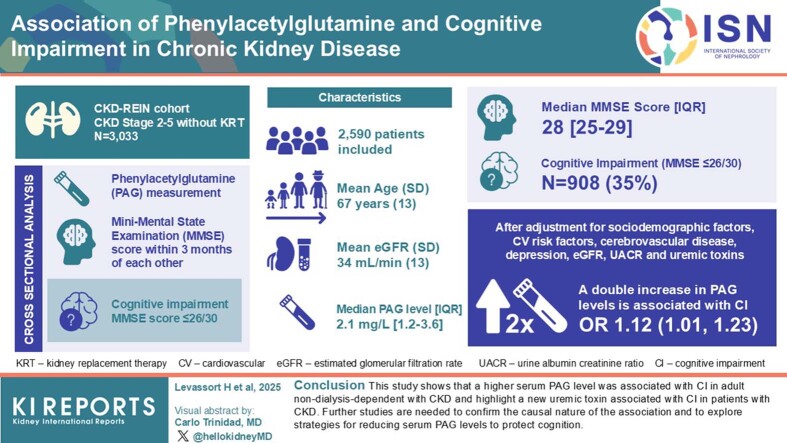 Figure 1
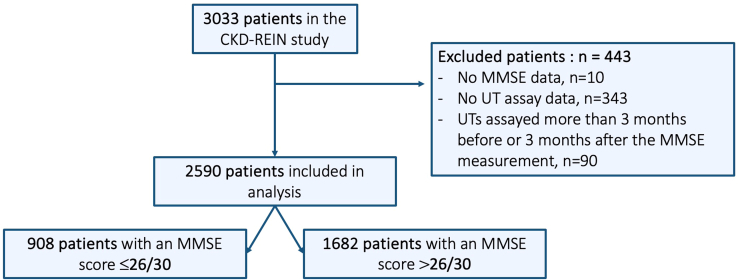 Figure 2
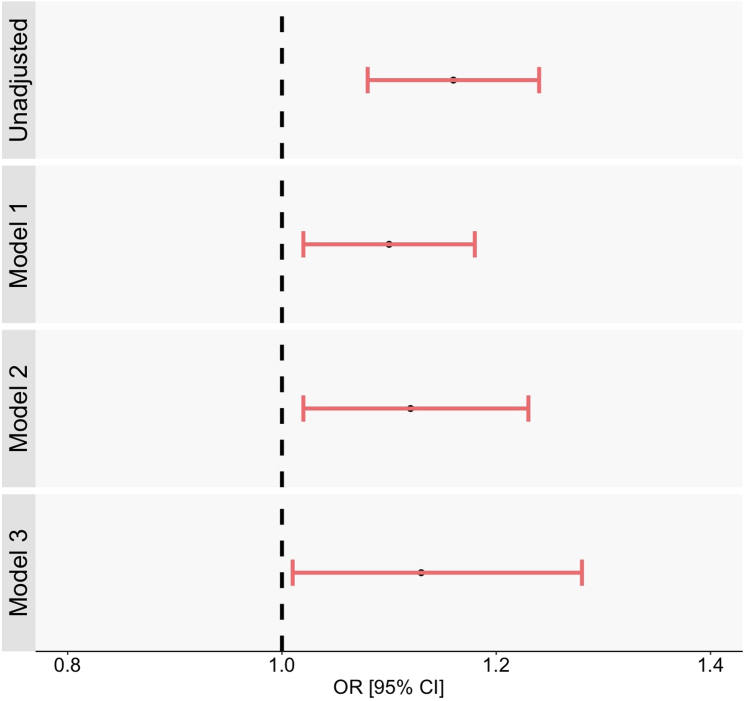 Figure 3
Peer Reviews
No public reviews on file for this paper yet. If you reviewed it on a platform where reviews are public (OpenReview, ICLR, NeurIPS, ICML), you can paste yours below so the community can read it here.
Videos
No videos yet. Explain this paper in a talk, walkthrough, or lecture? Add one.
Taxonomy
TopicsDialysis and Renal Disease Management · Neurological and metabolic disorders · Pharmacological Effects and Toxicity Studies