From Waste to Biocatalyst: Cocoa Bean Shells as Immobilization Support and Substrate Source in Lipase-Catalyzed Hydrolysis
Luciana Lordelo Nascimento, Bruna Louise de Moura Pita, César de Almeida Rodrigues, Paulo Natan Alves dos Santos, Yslaine Andrade de Almeida, Larissa da Silveira Ferreira, Maira Lima de Oliveira, Lorena Santos de Almeida, Cleide Maria Faria Soares, Fabio de Souza Dias

TL;DR
This study shows how cocoa bean shells can be used as a sustainable support for enzymes to produce free fatty acids, turning waste into a useful biocatalyst.
Contribution
The novelty lies in using cocoa bean shells as both a substrate and support for enzyme immobilization, enhancing sustainability and catalytic performance.
Findings
The covalently immobilized enzyme on cocoa bean shells (ORG-CB) achieved 60.1% FFA conversion from CBS oil.
ORG-CB retained over 50% activity after eight reuse cycles and showed enhanced thermal resistance.
Immobilization chemistry and support composition significantly impact the performance of biocatalysts.
Abstract
This study reports the development of a sustainable biocatalyst system for free fatty acid (FFA) production from cocoa bean shell (CBS) oil using Burkholderia cepacia lipase (BCL). CBS was explored as both a support material and a reaction substrate. Six immobilized systems were prepared using organic (CBS), inorganic (silica), and hybrid (CBS–silica) supports via physical adsorption or covalent binding. Among them, the covalently immobilized enzyme on CBS (ORG-CB) showed the most balanced performance, achieving a catalytic efficiency (Ke) of 0.063 mM−1·min−1 (18.6% of the free enzyme), broad pH–temperature tolerance, and over 50% activity retention after eight reuse cycles. Thermodynamic analysis confirmed enhanced thermal resistance for ORG-CB (Ed = 32.3 kJ mol−1; ΔH‡ = 29.7 kJ mol−1), while kinetic evaluation revealed that its thermal deactivation occurred faster than for the free…
Genes, proteins, chemicals, diseases, species, mutations and cell lines named across the full text — each resolved to its canonical identifier and authoritative record.
Click any figure to enlarge with its caption.
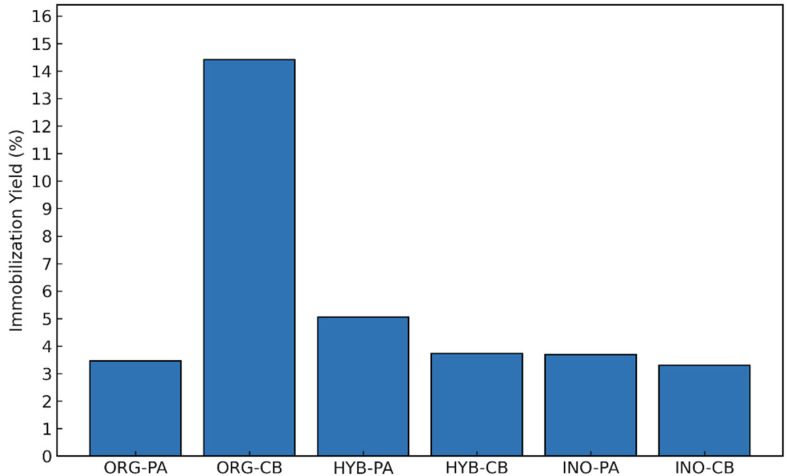 Figure 1
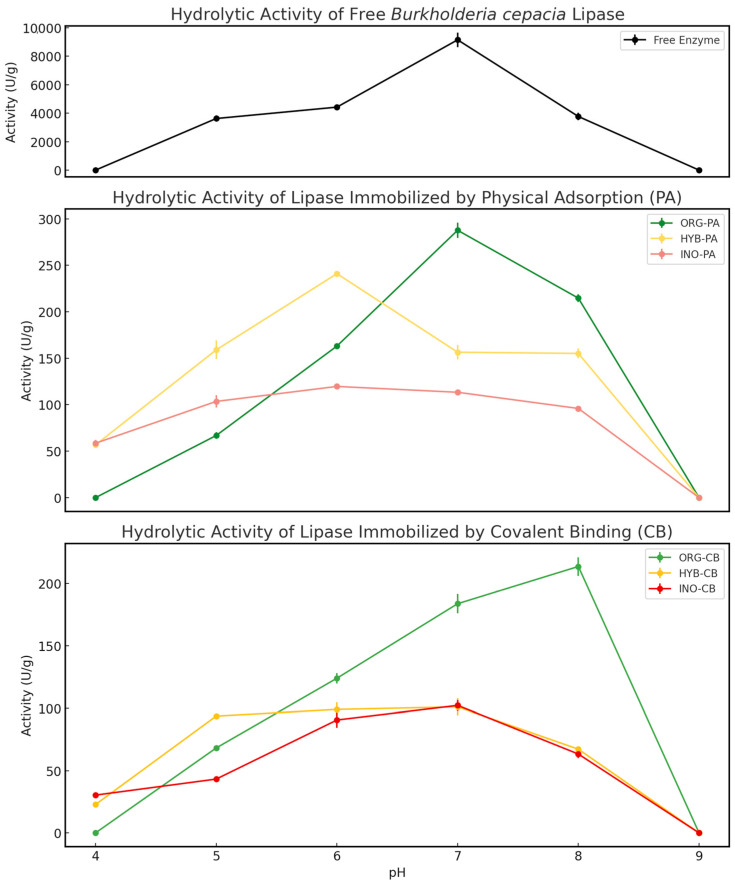 Figure 2
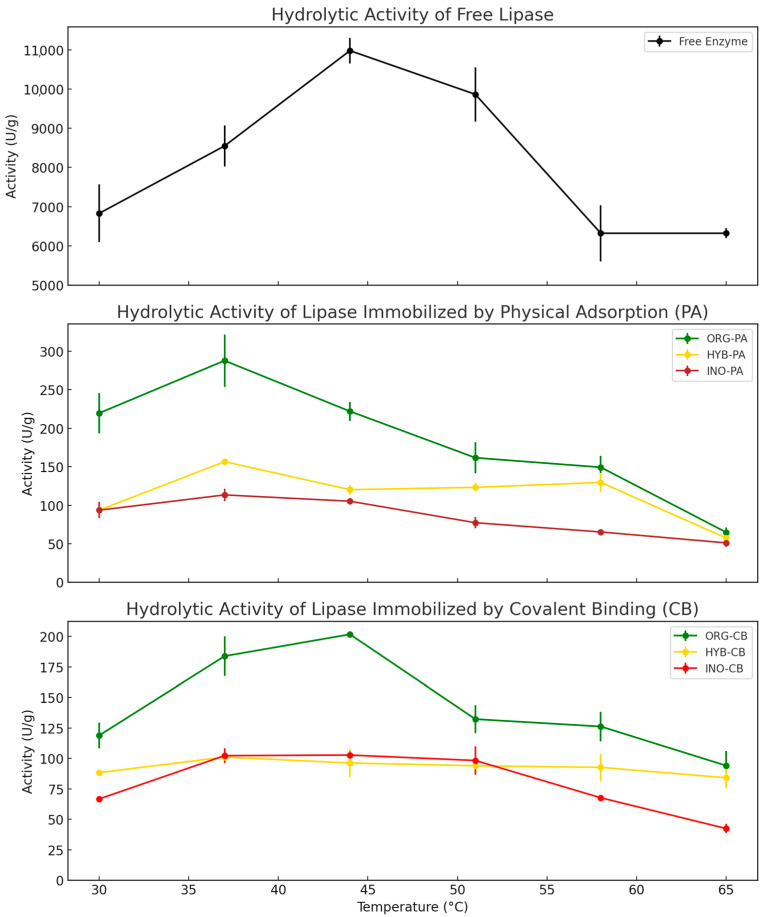 Figure 3
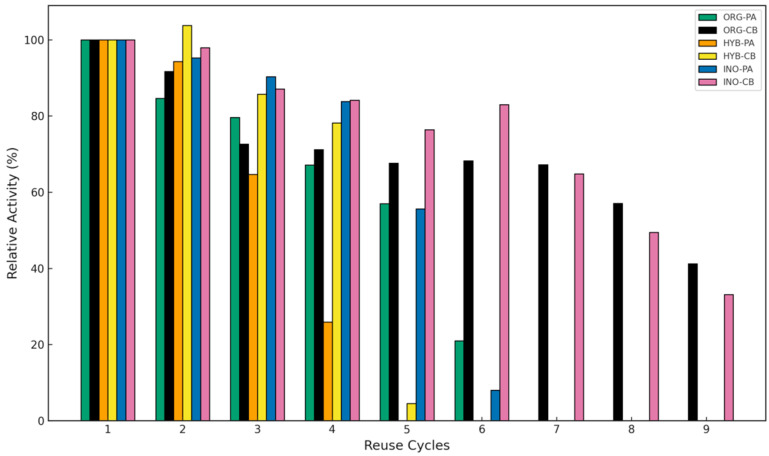 Figure 4
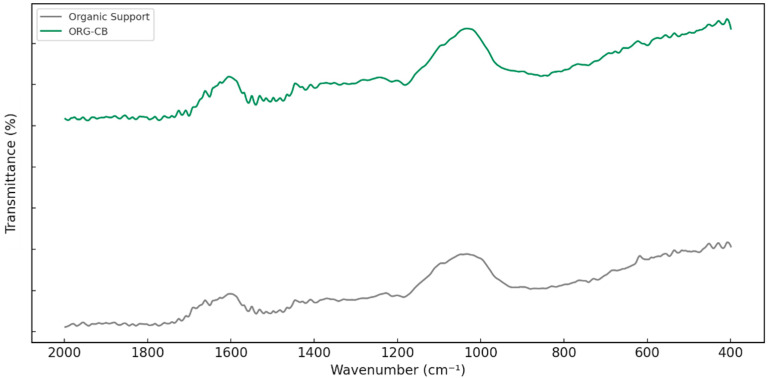 Figure 5
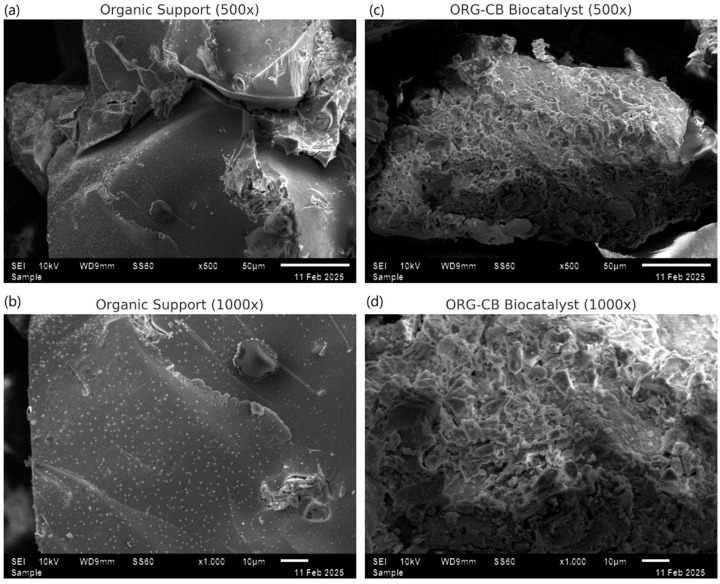 Figure 6
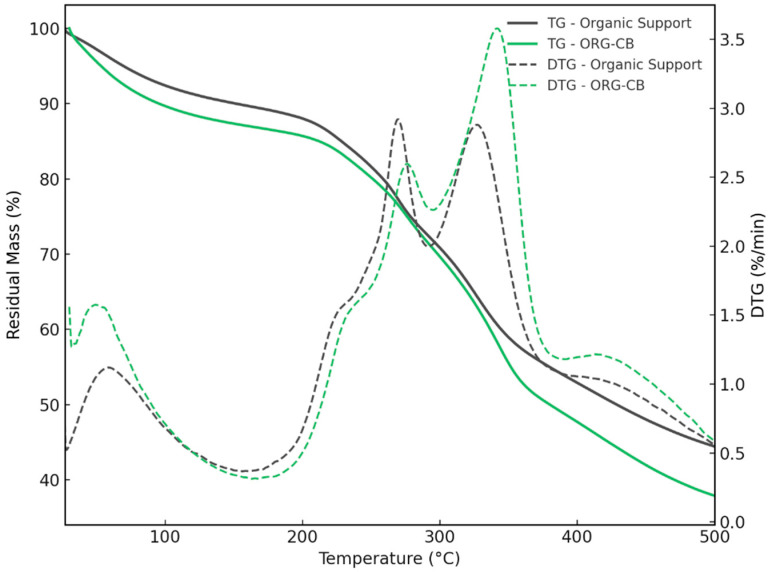 Figure 7
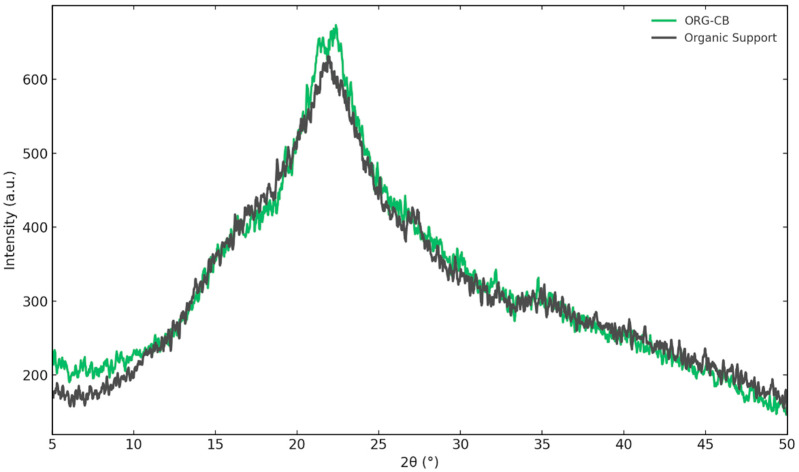 Figure 8
Peer Reviews
No public reviews on file for this paper yet. If you reviewed it on a platform where reviews are public (OpenReview, ICLR, NeurIPS, ICML), you can paste yours below so the community can read it here.
Videos
No videos yet. Explain this paper in a talk, walkthrough, or lecture? Add one.
Taxonomy
TopicsEnzyme Catalysis and Immobilization · Electrochemical sensors and biosensors · Catalysis for Biomass Conversion