A Comparative Study on ZrO2- and MgO-Based Sulfonic Acid Materials for the Reactive Adsorption of o-Xylene
Hongmei Wang, Xiaoxu Zhang, Ziqi Shen, Zichuan Ma

TL;DR
This study compares two sulfonic acid materials for removing o-xylene, a harmful VOC, showing that their performance depends on how the acid groups are attached to the support.
Contribution
The paper reveals how the anchoring mechanism of sulfonic acid groups on ZrO2 and MgO affects their reactivity for o-xylene removal.
Findings
SZO, with covalently bonded sulfonic acid groups, achieved ≥91.3% removal efficiency for o-xylene.
SMO's ion-paired sulfonic acid groups did not participate in the sulfonation reaction with o-xylene.
SZO showed a high adsorption capacity of 38.59 to 82.07 mg/g for o-xylene at 130–150 °C.
Abstract
The recovery and abatement of volatile organic compounds (VOCs) have received increasing attention due to their significant environmental and health impacts. Supported sulfonic acid materials have shown great potential in converting aromatic VOCs into their non-volatile derivatives through reactive adsorption. However, the anchoring state of sulfonic acid groups, which is closely related to the properties of the support, greatly affects their performance. In this study, two supported sulfonic acid materials, SZO and SMO, were prepared by treating ZrO2 and MgO with chlorosulfonic acid, respectively, to investigate the influence of the support properties on the anchoring state of sulfonic acid groups and their reactive adsorption performance for o-xylene. The supports, adsorbents, and adsorption products were extensively characterized, and the reactivity of SZO and SMO towards o-xylene…
Genes, proteins, chemicals, diseases, species, mutations and cell lines named across the full text — each resolved to its canonical identifier and authoritative record.
Click any figure to enlarge with its caption.
 Figure 1
 Figure 2
 Figure 3
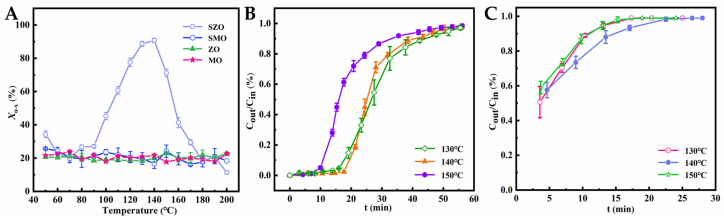 Figure 4
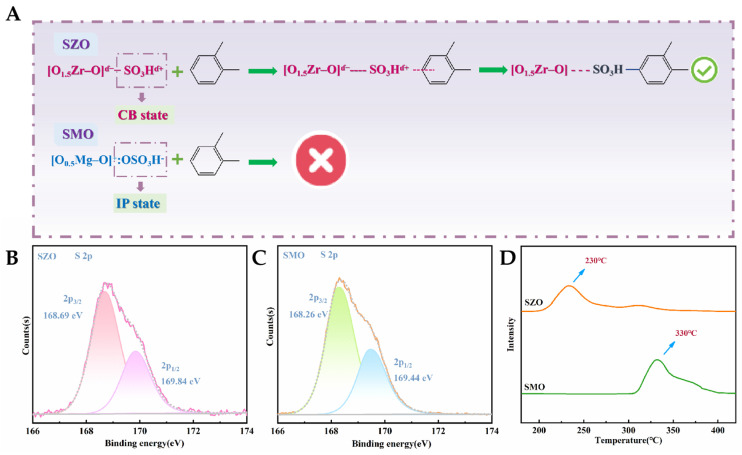 Figure 5
 Figure 6
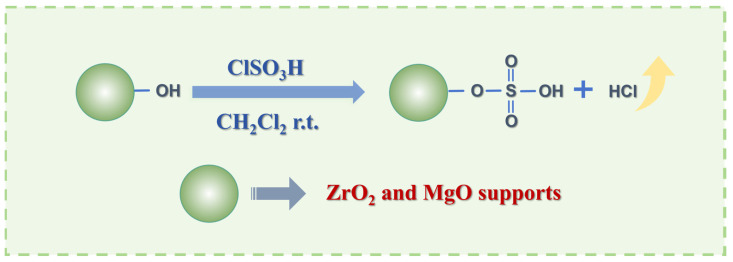 Figure 7
Peer Reviews
No public reviews on file for this paper yet. If you reviewed it on a platform where reviews are public (OpenReview, ICLR, NeurIPS, ICML), you can paste yours below so the community can read it here.
Videos
No videos yet. Explain this paper in a talk, walkthrough, or lecture? Add one.
Taxonomy
TopicsIndustrial Gas Emission Control · Catalysis and Hydrodesulfurization Studies · Covalent Organic Framework Applications