Phosphorene-Supported Au(I) Fragments for Highly Sensitive Detection of NO
Huimin Guo, Yuhan Liu, Xin Liu

TL;DR
This paper explores using phosphorene-supported gold fragments for detecting nitric oxide with high sensitivity.
Contribution
The study introduces a novel approach using Au(I) fragments on phosphorene for highly sensitive NO detection.
Findings
HO-Au1-Pene and H3C-Au1-Pene show 99.99% theoretical sensitivity for NO and NO2 detection.
HO-Au1-Pene is suitable for NO sensing due to a low energy barrier of 0.36 eV.
CH3-Au1-Pene is not suitable for NO or NO2 sensing due to high reaction barriers.
Abstract
The fabrication and application of single-site heterogeneous reaction centers are new frontiers in chemistry. Single-site heterogeneous reaction centers are analogous to metal centers in enzymes and transition-metal complexes: they are charged and decorated with ligands and would exhibit superior reactivity and selectivity in chemical conversion. Such high reactivity would also result in significant response, such as a band gap or resistance change, to approaching molecules, which can be used for sensing applications. As a proof of concept, the electronic structure and reaction pathways with NO and NO2 of Au(I) fragments dispersed on phosphorene (Pene) were investigated with first-principle-based calculations. Atomic-deposited Au atoms on Pene (Au1-Pene) have hybridized Au states in the bulk band gap of Pene and a decreased band gap of 0.14 eV and would aggregate into clusters.…
Genes, proteins, chemicals, diseases, species, mutations and cell lines named across the full text — each resolved to its canonical identifier and authoritative record.
Click any figure to enlarge with its caption.
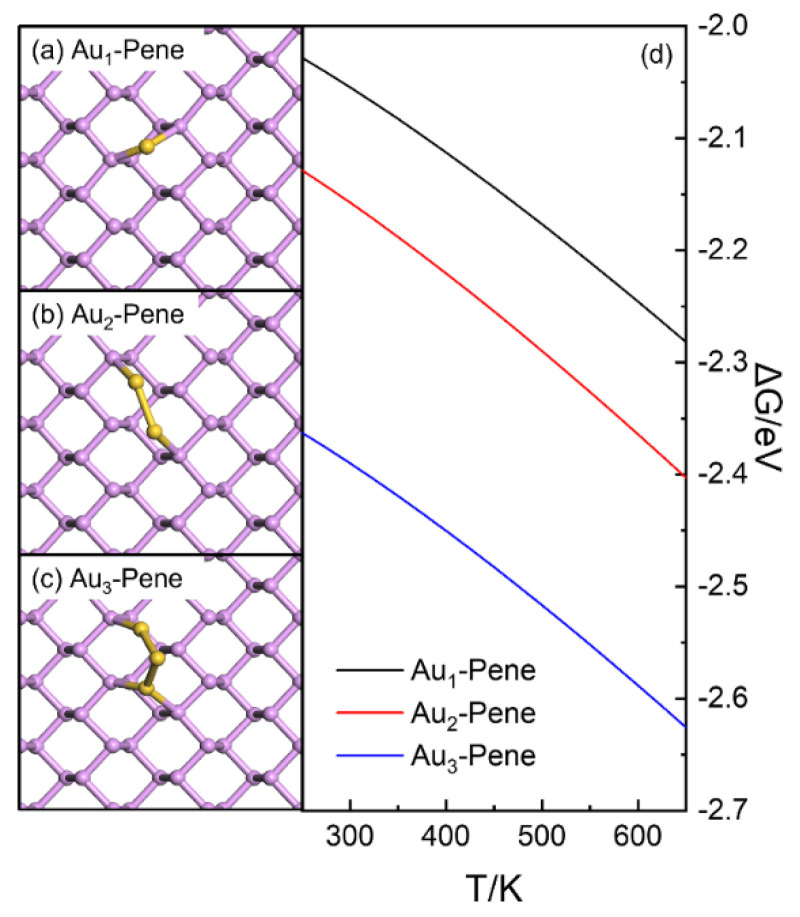 Figure 1
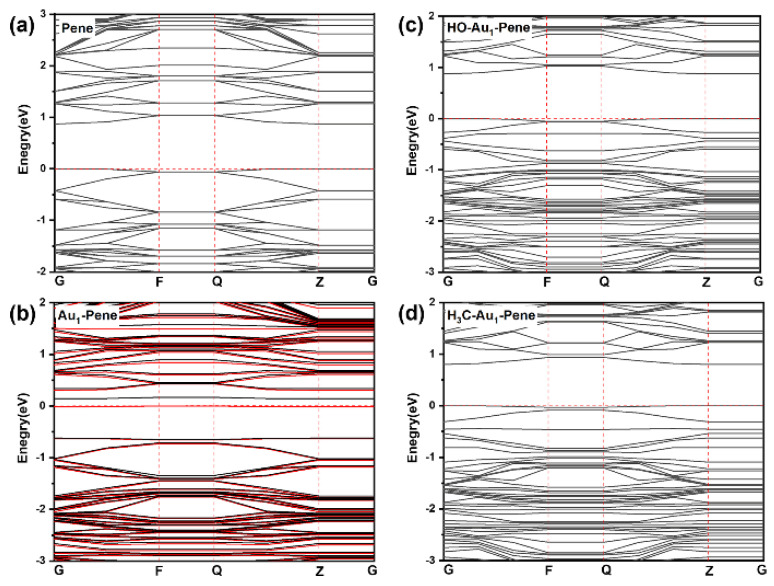 Figure 2
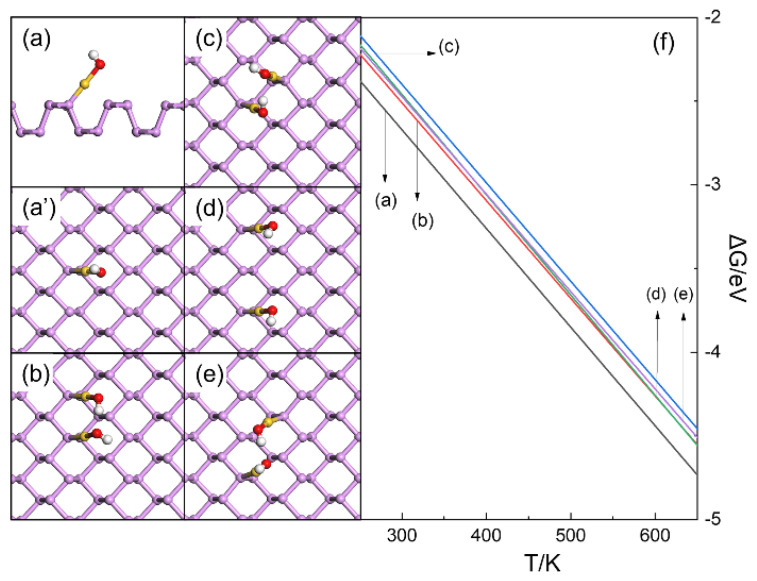 Figure 3
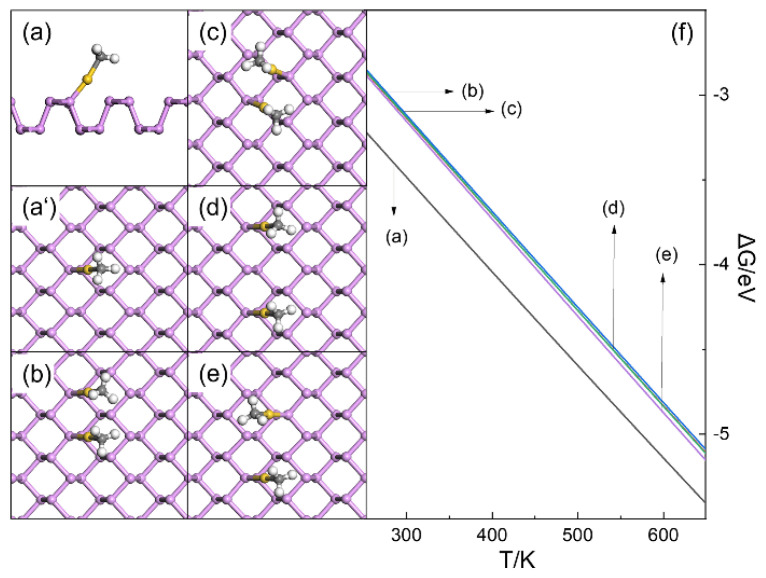 Figure 4
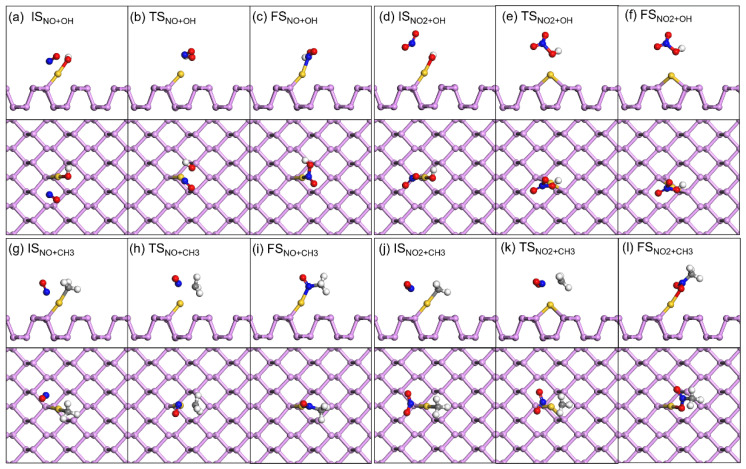 Figure 5
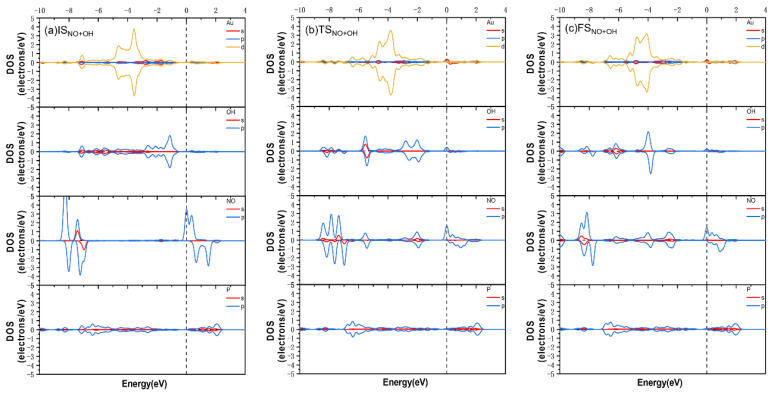 Figure 6
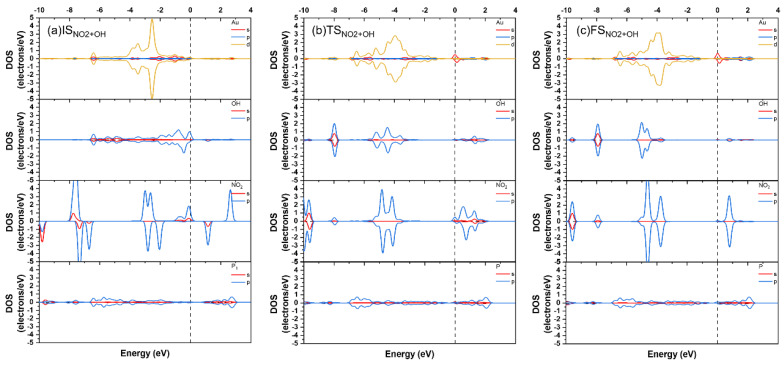 Figure 7
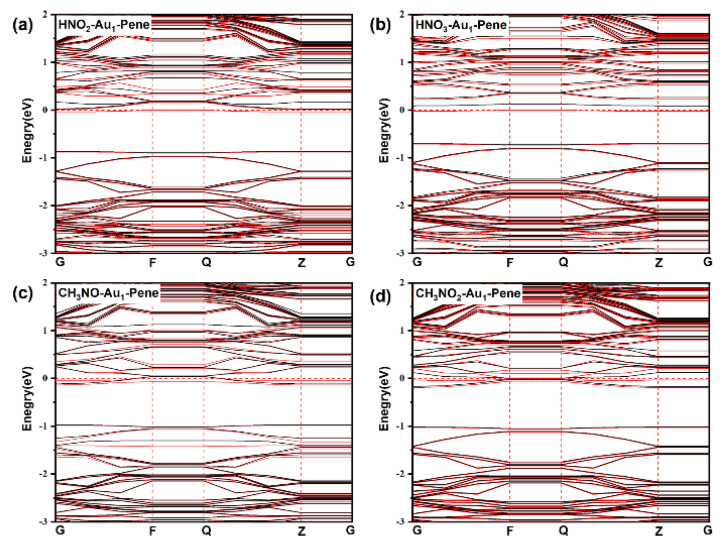 Figure 8
Peer Reviews
No public reviews on file for this paper yet. If you reviewed it on a platform where reviews are public (OpenReview, ICLR, NeurIPS, ICML), you can paste yours below so the community can read it here.
Videos
No videos yet. Explain this paper in a talk, walkthrough, or lecture? Add one.
Taxonomy
Topics2D Materials and Applications · Nanocluster Synthesis and Applications · Advanced Photocatalysis Techniques