Change in C, N, and P Characteristics of Hypericum kouytchense Organs in Response to Altitude Gradients in Karst Regions of SW China
Yage Li, Chunyan Zhao, Jiajun Wu, Suyan Ba, Shuo Liu, Panfeng Dai

TL;DR
This study examines how the nutrient content of a shrub species changes with altitude in China's karst regions, highlighting phosphorus as a key factor in adaptation.
Contribution
The study provides new insights into nutrient allocation and adaptation strategies of Hypericum kouytchense shrubs along altitude gradients in karst ecosystems.
Findings
Hypericum kouytchense organs showed higher nitrogen content compared to global and Chinese plant averages.
Phosphorus content in plant organs followed a concave pattern with increasing altitude, influencing nutrient ratios.
Phosphorus was identified as the key driver of nutrient cycling and plant-soil coupling in these shrubs.
Abstract
The environmental heterogeneity caused by altitude can lead to trade-offs in nutrient utilization and allocation strategies among plant organs; however, there is still a lack of research on the nutrient variation in the “flower–leaf–branch–fine root–soil” systems of native shrubs along altitude gradients in China’s unique karst regions. Therefore, we analyzed the carbon (C), nitrogen (N), and phosphorus (P) contents and their ratios in flowers, leaves, branches, fine roots, and surface soil of Hypericum kouytchense shrubs across 2200–2700 m altitudinal range in southwestern China’s karst areas, where this species is widely distributed and grows well. The results show that H. kouytchense organs had higher N content than both global and Chinese plant averages. The order of C:N:P value across plant organs was branches > fine roots > flowers > leaves. Altitude significantly affected the…
Genes, proteins, chemicals, diseases, species, mutations and cell lines named across the full text — each resolved to its canonical identifier and authoritative record.
Click any figure to enlarge with its caption.
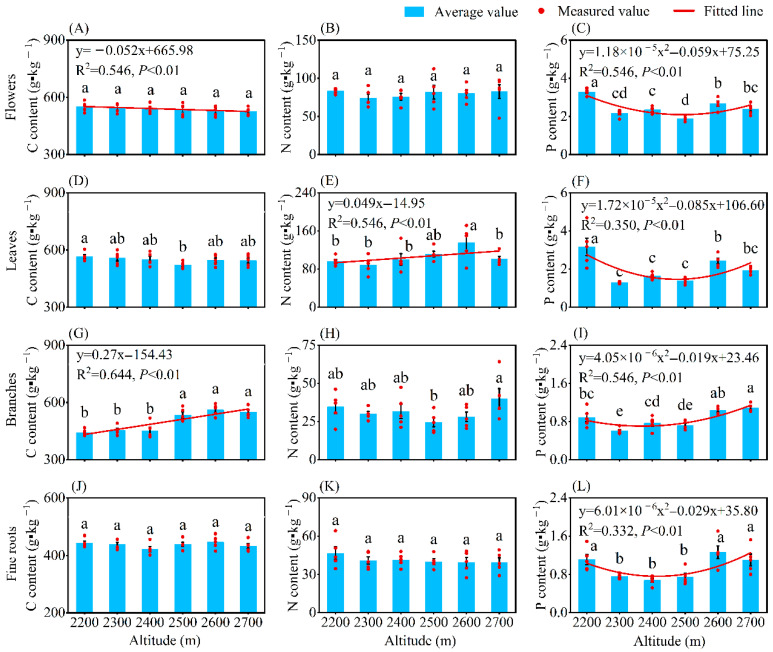 Figure 1
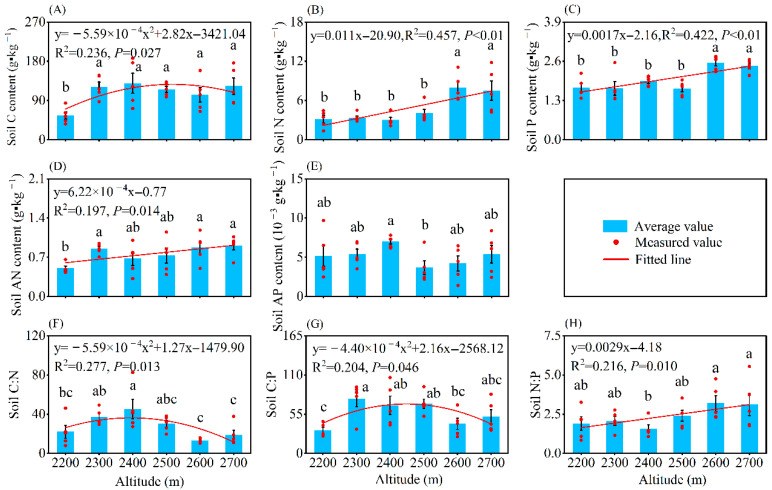 Figure 2
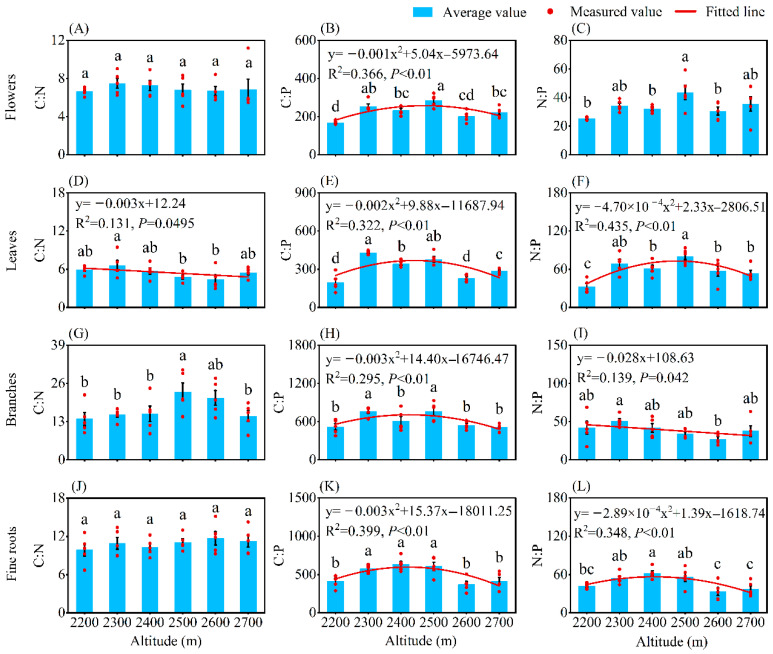 Figure 3
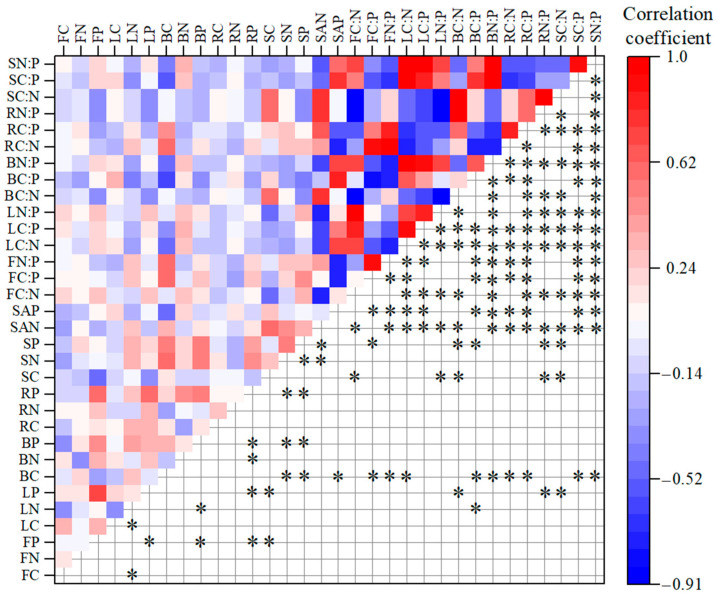 Figure 4
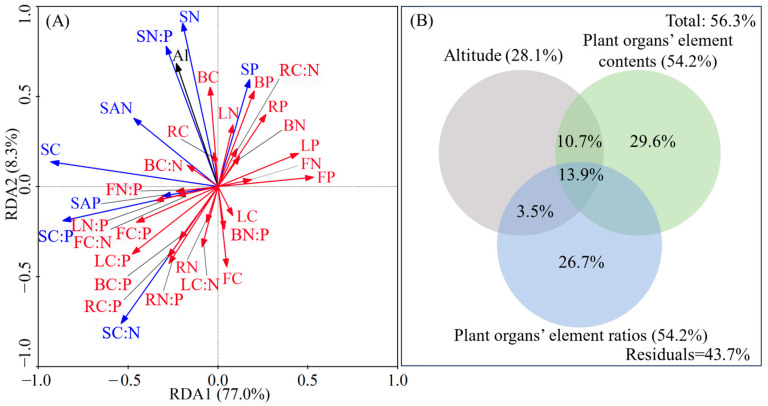 Figure 5
Peer Reviews
No public reviews on file for this paper yet. If you reviewed it on a platform where reviews are public (OpenReview, ICLR, NeurIPS, ICML), you can paste yours below so the community can read it here.
Videos
No videos yet. Explain this paper in a talk, walkthrough, or lecture? Add one.
Taxonomy
TopicsPlant responses to water stress · Agriculture, Soil, Plant Science · Ecology and Conservation Studies