Theoretical Investigation of the Material Usage During On-Bead Enrichment of Post-Translationally Modified Peptides in Suspension Systems
Kai Liu, Yuanyu Huang, Thomas Huang, Pengyuan Yang, Jilie Kong, Huali Shen, Quanqing Zhang

TL;DR
This paper presents a theoretical model to optimize the selective enrichment of low-abundance protein modifications, validated with experiments on glycosylated and phosphorylated peptides.
Contribution
A novel thermodynamic model linking material dosage to analyte recovery in PTM enrichment is introduced and experimentally validated.
Findings
Enrichment efficiency follows a non-linear trend, peaking at an optimal dosage before declining.
Experimental validation confirmed the model's predictions for both glycosylated and phosphorylated peptides.
Optimal dosage varies among peptides with the same modification, emphasizing the need for tailored strategies.
Abstract
Over the past decade, the number and diversity of identified protein post-translational modifications (PTMs) have grown significantly. However, most PTMs occur at relatively low abundance, making selective enrichment of modified peptides essential. To address this, we developed a thermodynamic model describing the free beads enrichment in suspension enrichment process and derived a theoretical relationship between material dosage and analyte recovery. The model predicts a non-linear trend, with enrichment efficiency increasing up to an optimal dosage and declining thereafter—a pattern confirmed by experimental data. We validated the model using centrifugation-based enrichment for glycosylated peptides and magnetic-based enrichment for phosphorylated peptides. In both cases, the results aligned with theoretical predictions. Additionally, the optimal dosage varied among peptides with the…
Genes, proteins, chemicals, diseases, species, mutations and cell lines named across the full text — each resolved to its canonical identifier and authoritative record.
Click any figure to enlarge with its caption.
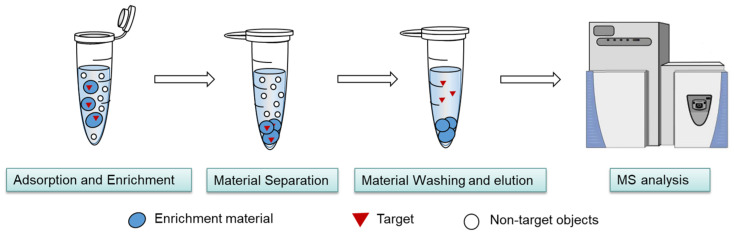 Figure 1
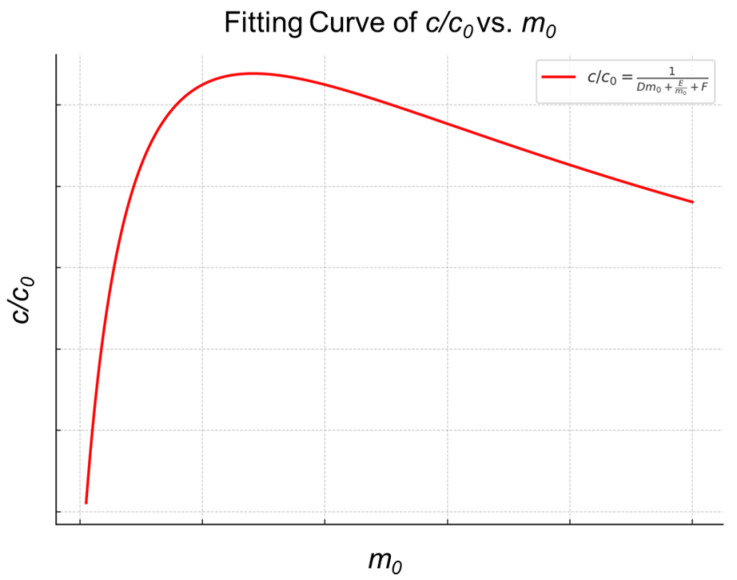 Figure 2
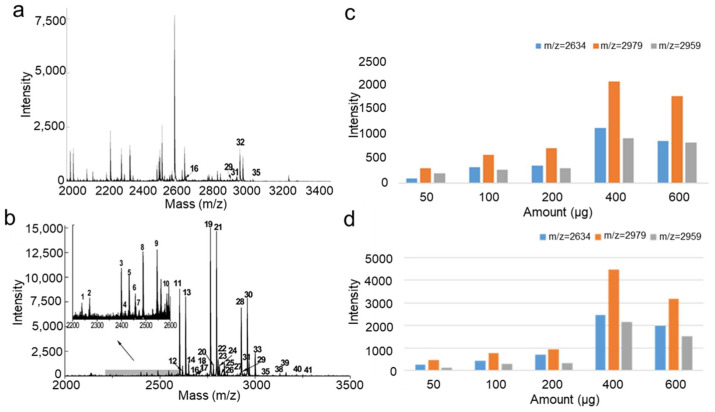 Figure 3
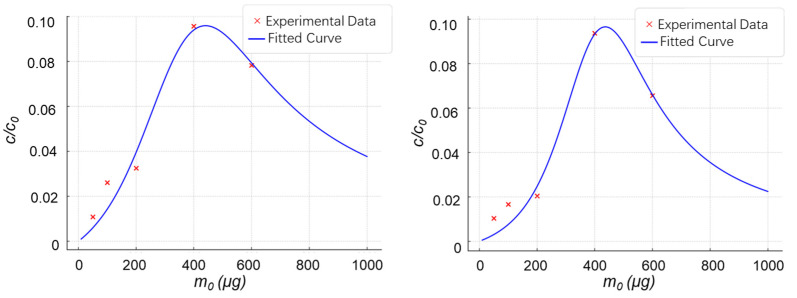 Figure 4
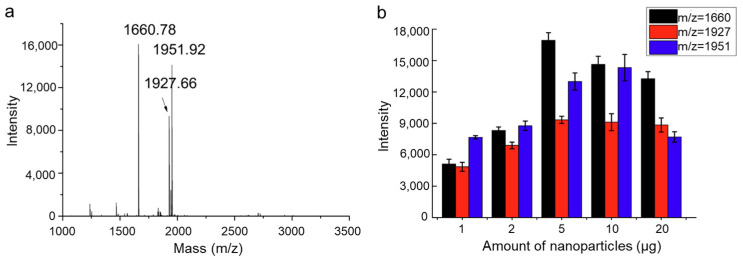 Figure 5
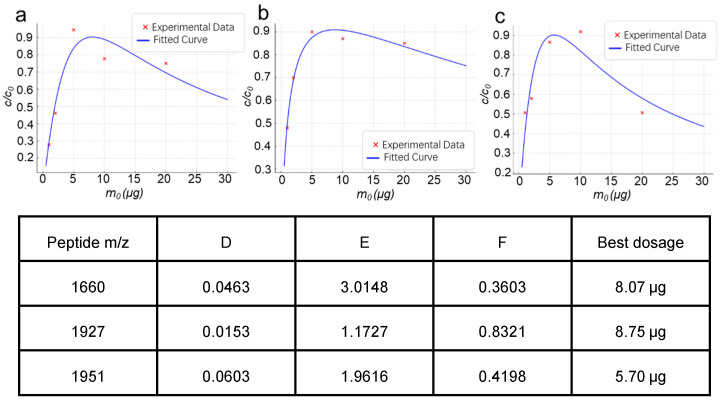 Figure 6
Peer Reviews
No public reviews on file for this paper yet. If you reviewed it on a platform where reviews are public (OpenReview, ICLR, NeurIPS, ICML), you can paste yours below so the community can read it here.
Videos
No videos yet. Explain this paper in a talk, walkthrough, or lecture? Add one.
Taxonomy
TopicsAdvanced Proteomics Techniques and Applications · Mass Spectrometry Techniques and Applications · Protein purification and stability