Machine Learning in Sensory Analysis of Mead—A Case Study: Ensembles of Classifiers
Krzysztof Przybył, Daria Cicha-Wojciechowicz, Natalia Drabińska, Małgorzata Anna Majcher

TL;DR
This study explores how machine learning can classify types of mead based on sensory analysis and aroma compounds, finding that certain algorithms perform better than others.
Contribution
The study introduces a novel combination of cluster mapping and machine learning algorithms for classifying mead types based on sensory and aromatic data.
Findings
Random Forest and K-Nearest Neighbors algorithms achieved the highest accuracy in mead classification.
Decision Tree achieved the highest accuracy (0.909) among tested algorithms.
Acacia mead was easier for algorithms to identify compared to tilia or buckwheat mead.
Abstract
The aim was to explore using machine learning (including cluster mapping and k-means methods) to classify types of mead based on sensory analysis and aromatic compounds. Machine learning is a modern tool that helps with detailed analysis, especially because verifying aromatic compounds is challenging. In the first stage, a cluster map analysis was conducted, allowing for the exploratory identification of the most characteristic features of mead. Based on this, k-means clustering was performed to evaluate how well the identified sensory features align with logically consistent groups of observations. In the next stage, experiments were carried out to classify the type of mead using algorithms such as Random Forest (RF), adaptive boosting (AdaBoost), Bootstrap aggregation (Bagging), K-Nearest Neighbors (KNN), and Decision Tree (DT). The analysis revealed that the RF and KNN algorithms…
Genes, proteins, chemicals, diseases, species, mutations and cell lines named across the full text — each resolved to its canonical identifier and authoritative record.
Click any figure to enlarge with its caption.
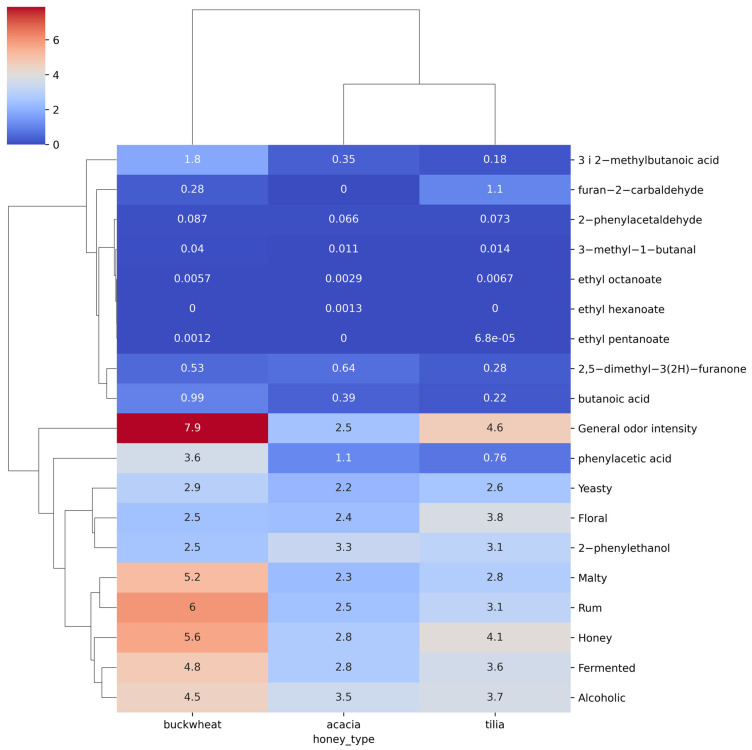 Figure 1
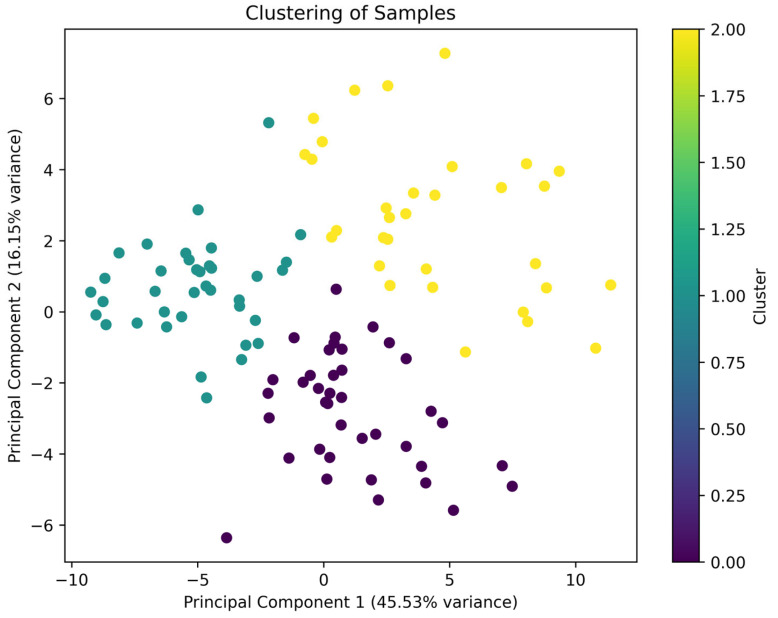 Figure 2
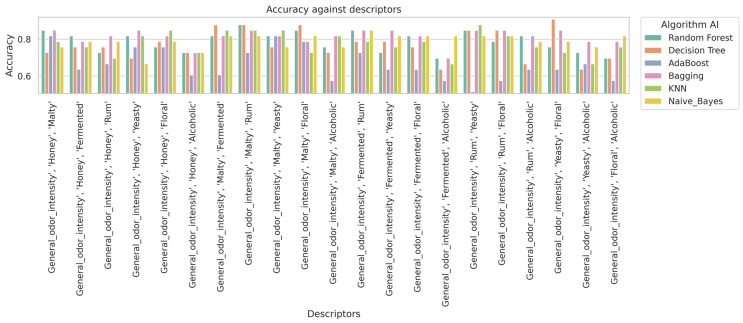 Figure 3
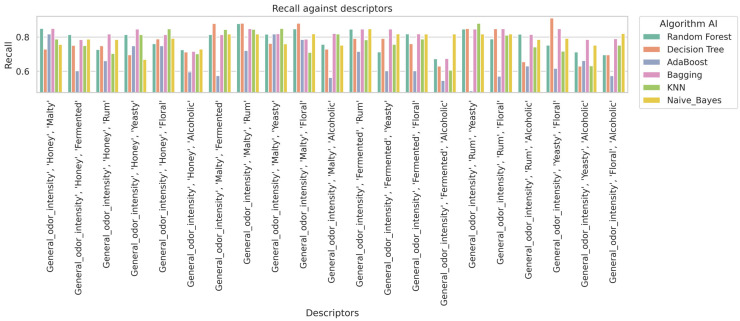 Figure 4
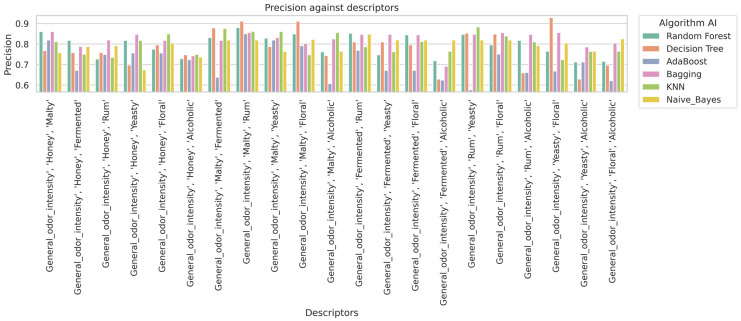 Figure 5
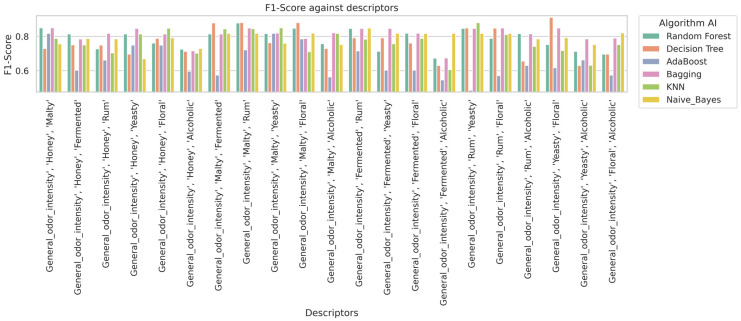 Figure 6
Peer Reviews
No public reviews on file for this paper yet. If you reviewed it on a platform where reviews are public (OpenReview, ICLR, NeurIPS, ICML), you can paste yours below so the community can read it here.
Videos
No videos yet. Explain this paper in a talk, walkthrough, or lecture? Add one.
Taxonomy
TopicsAdvanced Chemical Sensor Technologies · Sensory Analysis and Statistical Methods · Spectroscopy and Chemometric Analyses